

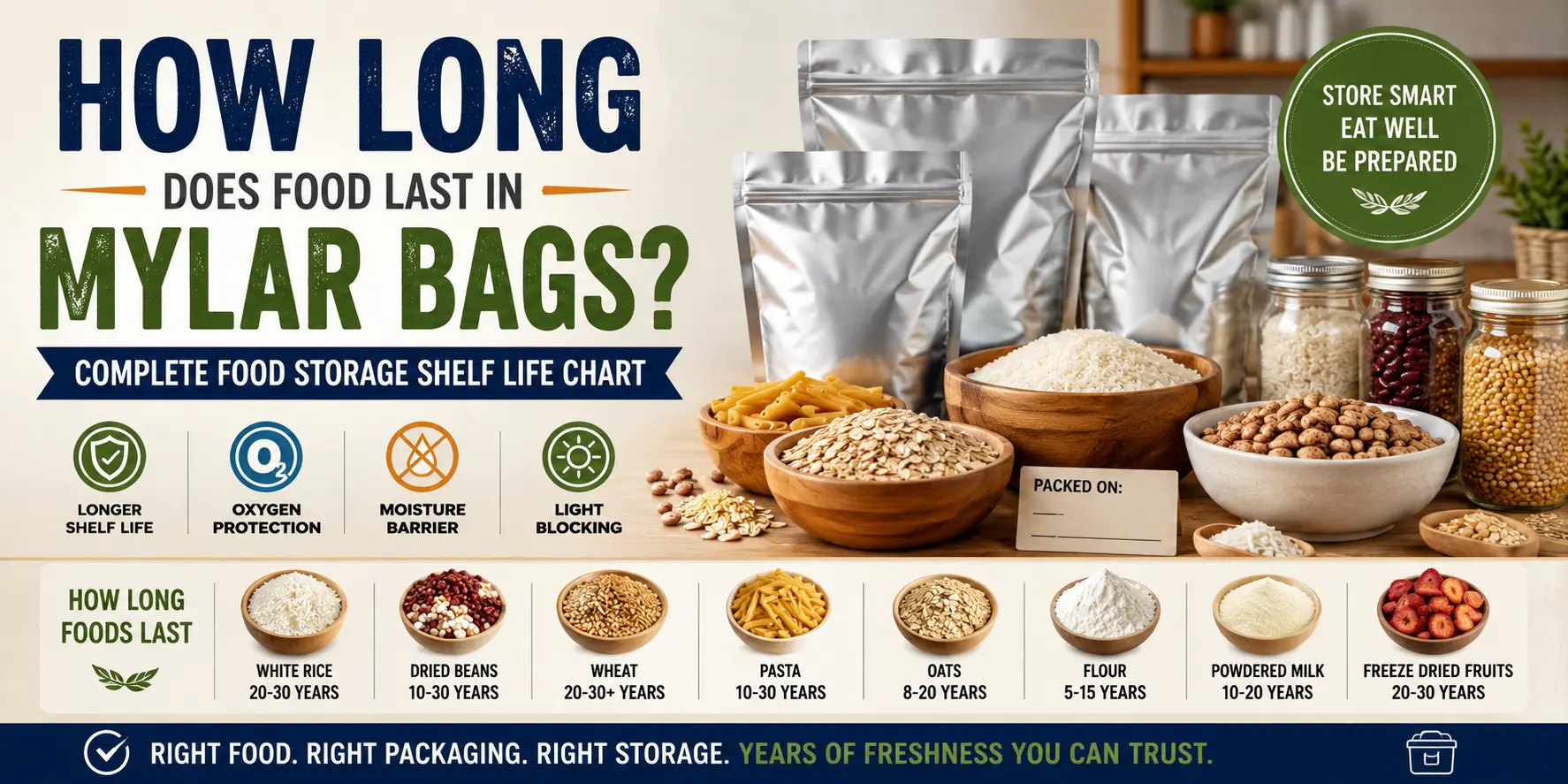
How long does food last in Mylar bags? Dry foods can last for many years when you store them the right way. Foods such as white rice, dried beans, wheat, pasta, and oats can have a much longer storage life when you use food-grade Mylar bags, oxygen absorbers, and proper storage conditions.
But not every food lasts for the same amount of time.
The type of food, moisture, fat, oxygen, light, temperature, and sealing method all affect shelf life. A Mylar bag can protect food from light, moisture, and outside air, but it cannot fix food that was already wet, spoiled, or unsafe.
In this guide, you will learn how long food lasts in Mylar bags, which foods work best, how to use oxygen absorbers, and how to store food for the long term.
Quick answer: Many dry, low-moisture foods can last 10–30 years or more when packed correctly in Mylar bags with oxygen absorbers and stored in a cool, dry, dark place. The exact shelf life depends on the food and storage conditions.
Mylar Bag Food Storage Shelf Life Chart
The chart below gives general estimates for properly packed dry foods. Actual shelf life can vary based on the food, packaging, temperature, moisture, and storage conditions.
| Food | Approximate Shelf Life in Mylar Bags* |
|---|---|
| White rice | 20–30 years |
| Dried beans | 10–30 years |
| Wheat berries | 20–30+ years |
| Pasta | 10–30 years |
| Rolled oats | 8–20 years |
| Lentils | 10–30 years |
| Quinoa | 8–10 years |
| White flour | 5–15 years |
| Dried vegetables | 10–20 years |
| Freeze-dried fruits | 20–30 years |
| Freeze-dried vegetables | 20–30 years |
| Powdered milk | 10–20 years |
| Powdered eggs | 5–15 years |
| White sugar | Very long-lasting when kept dry |
| Salt | Very long-lasting when kept dry |
| Brown rice | Much shorter than white rice |
| Nuts | Shorter because of their natural oils |
These are general storage ranges, not guarantees. Always follow the food manufacturer’s storage instructions and use your judgment before eating stored food. USDA notes that shelf-stable foods can lose freshness and quality over time, even when they remain shelf-stable.
How Long Does White Rice Last in Mylar Bags?
White rice can last about 20–30 years when stored correctly in a sealed Mylar bag with an oxygen absorber.
White rice works well for long-term storage because it has very little natural oil. This makes it more stable than brown rice.
Some storage guides report up to 25–30 years for properly packed white rice.
For better results:
- Use a food-grade Mylar bag.
- Use the correct oxygen absorber.
- Seal the bag tightly.
- Keep the bag away from heat and sunlight.
- Store it in a cool, dry place.
- Label the bag with the food and packing date.
What About Brown Rice?
Brown rice does not last as long as white rice.
Brown rice contains more natural oil. That oil can become rancid over time. For this reason, brown rice is better for shorter storage periods.
If you want to store rice for many years, white rice is usually a better choice than brown rice.
How Long Do Beans Last in Mylar Bags?
Dried beans can last for many years in Mylar bags when you pack and store them correctly.
White beans, pinto beans, black beans, kidney beans, and other dry beans are common choices for long-term food storage.
Some guides estimate 10–30 years for properly packed dried beans, depending on the type and storage conditions.
Beans should be dry before you pack them.
Do not put wet or damp beans into a sealed bag. Extra moisture can cause mold and spoilage.
How Long Does Pasta Last in Mylar Bags?
Dry pasta can also have a long storage life.
When you keep pasta dry and protect it from oxygen, light, insects, and moisture, it can last for many years. Storage guides commonly give ranges of 10–30 years, depending on the pasta and storage conditions.
Plain dry pasta is usually a better choice for long-term storage than pasta that contains added oils or other ingredients that can spoil faster.
How Long Do Oats Last in Mylar Bags?
Rolled oats and other dry oats can last for years in Mylar bags.
A common estimate is around 8–20 years, depending on the type of oats and storage conditions.
Keep oats away from heat. High temperatures can reduce food quality over time.
How Long Does Flour Last in Mylar Bags?
White flour can last much longer in a properly sealed Mylar bag than in normal pantry packaging.
Many storage guides place white flour at around 5–15 years when packed correctly.
Flour does not have the same long storage life as foods such as white rice because it can lose quality faster.
For the best results, use fresh flour and store it in a cool location.
How Long Do Freeze-Dried Foods Last in Mylar Bags?
Freeze-dried foods are popular for emergency food storage because they already have very low moisture.
When packed correctly, some freeze-dried fruits, vegetables, and meals can last 20–30 years or longer, depending on the product and manufacturer’s instructions.
Always check the original product label for the recommended storage life.
Do You Need Oxygen Absorbers in Mylar Bags?
For many dry foods intended for long-term storage, an oxygen absorber can help reduce the oxygen inside the sealed bag.
Oxygen can cause food quality to decline. It can also support insects and other unwanted changes in stored food.
The basic process is simple:
Food → Mylar bag → Oxygen absorber → Remove excess air → Heat seal → Cool, dark storage
However, not every food needs an oxygen absorber.
For example, some foods such as sugar and salt can clump or become hard when you use oxygen absorbers. Keep these foods dry and follow the recommended storage method.
Always choose an oxygen absorber based on the food and the amount of air in the package. Do not guess the size.
What Size Mylar Bag Should You Use?
The best Mylar bag size depends on the amount of food you want to store.
Common sizes include:
- 1 quart
- 1 gallon
- 2 gallon
- 5 gallon
A 1-gallon Mylar bag works well for many home food-storage projects because it is easy to fill, seal, label, and organize.
Larger bags can hold more food, but they can also become harder to handle.
If you are storing several types of food, smaller bags can make your food supply easier to organize.
How Thick Should a Mylar Bag Be?
Mylar bags come in different thicknesses.
For long-term food storage, many guides recommend using a thicker food-storage bag because it gives better protection against punctures and rough handling. Some food-storage guides recommend 5 mil or thicker bags for this use.
The important thing is not just thickness.
You should also check:
- Food-grade construction
- Seal quality
- Barrier performance
- Bag size
- Material layers
- Intended use
For commercial food packaging, your packaging supplier should provide material specifications for the exact bag.
How to Store Food in Mylar Bags
Follow these basic steps when packing dry food.
1. Choose the right food
Start with dry, low-moisture foods.
Good choices include:
- White rice
- Dried beans
- Wheat
- Pasta
- Oats
- Lentils
- Some dry vegetables
- Freeze-dried foods
2. Use clean, dry bags
Use food-grade Mylar bags that are made for food storage.
Do not use random plastic bags or trash bags for food. USDA warns that trash bags are not food-grade packaging and should not be used for food storage.
3. Fill the bag
Add your dry food to the bag.
Leave enough space at the top so you can create a strong heat seal.
4. Add the oxygen absorber when appropriate
Place the correct oxygen absorber inside the bag.
Work quickly after opening the absorber package because the absorber starts working when it is exposed to air.
5. Remove extra air
Gently press the bag to remove extra air.
Do not crush the food.
6. Heat seal the bag
Use a proper heat sealer to close the bag.
A strong seal is very important. A small leak can allow air and moisture to enter.
7. Label the bag
Write down:
- Food name
- Packing date
- Oxygen absorber size
- Any other useful information
This makes your food storage much easier to manage.
8. Store the bags correctly
Keep sealed bags in a cool, dry, dark place.
Avoid places with high heat, moisture, or direct sunlight.
USDA also recommends storing dry foods in clean, dry areas and checking packaging for holes or damage.
What Foods Should You NOT Store in Mylar Bags for Long-Term Storage?
Mylar bags are not a magic solution for every food.
Foods with high moisture or high amounts of natural oil can have a shorter storage life.
Be careful with:
- Fresh fruits
- Fresh vegetables
- Fresh meat
- High-moisture foods
- Many dairy products
- Nuts
- Brown rice
- Foods with high oil content
Fresh and perishable foods still need proper temperature control. A Mylar bag does not make perishable food shelf-stable.
USDA recommends following safe food-handling and storage practices and checking the manufacturer’s instructions for storage information.
Mylar Bags vs. Regular Food Packaging
Why do people use Mylar bags for long-term food storage?
A good Mylar bag can provide a strong barrier against outside conditions. This helps protect dry food from light, moisture, and oxygen when the package is properly sealed.
Regular food packaging may not provide the same level of protection for very long storage.
USDA notes that dry foods such as rice and pasta can lose quality when exposed to moisture and recommends protecting them from moisture and damaged packaging.
That is why proper packaging matters.
What Makes Food Last Longer in Mylar Bags?
Five main factors can affect storage life.
1. Food moisture
Dry foods usually store better than wet foods.
2. Oxygen
Less oxygen can help protect many dry foods from quality loss.
3. Temperature
A cool storage area is better than a hot one.
4. Light
Dark storage helps protect food quality.
5. Seal quality
A poor seal can let air and moisture back into the bag.
The bag alone does not create a 20- or 30-year shelf life.
The food, bag, oxygen control, seal, and storage conditions all work together.
How Can You Tell if a Mylar Bag Is Sealed Correctly?
After sealing the bag, check the seal.
The seal should look even and complete.
Look for:
- Open areas
- Holes
- Wrinkles across the seal
- Tears
- Air leaks
- Damaged corners
Some oxygen-absorber storage guides note that the bag may become tighter as the absorber removes oxygen.
If the bag has a leak, do not assume the food has long-term protection. Repack it using a new bag and a fresh oxygen absorber when appropriate.
Can You Store Mylar Bags Inside Buckets?
Yes.
Many people place sealed Mylar bags inside food-grade buckets.
The bucket gives the bags another layer of physical protection. It can help protect against pests, punctures, and rough handling.
The Mylar bag still needs to be properly sealed.
Think of it this way:
Mylar bag = barrier protection
Bucket = extra physical protection
Using both can make a useful storage system for large amounts of dry food.
How Long Does Food Last in Mylar Bags Without Oxygen Absorbers?
There is no single answer.
The result depends on the food, moisture, bag construction, seal, and storage conditions.
For long-term storage of many dry foods, oxygen absorbers are commonly used to reduce oxygen inside the sealed package. Without one, you should not assume that the food will have the same long shelf life.
If you plan to store food for many years, use a packaging method designed for long-term storage and follow reliable food-storage guidance.
Does Food Expire in a Mylar Bag?
Yes, food can still lose quality.
A Mylar bag does not make food last forever.
Over time, food can lose:
- Flavor
- Color
- Texture
- Nutritional quality
Some dry foods can remain usable for a very long time when stored correctly. Others have a much shorter storage life.
USDA explains that shelf-stable foods may remain safe but can lose freshness and quality over time.
So there is an important difference between “still safe” and “best quality.”
Mylar Bag Food Storage Tips for U.S. Homes
If you live in the United States and want to build a long-term food supply, keep these tips in mind:
Buy fresh food.
Do not pack old or damaged food and expect the bag to fix it.
Keep food dry.
Moisture can lead to mold and spoilage.
Use food-grade packaging.
The bag should be designed for the food you plan to store.
Use the right oxygen absorber when needed.
The correct size depends on the package and food.
Seal the bag well.
A weak seal can ruin long-term storage.
Store food somewhere cool.
Do not leave sealed bags in a hot garage or shed.
Keep food away from sunlight.
A dark storage area is better.
Label everything.
Write the food name and packing date on every bag.
Check your stored food.
Look for damaged bags, leaks, pests, moisture, or unusual changes.
Frequently Asked Questions About Mylar Bag Food Storage
How long does food last in Mylar bags?
Many dry, low-moisture foods can last 10–30 years or more when packed correctly and stored under good conditions. Shelf life depends on the food and storage method.
How long does rice last in Mylar bags?
White rice can last around 20–30 years when properly sealed with an oxygen absorber and stored in a cool, dry, dark location. Brown rice has a much shorter storage life.
How long do beans last in Mylar bags?
Dried beans can last many years when stored correctly. Some food-storage guides estimate 10–30 years, depending on the type of bean and storage conditions.
Do Mylar bags keep food fresh?
Mylar bags can help protect dry food from oxygen, moisture, and light when you use the right bag and seal it correctly. They do not make spoiled or wet food safe.
Do you need oxygen absorbers in Mylar bags?
Oxygen absorbers are commonly used with Mylar bags for long-term storage of many dry foods. They help reduce oxygen inside the sealed package. However, some foods should not be stored with oxygen absorbers, so follow food-specific guidance.
Can you store brown rice in Mylar bags?
Yes, but brown rice does not usually last as long as white rice because it contains more natural oil.
What is the best food to store in Mylar bags?
Dry, low-moisture foods are generally the best choices. White rice, dried beans, wheat, pasta, and some oats are common examples.
Can you reuse Mylar bags?
It depends on the bag and what you used it for. For long-term food storage, using a clean, undamaged, food-grade bag is important. A new bag is often the safer choice when you need a reliable long-term seal.
What size Mylar bag is best for food storage?
A 1-gallon bag is a popular choice for home food storage. Larger bags work well for bulk storage. Choose the size based on the amount and type of food you want to store.
Are Mylar bags waterproof?
Mylar packaging can provide strong moisture protection, but the exact level depends on the bag’s material structure and construction. Always check the specifications of the specific bag you buy.
Can you vacuum seal Mylar bags?
Some Mylar bags can work with vacuum-sealing equipment, but the method depends on the bag construction and equipment. For long-term food storage, heat sealing is a common method.
Final Answer: How Long Does Food Last in Mylar Bags?
So, how long does food last in Mylar bags?
The answer depends on the food and how you store it.
For many dry foods, properly sealed Mylar bags with the right oxygen absorber can provide a storage life of 10–30 years or more. White rice, dried beans, wheat, pasta, and other low-moisture foods are common choices for long-term storage.
But good packaging is only one part of the process.
Start with fresh, dry food. Use the right food-grade Mylar bag. Use an oxygen absorber when appropriate. Create a strong seal. Then store the package in a cool, dry, dark place.
If you need custom Mylar bags for food, snacks, supplements, or other products, choose a bag based on your product, size, barrier needs, printing requirements, and storage conditions.
The right packaging can help protect your product and give your customers a better storage experience.