

GSM in Paper Packaging Explained: What the Numbers Mean for Your Boxes
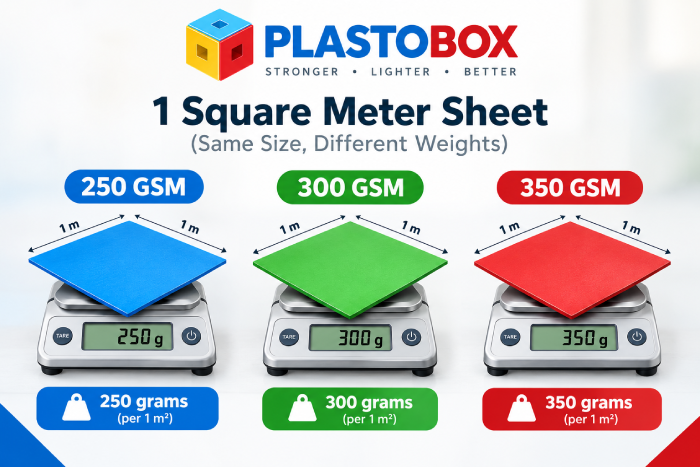
GSM in paper packaging refers to the weight of a paper or board in grams per square meter. A 300 GSM board weighs 300 grams per square meter. Suppliers quote it as a quick way to compare materials, but it measures weight, not thickness or strength.
Look at any quote and you’ll see it: 250 GSM, 300 GSM, 350 GSM. The number looks technical, but it answers one simple question about the material. It’s simpler than it looks.
This works best for paper-based packaging such as cartons, kraft bags, corrugated and rigid boxes. It won’t help if you’re buying plastic, foam or molded pulp packaging, where GSM isn’t the spec.
What Does GSM Mean, and Which Range Fits Most Boxes?
Short answer first. Most paperboard cartons land between 250 and 400 GSM, and the right spot in that range depends on what’s inside the box. The rest of this section shows where that number comes from.
The best GSM for packaging boxes depends on the box type and the product’s weight. According to published supplier guides, most paperboard cartons fall between 250 and 400 GSM. Heavier or premium products usually sit toward the top of that range, while lighter retail items can use less.
GSM is measured by weighing a paper sample of known area and converting the result to grams per square meter. According to ISO 536:2019, the international standard for paper and board grammage, labs follow a set method, with an annex covering oven-dry and as-taken weights. That’s why moisture can nudge a board’s reported GSM.
A 10 cm × 10 cm sample that weighs 3 grams works out to 300 GSM.
According to ISO 536:2019 the international standard for paper and board grammage, labs follow a set method, with an annex covering oven-dry and as-taken weights.
Is Higher GSM Always Better? GSM vs Thickness vs Strength
Not always. GSM measures how heavy the board is per square meter, which is a different thing from how thick it is or how much load it can carry. A 350 GSM board is a heavy board. Or maybe I should say it this way: it’s heavy, and heavy isn’t the same as strong.
Higher GSM is not always better for packaging, because GSM measures weight, not thickness or strength. Thickness is measured as caliper, in microns or points, and two boards with the same GSM can differ in caliper depending on fiber density. Ask suppliers for both numbers before you compare quotes.
Most people assume a higher GSM means a thicker box — the measurements say otherwise. Buyers who’ve compared supplier quotes often report that two samples labeled 350 GSM can feel noticeably different in the hand, because fiber density and coating change thickness at the same weight.
What most guides skip is caliper. Ask for thickness in microns or points, where 1 point equals 0.001 inch (25.4 microns). For corrugated boxes, also ask about the edge crush test (ECT) rating or burst strength.
Here’s the thing: GSM tells you what you’re paying for in material, not how well the box will perform.
If your supplier quotes in pounds
Multiply pounds of cover stock by about 2.7 to get GSM. A 110 lb cover sheet is roughly 300 GSM.
GSM Chart for Packaging: What Each Box Type Typically Uses
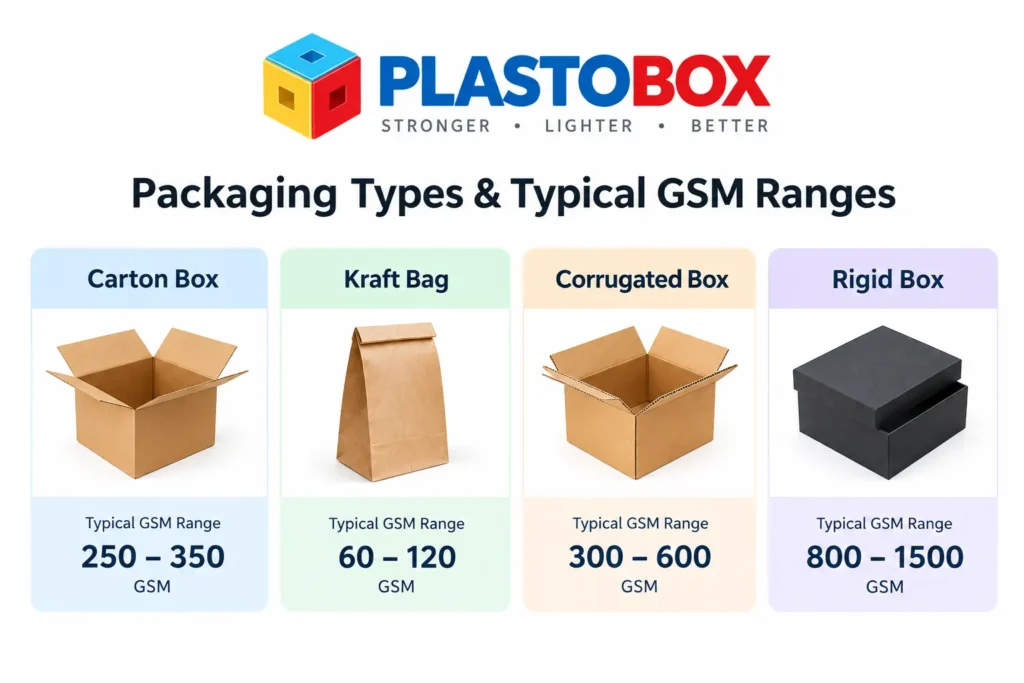
Printer-paper charts don’t help here. This one is organized by packaging type instead. Treat every range as typical, not guaranteed, because suppliers grade and label board differently.
Quick Comparison
| Option | Best For | Key Benefit | Limitation |
|---|---|---|---|
| Folding carton board, SBS (solid bleached sulphate), about 250–400 GSM | Cosmetic, food and retail cartons | Prints sharp and folds cleanly | Needs an insert or thicker board for heavy items |
| Kraft paper and board, roughly 90–400 GSM (varies by supplier) | Paper bags, eco-focused boxes, wrapping | Strong natural fibers and a natural look | Brown surface mutes bright colors |
| Corrugated board (liner sheets plus fluted medium) | Shipping boxes and heavy products | Cushioning and stacking strength | Bulkier, and GSM alone doesn’t show strength |
| Rigid box board, 800+ GSM | Luxury electronics, cosmetics, gift sets | Premium feel and crush resistance | Higher cost, ships bulky |
250 GSM vs 350 GSM: 250 GSM is better suited for lightweight retail and food cartons because it folds cleanly and costs less. 350 GSM works better when the box carries heavier items or needs a premium feel. The key difference is rigidity versus cost.
I’ve seen conflicting data on corrugated liners — some supplier guides put them around 90 to 200 GSM, others show 125 to 440 or more. My read is that the lower range describes a single liner sheet, while the higher figures include heavier liners and combined layers.
Always ask which one the quote means.
 Need cartons made for your brand? See our custom packaging in Los Angeles
How Do You Choose the Right GSM for Your Product?
Start with the product. Weight, fragility, and how the box will travel decide most of the answer, and the GSM figure should come last in that conversation.
To choose the right GSM for your packaging, follow these steps:
- Weigh your product with its inner contents.
- Pick the box type: carton, corrugated, rigid or bag.
- Match that box type to its typical GSM range.
- Ask the supplier for caliper in microns, not only GSM.
- Order a sample and test it with real product weight.
Look if you’re ordering cosmetic boxes for the first time, here’s what actually works: start with a 300 GSM carton board, test a sample with the real product inside, then move up or down from there.
Some packaging buyers argue the heaviest board you can afford is the safest choice. That’s valid for fragile or heavy items shipped long distances. But if you’re packing lightweight retail products, extra GSM mostly adds cost and makes folding harder.
My opinion, and some buyers will push back: most small brands over-spec GSM. Moving from 300 to 400 GSM raises the cost per box, but a better insert or box style usually protects the product more than extra board weight. If a supplier says “higher is better” and won’t share the caliper, that isn’t a spec, it’s a sales line.
Shipping heavier products? Look at custom corrugated boxes
Quick Answers and Your Next Move
Q: What’s the best GSM for packaging boxes?
A: Most paperboard cartons use 250 to 400 GSM. Lighter retail and food items sit lower in that range, while cosmetics and heavier products usually use 300 to 400 GSM.
Q: How do I convert GSM to pounds?
A: Multiply pounds of cover stock by about 2.7 to get GSM. For example, 110 lb cover is roughly 300 GSM. Bond and text papers use different factors, so check the paper type.
Q: Should I choose a higher GSM for safer shipping?
A: Not by default. Higher GSM adds weight and cost, but shipping strength depends more on board structure, such as corrugated flutes and inserts. Match GSM to product weight, then test a sample.
Q: Why does my 350 GSM sample feel thinner than another 350 GSM sample?
A: GSM measures weight, not thickness. Fiber density and coating change how thick a sheet feels at the same weight, so compare caliper in microns as well.
Q: When should I use kraft instead of white board?
A: Use kraft for bags, mailers and eco-focused brands that want a natural look. Choose white paperboard when you need bright, sharp print and a polished retail finish.
Your next move
Before you approve a quote, collect three numbers from the supplier: GSM, caliper in microns, and the board grade. Then order a sample and test it with the real product inside. If you’re comparing quotes right now, send those three questions to each supplier today.
This guide covers weights for paper-based packaging. It does NOT address food-contact approvals, coatings or lamination, or exact board-strength testing. Ranges shown are typical supplier ranges, not standards, so confirm specs with your supplier before you order.
Planning a premium gift, cosmetic or electronics box? Explore custom rigid boxes