

Choosing the right display box size is one of the most important decisions when creating retail packaging. Many brands focus on graphics, colors, and printing finishes, but even the most attractive packaging can fail if the display box dimensions are not properly matched to the product.
Whether you sell cosmetics, supplements, snacks, CBD products, toys, electronics accessories, or retail merchandise, the correct display box size helps maximize product visibility, improve shelf presentation, and increase sales. A display box that is too large can make products look sparse and unorganized, while a box that is too small can create overcrowding and make it difficult for customers to access products.
This guide explains how to determine the ideal display box sizes for your products and highlights the most common display packaging dimensions used in retail environments.
Why Display Box Size Matters
Display packaging serves two important purposes. First, it protects products during transportation and stocking. Second, it acts as a marketing tool that encourages customers to pick up and purchase products.
The right display box size can help:
- Improve product visibility
- Increase impulse purchases
- Maximize shelf space
- Create a professional appearance
- Enhance customer convenience
- Reduce packaging waste
Retailers often evaluate packaging based on how efficiently it fits store shelves and countertops. Selecting the proper dimensions can improve both retailer acceptance and customer experience.
Start with Product Measurements
Before selecting a display box, measure the product accurately.
Record the following dimensions:
- Length
- Width
- Height
If multiple products will be displayed together, calculate the combined dimensions while allowing enough room for customers to easily remove individual items.
A display box should securely hold products while avoiding excessive empty space.
Standard Countertop Display Box Sizes
Countertop displays are commonly used near checkout areas where impulse purchases occur.
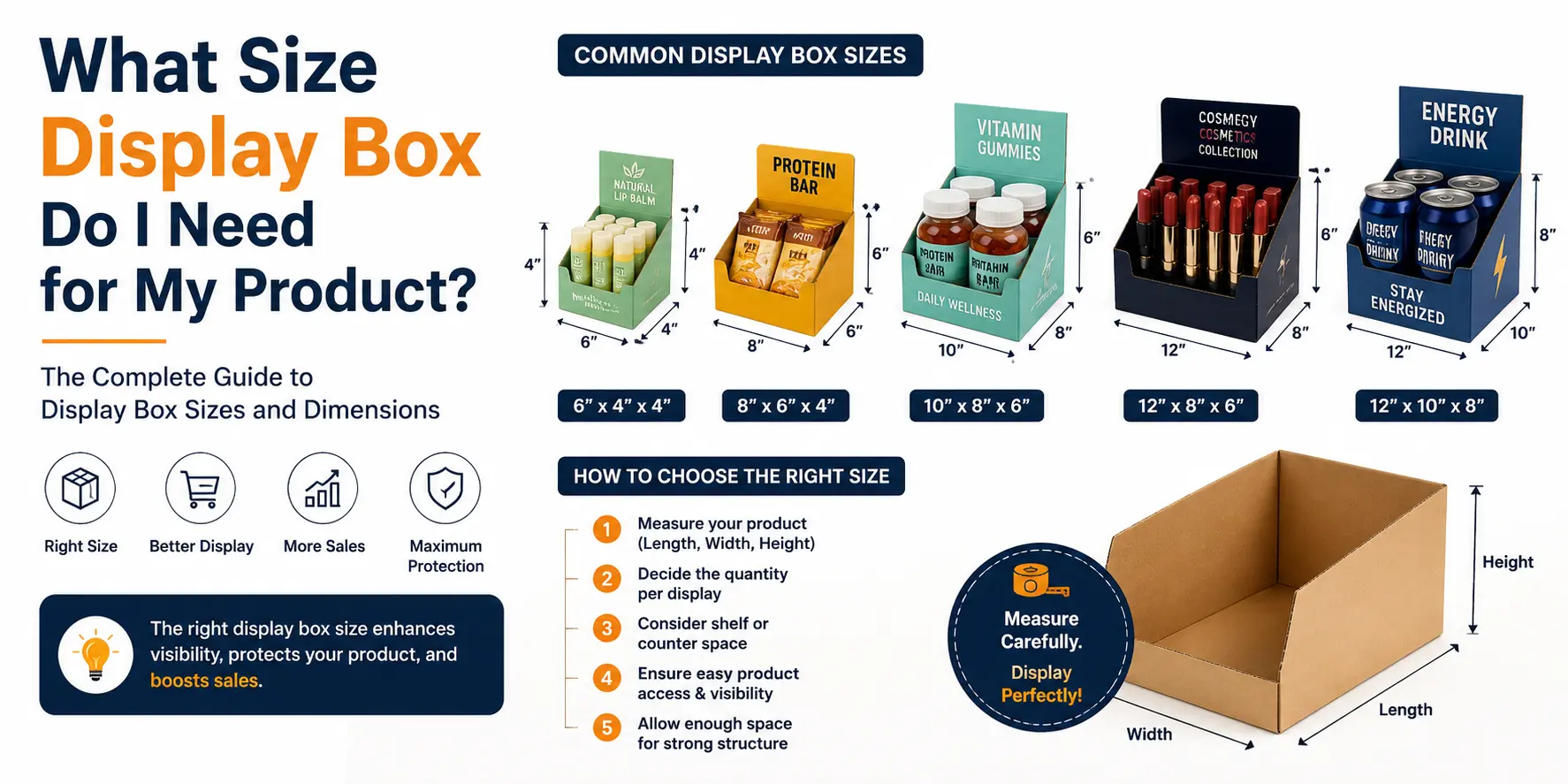
Popular countertop display box sizes include:
- 6″ x 4″ x 4″
- 8″ x 6″ x 4″
- 10″ x 8″ x 6″
- 12″ x 8″ x 6″
- 12″ x 10″ x 8″
These sizes are often used for:
- Candy
- Lip Balms
- Vape Products
- Cosmetics
- Supplements
- Small Electronics
Countertop display box sizes should allow products to remain visible while maintaining easy customer access.
Display Box Sizes by Product Category
Different industries typically require different display packaging dimensions.
Cosmetic Display Boxes
Cosmetic products often require compact countertop displays.
Common applications include:
- Lipsticks
- Nail Polish
- Eyelashes
- Skincare Products
- Makeup Accessories
Display boxes should showcase branding while allowing customers to see product colors and styles.
Supplement Display Boxes
Supplement packaging typically requires larger displays due to bottle dimensions.
Common products include:
- Protein Powders
- Vitamins
- Gummies
- Energy Supplements
These displays must support product weight while maintaining structural stability.
Food Display Boxes
Snack and food products often rely on display packaging to encourage impulse purchases.
Examples include:
- Chocolate Bars
- Protein Bars
- Cookies
- Candy
- Energy Snacks
The display should keep products organized while maximizing shelf visibility.
How Many Products Should a Display Box Hold?
One of the most common mistakes brands make is focusing only on product dimensions rather than product quantity.
Before finalizing a display box design, determine:
- Number of units per display
- Shelf space available
- Retailer requirements
- Product replenishment frequency
For example, a countertop display for lip balm may hold 24 units, while a supplement display may hold 6 to 12 bottles.
The quantity directly impacts the overall display packaging dimensions.
Display Box Depth and Product Accessibility
Depth plays a critical role in customer interaction.
If products sit too deep inside the display, customers may struggle to remove them. If the depth is too shallow, products can fall out during transportation or stocking.
An effective display box balances:
- Product visibility
- Product stability
- Customer accessibility
- Shelf presentation
The front cut-out section should expose enough product to attract attention without compromising support.
Retail Shelf Requirements
Many retailers have specific requirements regarding display packaging dimensions.
Before ordering custom display boxes, consider:
- Shelf height restrictions
- Checkout counter dimensions
- Product placement requirements
- Retail chain guidelines
Retail-ready packaging that aligns with retailer specifications is more likely to be accepted and displayed effectively.
Custom Display Box Sizes vs Standard Sizes
Standard display boxes work well for many products, but custom sizes offer additional advantages.
Custom display boxes provide:
- Better product fit
- Improved branding opportunities
- Enhanced shelf presentation
- Reduced packaging waste
- Stronger product protection
Brands with unique product dimensions often achieve better results with custom display packaging.
Common Display Box Sizing Mistakes
Many businesses encounter problems when sizing display packaging.
Common mistakes include:
- Choosing oversized displays
- Ignoring retailer shelf dimensions
- Forgetting product replenishment needs
- Overcrowding products
- Using weak materials for heavier items
Avoiding these issues helps create packaging that performs effectively in retail environments.
Choosing the Right Display Packaging Dimensions
The ideal display box size depends on your product dimensions, product quantity, retail environment, and marketing objectives.
When evaluating display box sizes, focus on:
- Product Protection
- Product Visibility
- Customer Convenience
- Shelf Compatibility
- Branding Opportunities
A well-designed display box can increase product visibility, improve customer engagement, and contribute directly to higher retail sales.
Final Thoughts
Selecting the correct display box size is about more than fitting a product inside a package. The right display packaging dimensions help attract attention, improve product presentation, and maximize retail performance.
Whether you’re designing countertop display box sizes for cosmetics, supplements, snacks, or retail merchandise, investing time in proper sizing can significantly improve both customer experience and sales results.
FAQs
What size display box do I need for my product?
The ideal display box size depends on your product dimensions, product quantity, and retail placement. Measure your product accurately and allow enough space for visibility and customer access.
What are the standard display box sizes?
Common display box sizes include 6″ x 4″ x 4″, 8″ x 6″ x 4″, 10″ x 8″ x 6″, and 12″ x 10″ x 8″, depending on the product category.
What are standard countertop display box sizes?
Popular countertop display box sizes range from 6″ x 4″ x 4″ for small products to 12″ x 10″ x 8″ for larger retail items.
How many products should a display box hold?
The number depends on product size and retail goals. Small items may require 12–48 units per display, while larger products may require fewer units.
Are custom display box sizes better than stock sizes?
Custom display boxes often provide a better product fit, stronger branding opportunities, and improved shelf presentation compared to standard stock sizes.