


Your product might be a flawless 10/10, but if it arrives on a doorstep in a battered 2/10 plain brown box, your customer’s first impression is instantly compromised. In the digital retail world, you rarely get to greet your buyers face-to-face to express your appreciation. Because of this distance, custom packaging acts as the physical handshake of e-commerce. It is the very first tangible interaction someone has with your brand, standing as a critical moment to establish professionalism and care.
According to retail psychology studies, this initial physical contact heavily dictates a product’s perceived value. Think of a generic box as a basic t-shirt, whereas a thoughtfully designed mailer acts as a tailored suit. Feeling the smooth texture of the cardboard and seeing vibrant, crisp colors transforms a routine delivery into a premium “gift” experience. Utilizing branded shipping supplies for startups immediately solves the problem of generic first impressions while building instant trust with the buyer.
Partnering with a capable package supplier to craft these unboxing moments is an investment that pays ongoing dividends. Beyond simply looking attractive, upgrading your boxes delivers three core benefits that strengthen your business: amplifying your brand identity, engineering vital physical protection for your items, and streamlining your shipping logistics.
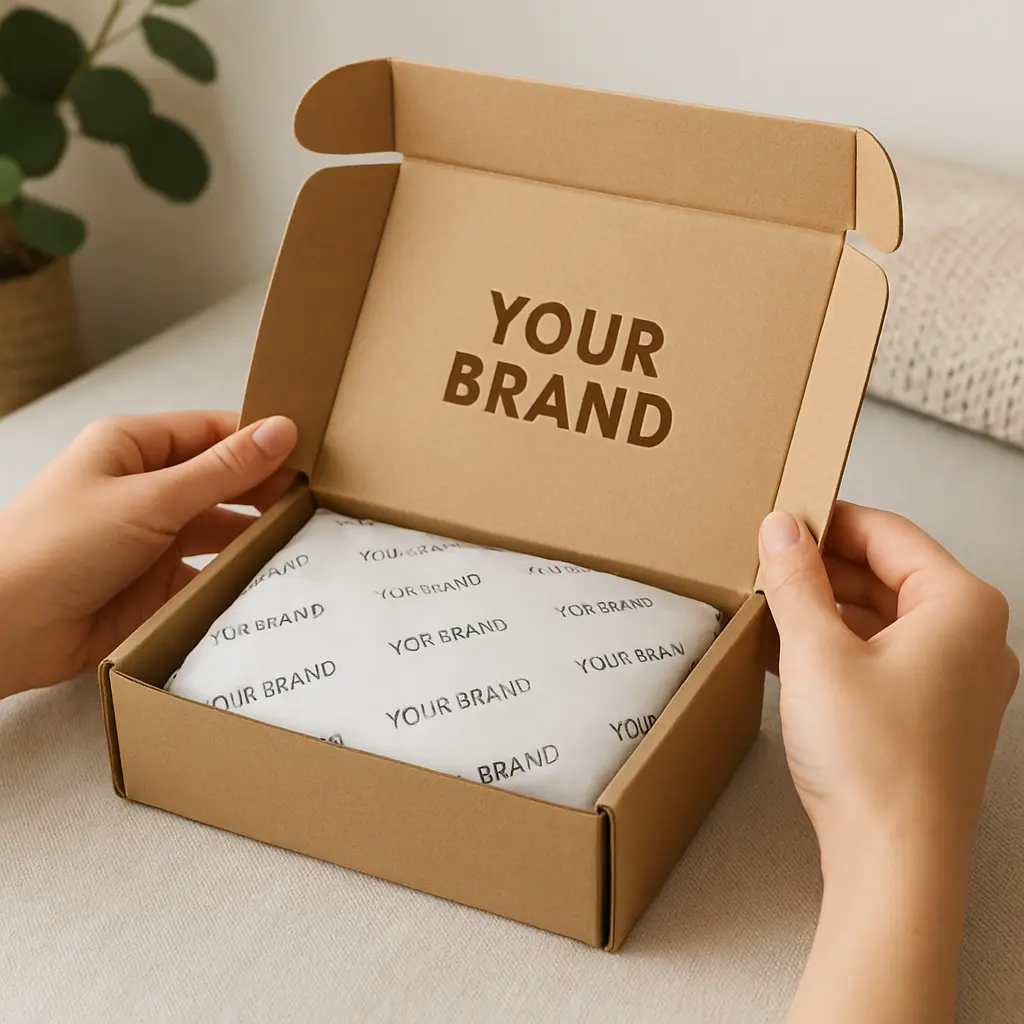
Creating a Memorable Unboxing Experience: The Science of the ‘Aha’ Moment
Think about the anticipation of opening a highly awaited online order. That transition from seeing a closed package to revealing the product inside is the unboxing experience, and it is a critical moment for building brand recall. Brand recall is simply how easily a customer remembers your name the next time they want to shop. By designing a deliberate sequence of discovery, you can increase the perceived value of your items significantly. A simple boutique candle feels incredibly luxurious when the opening process mimics unwrapping a premium gift.
If you ever wonder why use personalized tissue paper, consider the tactile sense of high quality it adds when a buyer peels back that crisp, branded layer. Every interior detail offers a chance to impress rather than showing them an empty cardboard void. Even before they open the lid, swapping standard clear packing tape for printed adhesive tape for brand recognition sets a professional stage right on their doorstep.
Nailing these visual elements is the secret to creating a memorable unboxing experience that customers actively want to share on social media. This “TikTok factor” turns your aesthetic choices into free marketing as people film their reveals for followers. Of course, a beautiful presentation means nothing if the item inside arrives in pieces. Protecting items with custom inserts and proper structural strength prevents costly damage and subsequent returns.
Protecting Your Profit: How Custom Inserts and ECT Ratings Prevent Costly Returns
A beautiful unboxing video turns into a customer service nightmare if the product arrives shattered. To prevent shipping damage, you need an outer box built with the right edge crush test corrugated strength; an industry metric measuring exactly how much vertical weight your package can handle before the walls buckle.
Inside that sturdy shell, you must stop items from bouncing around during transit. You are likely familiar with the process of selecting protective dunnage for delicate items to fill empty voids. Common filler options include:
- Air pillows: Extremely lightweight to ship, but rarely eco-friendly.
- Kraft paper: Highly recyclable and affordable, though it often looks messy.
- Biodegradable peanuts: Planet-friendly, but frustrating for customers to clean up.
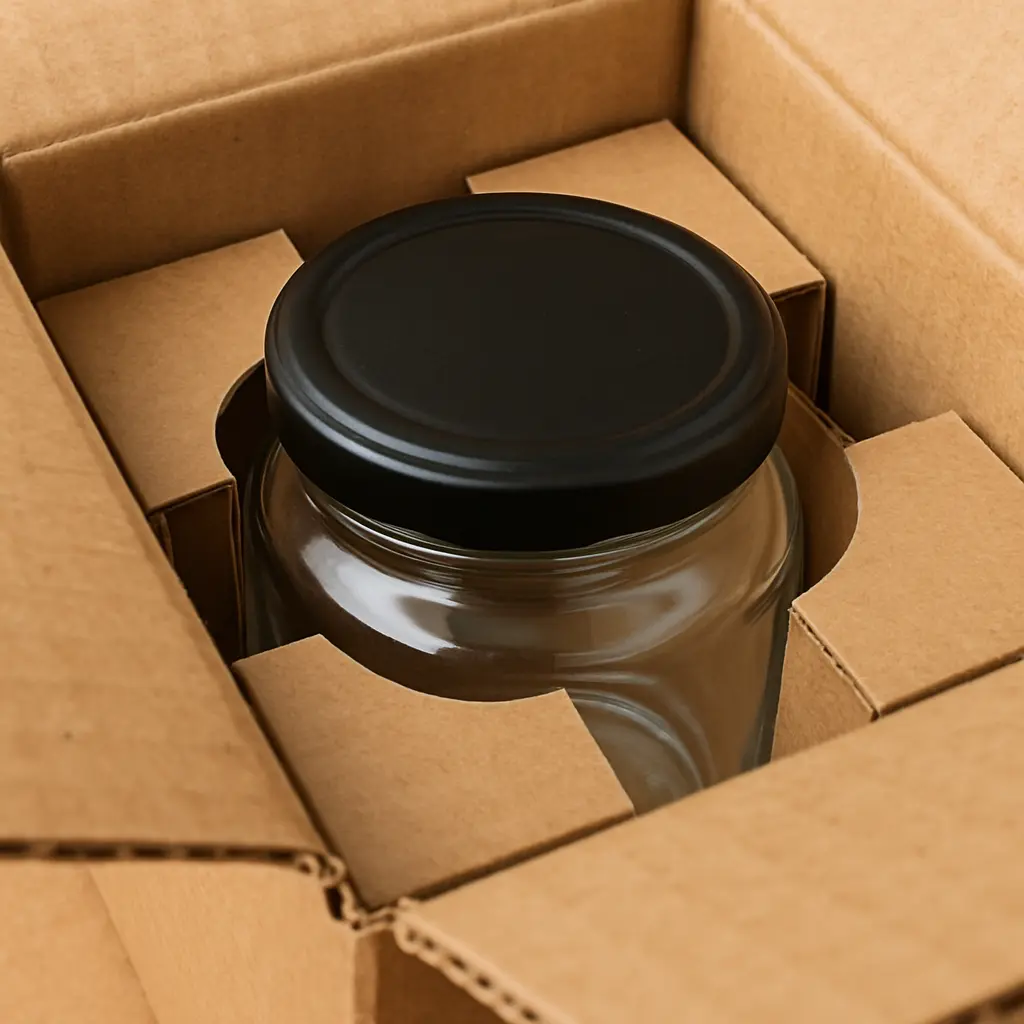
Instead of relying on these loose fillers, many brands upgrade to a precision-engineered approach. By designing protective structural inserts for shipping, you cradle your items perfectly, much like an egg resting securely in a carton. This method entirely eliminates the need for excess filler while delivering a remarkably clean, premium presentation. Crucially, this thoughtful structural engineering can reduce your damage-related return rates by up to 15%, saving you significant money.
Securing the physical safety of your goods provides a sturdy, reliable canvas ready for your brand’s colors. The key to printing your logo affordably lies in choosing the right technology for your specific volume.
Digital vs. Flexographic: Choosing the Right Printing Tech for Your Budget
Transforming your protective cardboard into a branded experience requires understanding packaging printing. Artwork is typically printed in CMYK, the standard four-color ink blend used commercially. If you only need 500 boxes, digital printing is perfect; it acts like a standard office printer with zero setup fees. Once you routinely order thousands, you must weigh digital vs flexographic printing technologies. Flexographic printing uses custom-made rubber plates to stamp your design. While these plates cost money upfront to manufacture, your price-per-box drops dramatically for bulk runs.
Always save your logo as a vector file before submitting it to a manufacturer, this is a digital format that never blurs, regardless of how much you enlarge it. With crisp artwork secured, you can add premium textures that command attention. Using spot UV and foil stamping finishes creates a highly tactile unboxing experience. Spot UV applies a glossy, raised clear-coat over specific patterns, while foil presses actual metallic layers into the paper to communicate instant luxury.
A visually stunning package ensures an excellent first impression, but aesthetics alone cannot optimize your profit margins. Even with flawless inks and shiny finishes, the physical footprint of your box ultimately dictates your postage fees. Carefully engineering dimensions to match your product eliminates unnecessary weight and slashes shipping costs.
Smarter Boxes, Lower Bills: How Custom Sizing Slashes Your Shipping Costs
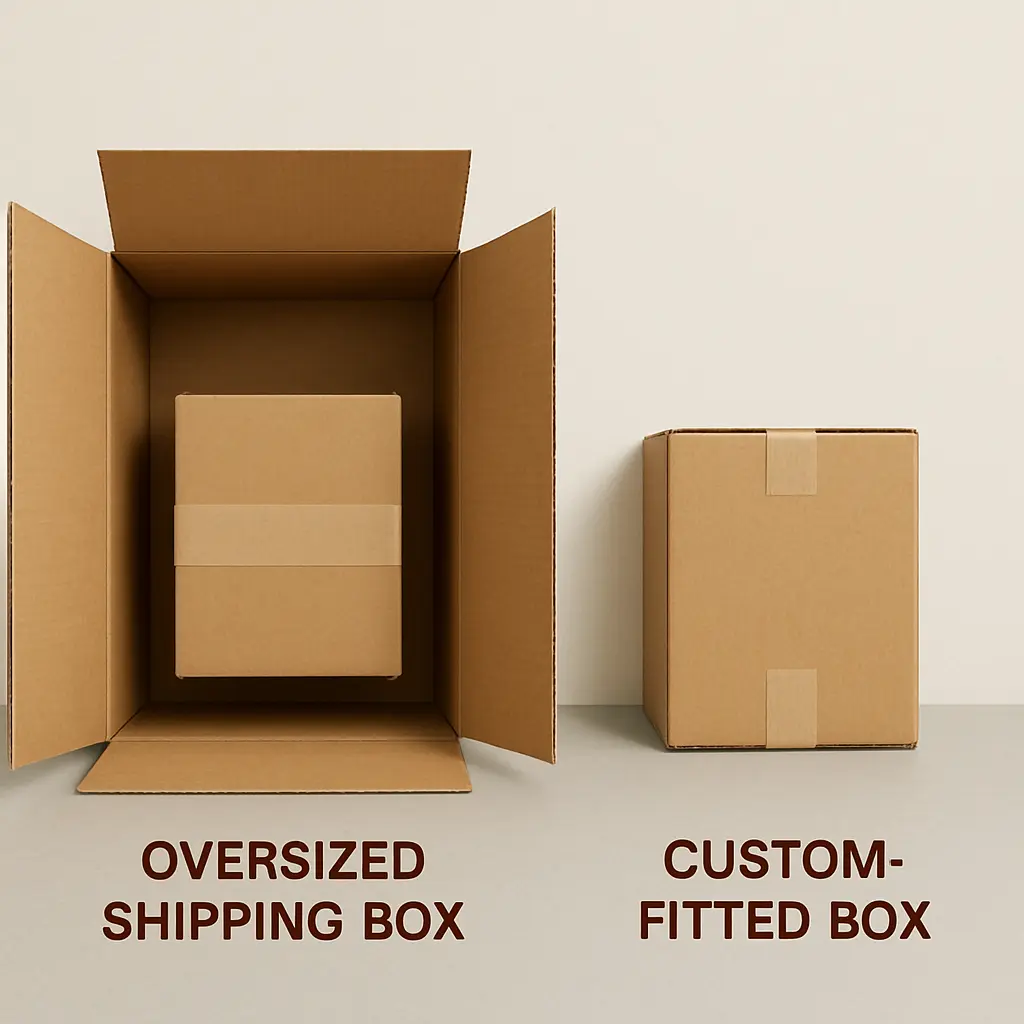
Imagine packing a tiny jar in a massive box stuffed with paper. You aren’t just creating a messy experience; you are literally paying to ship air. Shipping companies use Dimensional (DIM) weight to charge based on the space a package occupies, not just its scale weight. Shrinking your dimensions directly lowers these fees, making optimizing dimensional weight for lower freight crucial.
To audit current packaging for wasted space, you need to understand the carrier’s math. Here are the steps to calculate dimensional weight:
- Measure the exterior length, width, and height.
- Multiply those numbers to find the total volume.
- Divide that volume by your shipping carrier’s specific “DIM divisor.”
If this number exceeds actual weight, you pay the higher DIM rate. Grasping this prevents expensive surprises when learning how to calculate wholesale box costs.
Beyond dimensions, your material structure heavily impacts total shipping weight. When evaluating rigid containers versus folding cartons, remember that thick, pre-assembled rigid boxes (like luxury jewelry cases) add significant physical bulk. Conversely, custom folding cartons offer superior weight efficiency while still maintaining a tailored, professional look for your brand. Financial optimization also extends to material choices, allowing brands to adopt sustainable mailers without ruining their budget.
Eco-Friendly Without the ‘Eco-Tax’: Navigating Sustainable Mailer Materials
Have you ever opened a package stuffed with unrecyclable plastic and felt guilty? Your customers feel that, too. Upgrading to sustainable biodegradable mailer materials is now a smart business move that won’t ruin your budget. The massive premium once required to be eco-friendly is fading as greener options become widely accessible.
Selecting materials usually comes down to paper or plant-based plastics. For a classic feel, choose FSC-certified paper, a label ensuring the wood was responsibly harvested, like a farmer replanting crops. If your products need waterproof protection, compostable alternatives to poly mailers are perfect. Made from plant starches, they provide traditional plastic durability but break down safely in a compost bin.
These green upgrades only boost brand loyalty if buyers know about them. Printing simple disposal instructions on your custom packaging builds trust and prevents “greenwashing”, the mistake of sounding eco-friendly without doing the actual work. With a package that protects both your product and the planet, securing a reliable supplier is the key to scaling your operations.
Your Roadmap to Professional Packaging: Finding the Right Supplier and Scaling Fast
You no longer must settle for plain brown boxes. You are now equipped to confidently vet a package supplier by asking the right questions about Minimum Order Quantities (MOQs) and production lead times. Understanding these limits ensures you partner with reliable packaging suppliers who can actually scale at your pace.
To overcome analysis paralysis, transition your unboxing experience in three straightforward phases. First, validate your sizing by shipping standard test boxes to ensure product safety. Next, use a retail box design template guide to apply your logo and brand colors without paying for an expensive graphic designer. Finally, place a conservative initial order to verify the print quality before committing to massive volumes.
Starting small protects your budget while immediately elevating your brand’s physical first impression. Every beautiful, sturdy box you send out becomes a professional handshake, building customer excitement and trust that keeps people coming back long after the delivery truck drives away.