

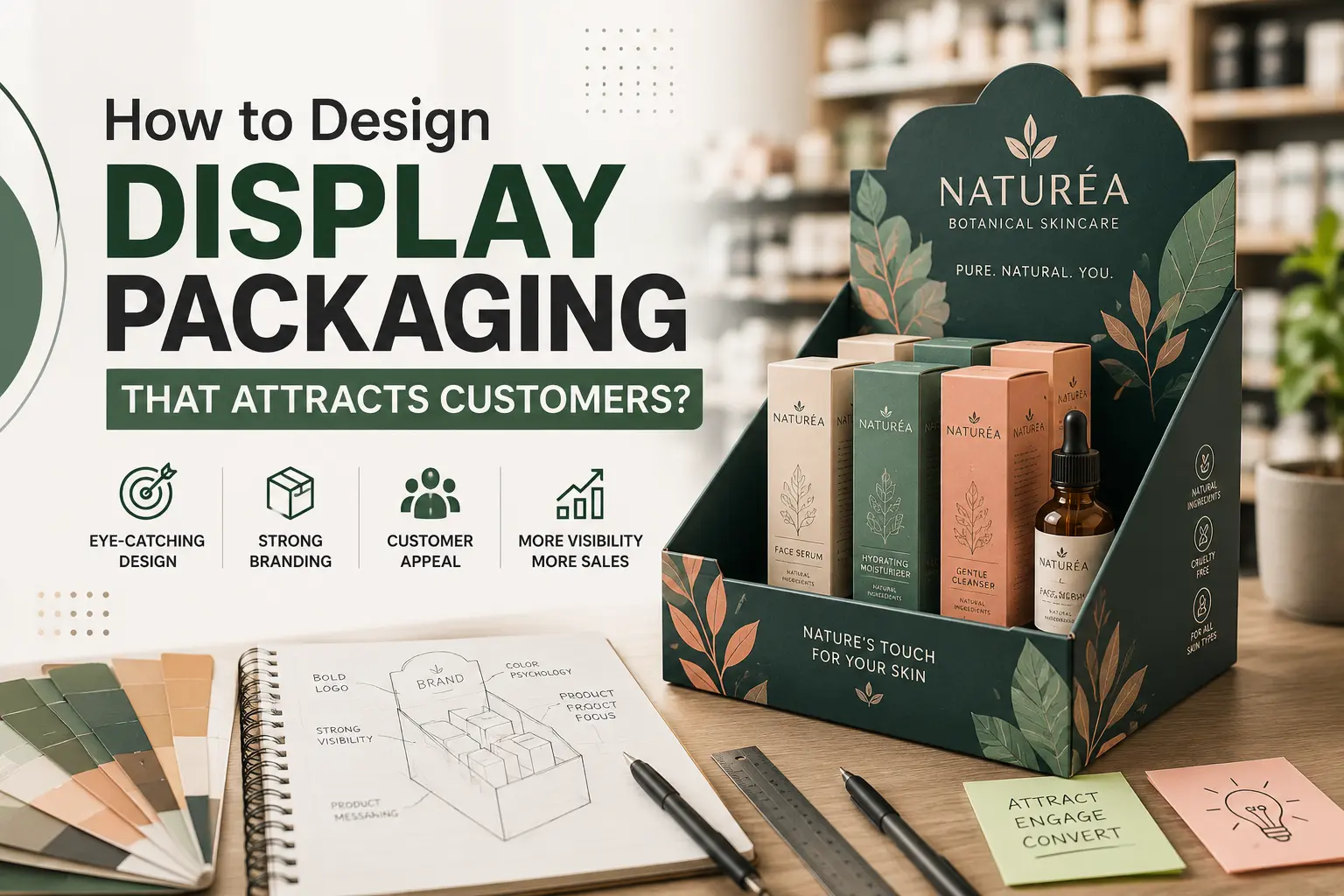
In today’s highly competitive retail environment, having a great product is no longer enough to guarantee sales. Customers are surrounded by countless options every time they walk into a store, and businesses often have only a few seconds to capture their attention. This is why display packaging has evolved into one of the most important marketing tools in modern retail.
Well-designed display packaging does much more than organize products on a shelf. It influences buying decisions, strengthens brand identity, creates memorable shopping experiences, and encourages impulse purchases. In many cases, customers interact with the packaging before they interact with the product itself.
Successful display packaging design combines aesthetics, functionality, psychology, and branding into a single solution that attracts customers and increases conversions. Whether you sell cosmetics, candles, snacks, supplements, electronics, or promotional products, investing in effective retail packaging design can significantly improve your brand’s performance.
This guide explains how to design display packaging that not only looks attractive but also motivates customers to purchase your products.
Understand Your Target Customers Before Designing Anything
One of the biggest mistakes businesses make is designing packaging based on personal preferences instead of customer behavior.
Effective display packaging begins with understanding who will be purchasing the product. Different customer groups respond to different colors, layouts, messaging styles, and visual elements.
Before designing your packaging, ask yourself several important questions.
- Who is the ideal customer?
- What age group are they?
- What type of stores will sell the product?
- What problems does the product solve?
- What emotions should the packaging create?
Customer preferences vary significantly between industries.
For example:
Luxury customers often prefer:
- Minimalist designs
- Elegant typography
- Premium finishes
- Sophisticated colors
Younger audiences may prefer:
- Bright colors
- Bold graphics
- Interactive elements
- Modern typography
Eco-conscious consumers often respond positively to:
- Natural textures
- Earth-tone colors
- Sustainable messaging
- Simple packaging structures
The better you understand your audience, the easier it becomes to create packaging that immediately resonates with them.
Start With a Strong Brand Identity
Many businesses design display packaging without establishing clear brand guidelines. This creates inconsistency that weakens brand recognition.
Your display packaging should instantly communicate who you are as a business.
Customers should be able to recognize your products without reading every detail on the display.
Several branding elements should remain consistent throughout your packaging.
Brand Logo
Your logo should be clearly visible without overwhelming the design.
It should occupy a prominent position that customers can quickly identify from a distance.
Brand Colors
Colors are among the most powerful recognition tools available.
Using consistent colors across all products helps customers identify your brand more easily over time.
Typography
Fonts should align with your brand personality.
Luxury brands often use elegant typography, while modern brands may use clean and simple fonts.
Brand Messaging
Short and memorable messaging helps reinforce your identity.
Examples include:
- Handcrafted Quality
- Sustainably Made
- Premium Ingredients
- Everyday Essentials
Strong brand consistency builds trust and improves long-term recognition.
Choose the Right Display Structure for Your Products
Beautiful graphics alone will not create successful display packaging.
The structure itself plays an equally important role.
The packaging should support the product while making it easy for customers to browse and access items.
Common display structures include:
Countertop Display Boxes
These are designed for checkout counters and impulse purchases.
They work well for:
- Candles
- Cosmetics
- Snacks
- Small accessories
Floor Displays
These are freestanding units placed throughout stores.
They are suitable for:
- Seasonal products
- Product launches
- Bulk products
- Promotional campaigns
Shelf Ready Packaging
These displays transition directly from shipping boxes to retail shelves.
They save labor and improve efficiency.
Choosing the right structure ensures both functionality and customer convenience.
Make Your Products Visible Immediately
Customers should not have to search for your products inside the display.
Visibility is one of the most important principles of effective display packaging design.
The display should showcase products in a way that feels organized and inviting.
Consider these factors.
Product Positioning
Place products where customers can easily see them.
The most popular products should receive the most visible placement.
Product Accessibility
Customers are more likely to purchase products they can easily reach and examine.
Avoid designs that make products difficult to remove.
Open Display Concepts
Open-front displays often perform better because customers can interact with products directly.
The easier the shopping experience, the higher the likelihood of a purchase.
Use Color Psychology to Capture Attention
Color is one of the first things customers notice.
Different colors trigger different emotions and influence purchasing decisions.
Strategic color selection can dramatically improve retail performance.
Blue
Creates feelings of trust, reliability, and professionalism.
Green
Communicates sustainability, health, and natural ingredients.
Black
Represents luxury, sophistication, and exclusivity.
Red
Creates urgency and excitement.
Yellow
Captures attention and promotes positivity.
White
Communicates simplicity, cleanliness, and elegance.
Instead of using too many colors, businesses should establish a primary color palette and maintain consistency.
A cluttered color scheme can overwhelm customers and weaken branding efforts.
Keep the Design Clean and Uncluttered
One of the most common retail packaging design mistakes is trying to communicate too much information at once.
Customers do not read every detail.
They scan packaging quickly and make rapid judgments.
A clean design often performs better than a complicated one.
Focus on essential information such as:
- Brand name
- Product name
- Key benefits
- Short promotional messages
Avoid:
- Excessive text
- Overlapping graphics
- Too many fonts
- Busy backgrounds
White space is equally important.
Strategic empty space helps important elements stand out and improves readability.
Simple designs often appear more professional and trustworthy.
Create Clear Product Hierarchy
Visual hierarchy determines the order in which customers notice information.
Good packaging naturally guides the customer’s eyes through the display.
Important elements should be prioritized.
A common hierarchy includes:
First Level
Brand logo
Second Level
Product name
Third Level
Key benefits
Fourth Level
Supporting information
Customers should understand what the product is within a few seconds.
Strong visual hierarchy simplifies decision-making and reduces confusion.
Write Short and Powerful Marketing Messages
Customers rarely read long paragraphs while shopping.
Messaging should be concise and impactful.
Effective messages include:
- New Arrival
- Limited Edition
- Best Seller
- Eco-Friendly
- Handcrafted
- Premium Quality
Keep messages simple and benefit-focused.
Instead of listing technical features, explain how the product helps customers.
For example:
Instead of:
Contains natural ingredients.
Say:
Made with ingredients that support a healthier lifestyle.
Benefit-driven messaging often converts better than feature-driven messaging.
Design for Impulse Buying
Many retail purchases happen spontaneously.
Display packaging should be designed to encourage these decisions.
Several factors contribute to impulse buying.
Strategic Placement
Displays positioned near checkout areas often perform extremely well.
Promotional Messaging
Limited-time offers create urgency.
Attractive Product Presentation
Customers are more likely to buy products that appear organized and visually appealing.
Accessibility
Easy-to-reach products reduce purchase friction.
Every element should make purchasing feel effortless.
Use High-Quality Images and Graphics
Poor visuals can significantly reduce perceived product quality.
Customers often associate packaging quality with product quality.
Graphics should be:
- High resolution
- Professionally designed
- Relevant to the product
- Consistent with branding
Avoid using generic visuals that fail to communicate uniqueness.
Custom illustrations and product photography often perform better.
Visual consistency strengthens overall brand identity.
Choose Durable Materials That Support Your Design
The best design in the world will fail if the display cannot maintain its structure.
Material selection directly affects customer perception.
Popular display materials include:
Cardboard
Affordable and highly customizable.
Corrugated Board
Durable and ideal for heavier products.
Kraft Materials
Popular for sustainable brands.
Rigid Materials
Used for luxury presentations.
Material choices should align with both product requirements and brand positioning.
Strong materials communicate professionalism and reliability.
Incorporate Sustainability Into Your Packaging Strategy
Modern customers increasingly value environmentally responsible brands.
Sustainable packaging can strengthen brand reputation while attracting eco-conscious consumers.
Consider:
- Recyclable materials
- FSC-certified paper
- Soy-based inks
- Minimal plastic usage
- Reduced material waste
Businesses should communicate these efforts clearly on the display.
Sustainability has become a significant purchasing factor for many consumers.
Test Your Display Before Mass Production
Many businesses skip testing and immediately move into large production runs.
This can be expensive if problems arise later.
Testing helps identify issues before large investments are made.
Evaluate several factors.
Customer Visibility
Can customers immediately notice the product?
Product Accessibility
Can products be removed easily?
Structural Stability
Can the display handle the intended weight?
Branding Effectiveness
Is the brand recognizable from a distance?
Even small adjustments can dramatically improve performance.
Common Display Packaging Design Mistakes to Avoid
Certain mistakes repeatedly reduce packaging effectiveness.
Avoid these common errors.
Overcrowding the Design
Too much information overwhelms customers.
Ignoring Customer Behavior
Packaging should be designed around shopping habits.
Inconsistent Branding
Changing colors and fonts weakens recognition.
Choosing Style Over Functionality
Displays must remain practical.
Poor Material Selection
Weak displays damage customer confidence.
Using Small Text
Customers should be able to read information quickly.
Avoiding these mistakes helps maximize return on investment.
How Great Retail Packaging Design Increases Sales
Effective display packaging influences multiple stages of the customer journey simultaneously.
It helps businesses:
- Attract attention
- Build trust
- Improve recognition
- Encourage interaction
- Increase impulse purchases
- Strengthen customer loyalty
Every positive interaction compounds over time.
Customers begin to recognize your products faster, trust your brand more easily, and return for future purchases.
In competitive retail environments, this advantage can become one of the strongest drivers of long-term growth.
Conclusion
Learning how to design display packaging that attracts customers involves much more than creating an attractive box. Successful display packaging design combines branding, psychology, functionality, and customer behavior into a cohesive strategy that guides purchasing decisions.
Strong retail packaging design helps businesses stand out in crowded stores, increase product visibility, and create memorable shopping experiences that customers remember long after they leave the store.
When businesses invest in customer-focused display packaging, they are not simply improving product presentation. They are building a powerful marketing tool that continuously promotes their brand, strengthens recognition, and contributes to long-term business success.