

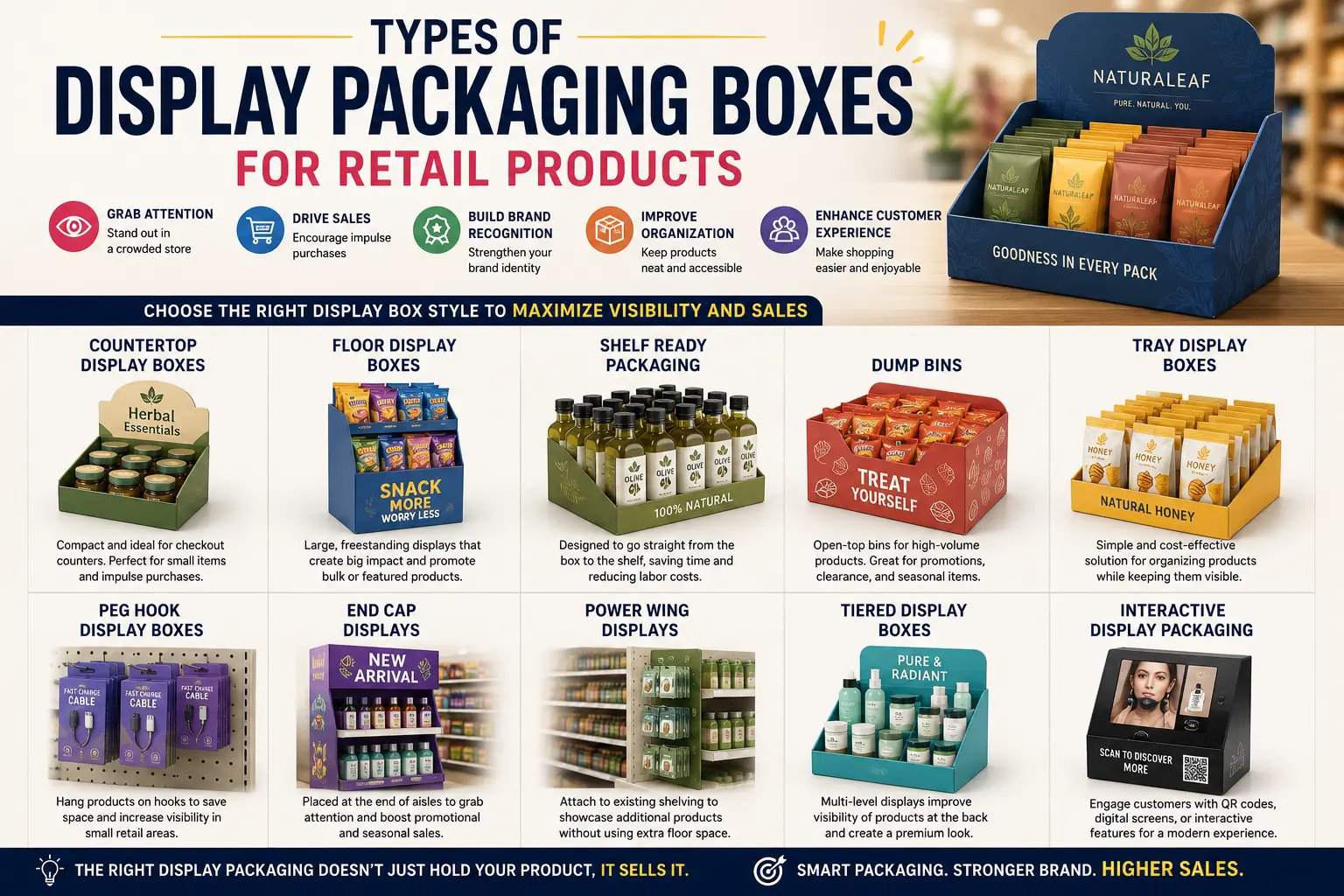
Retail stores are filled with thousands of products competing for customer attention every single day. No matter how good a product is, customers may never notice it if it is not presented effectively. This is why display packaging has become one of the most important components of modern retail marketing.
Display packaging is designed to do much more than simply hold products. It attracts attention, organizes merchandise, communicates brand identity, and encourages customers to make purchasing decisions. In many cases, the display itself becomes a powerful marketing tool that influences buying behavior.
However, not all displays are designed the same way. Different products require different display solutions depending on their size, weight, target audience, retail environment, and promotional goals. Understanding various display box styles can help businesses select the right packaging strategy to maximize visibility and improve sales performance.
This guide explores the most popular retail display packaging types and explains how businesses can use each one effectively.
Why Choosing the Right Display Packaging Matters
Many businesses underestimate how much display packaging can influence customer behavior.
Customers often make purchasing decisions within a matter of seconds. During this short period, product presentation can determine whether a customer notices a product or walks past it entirely.
The right display packaging provides several advantages.
It helps businesses:
- Increase product visibility
- Improve customer engagement
- Strengthen brand recognition
- Encourage impulse purchases
- Organize products efficiently
- Enhance the overall shopping experience
Different display solutions are designed for different objectives. Some displays are created to maximize product exposure at checkout counters, while others are designed to dominate entire store aisles.
Selecting the wrong display can negatively affect sales, customer experience, and brand perception.
Understanding available options allows businesses to create more effective retail strategies.
Countertop Display Boxes
Countertop display boxes are among the most commonly used display box styles in retail stores.
These compact displays are placed near checkout counters, customer service desks, and small shelving units where customers naturally spend time before completing purchases.
Their primary purpose is to encourage impulse buying.
Since customers are already preparing to make a purchase, products displayed at these locations often experience higher conversion rates.
Features of Countertop Display Boxes
Countertop displays typically offer:
- Compact designs
- Lightweight structures
- Easy product access
- Strong branding opportunities
- Quick assembly
These displays are highly customizable and can be designed in various shapes and sizes.
Best Products for Countertop Displays
Countertop displays work particularly well for:
- Candles
- Lip balms
- Cosmetics
- Small electronics
- Chocolates
- Personal care products
- Accessories
Businesses with limited retail space often rely heavily on countertop displays because they deliver strong visibility without occupying large areas.
Floor Display Boxes
Floor display boxes are large freestanding structures placed directly on retail floors.
These displays are specifically designed to attract attention from a distance and showcase larger product quantities.
Unlike countertop displays, floor displays create a stronger visual impact throughout the store.
They are frequently used for:
- Seasonal campaigns
- New product launches
- Promotional events
- High-volume products
Features of Floor Display Boxes
Floor displays provide several advantages.
These include:
- Large branding surfaces
- High product capacity
- Strong visibility
- Greater customization opportunities
- Enhanced customer interaction
Because of their size, they can become dominant visual elements within retail environments.
Best Products for Floor Displays
These displays are ideal for:
- Beverages
- Snacks
- Household products
- Candles
- Toys
- Beauty products
- Promotional merchandise
Businesses often use floor displays to introduce new products and increase brand exposure.
Shelf Ready Packaging
Shelf ready packaging has become increasingly popular among retailers seeking efficiency.
This type of packaging is designed to move directly from shipping cartons to retail shelves with minimal effort.
Store employees simply remove portions of the outer packaging and place the products directly onto shelves.
This saves both time and labor.
Benefits of Shelf Ready Packaging
Shelf ready packaging offers multiple advantages.
These include:
- Faster shelf replenishment
- Improved product organization
- Reduced labor costs
- Cleaner product presentation
- Better inventory management
Retailers appreciate this solution because it simplifies operations while maintaining attractive product displays.
Industries That Commonly Use Shelf Ready Packaging
This packaging is commonly used for:
- Grocery products
- Beverages
- Health supplements
- Personal care products
- Household items
As retailers continue prioritizing efficiency, shelf ready packaging continues to grow in popularity.
Dump Bins
Dump bins are open-top displays designed to hold large quantities of products.
Customers can browse and select items freely without opening boxes or interacting with complicated structures.
These displays are often used for discounted or promotional products.
Features of Dump Bins
Dump bins offer several advantages.
These include:
- High product capacity
- Easy customer access
- Strong promotional opportunities
- Affordable production costs
- Flexible placement
Their casual shopping experience often encourages spontaneous purchases.
Products Commonly Displayed in Dump Bins
These displays are ideal for:
- Toys
- Seasonal products
- Snacks
- Clearance items
- Small packaged goods
Dump bins work particularly well during holiday seasons and promotional campaigns.
Tray Display Boxes
Tray displays are among the simplest retail display packaging types available.
These shallow boxes organize products while keeping them highly visible.
Products are usually arranged in rows for easy browsing.
Benefits of Tray Displays
Tray displays offer several advantages.
These include:
- Simple product organization
- Easy accessibility
- Cost-effective production
- Efficient shelf utilization
Their straightforward design works exceptionally well for frequently purchased products.
Ideal Products for Tray Displays
Tray displays are commonly used for:
- Candy bars
- Small bottles
- Health supplements
- Cosmetics
- Tea products
They provide an effective balance between organization and visibility.
Peg Hook Display Boxes
Peg hook displays are designed to hang products vertically.
These displays feature punched holes that allow products to hang on store hooks.
Vertical displays maximize space efficiency while increasing visibility.
Advantages of Peg Hook Displays
Benefits include:
- Space optimization
- Improved product visibility
- Better organization
- Easy customer access
Retailers frequently use these displays in areas with limited shelf space.
Products Suitable for Peg Displays
Examples include:
- Phone accessories
- Beauty products
- Small tools
- Hardware accessories
- Travel-size products
Vertical arrangements often help customers browse products more efficiently.
End Cap Displays
End cap displays are positioned at the ends of retail aisles.
These locations receive significant customer traffic and offer excellent visibility.
Many retailers reserve these premium spaces for promotional campaigns.
Why End Cap Displays Are Effective
These displays work because customers naturally notice aisle endings while navigating stores.
Benefits include:
- High customer exposure
- Increased impulse purchases
- Premium product placement
- Enhanced promotional opportunities
Brands often pay premium fees to secure end cap locations.
Best Uses for End Cap Displays
They work particularly well for:
- New product launches
- Holiday products
- Best-selling items
- Special promotions
Strong design is especially important because of their high visibility.
Power Wing Displays
Power wing displays attach to existing shelving systems.
These narrow vertical displays provide additional merchandising space without requiring separate floor areas.
Benefits of Power Wing Displays
Advantages include:
- Space efficiency
- Increased product exposure
- Cross-selling opportunities
- Flexible placement
Retailers often place complementary products together using power wings.
Products Commonly Used
Examples include:
- Batteries
- Personal care products
- Accessories
- Seasonal items
Power wings help maximize underutilized retail spaces.
Tiered Display Boxes
Tiered displays organize products across multiple levels.
The stepped arrangement improves visibility because products at the back remain visible to customers.
Advantages of Tiered Displays
Benefits include:
- Better product presentation
- Improved accessibility
- Enhanced visual appeal
- Efficient organization
These displays create a premium appearance without requiring excessive space.
Common Applications
Tiered displays work well for:
- Cosmetics
- Candles
- Gourmet foods
- Gift items
- Beauty products
Businesses often use them to create elegant presentations.
Interactive Display Packaging
Modern retail environments increasingly incorporate interactive elements.
Interactive displays encourage customers to engage directly with products.
Some examples include:
- QR codes
- Product demonstrations
- Digital screens
- Touch-enabled experiences
These displays help brands bridge physical and digital shopping experiences.
Benefits of Interactive Displays
Interactive packaging can:
- Increase customer engagement
- Improve product education
- Strengthen brand recall
- Enhance shopping experiences
This category continues to grow as technology evolves.
How to Choose the Right Display Box Style
Choosing among different retail display packaging types requires careful planning.
Businesses should evaluate several factors before making a decision.
Product Size and Weight
Heavy products require stronger display structures.
Lightweight products offer greater flexibility.
Store Environment
Large supermarkets can accommodate floor displays.
Small boutiques may benefit from countertop displays.
Marketing Objectives
Different goals require different solutions.
Objectives may include:
- Brand awareness
- Product launches
- Promotional campaigns
- Impulse purchases
Budget Considerations
Businesses should balance visual impact with production costs.
Expensive displays are not always necessary to achieve strong results.
Choosing the right solution depends on aligning business goals with customer behavior.
Common Mistakes Businesses Make With Display Packaging
Many businesses reduce display effectiveness by making avoidable mistakes.
Common errors include:
Choosing the Wrong Display Type
Not every product belongs in every display.
Overcrowding Products
Too many products create visual confusion.
Ignoring Customer Accessibility
Products should always be easy to reach.
Inconsistent Branding
Displays should match overall brand identity.
Weak Structural Design
Poor-quality displays can damage customer trust.
Avoiding these mistakes helps maximize return on investment.
The Future of Retail Display Packaging
Retail environments continue to evolve as customer expectations change.
Future trends are focusing on:
- Sustainable materials
- Interactive technology
- Minimalist designs
- Smart packaging
- Digital integration
Businesses that adapt to these trends will remain competitive and continue attracting customers.
Display packaging will increasingly become a combination of marketing, branding, and customer experience.
Conclusion
Understanding different display box styles allows businesses to create more effective retail strategies that attract customers and improve sales performance. From countertop display boxes and floor displays to shelf ready packaging and interactive solutions, each option serves a unique purpose within the customer journey.
Choosing the right retail display packaging types helps businesses increase visibility, strengthen brand recognition, and create memorable shopping experiences. In today’s competitive retail landscape, strategic display packaging is no longer optional. It has become an essential tool for influencing customer behavior and building long-term business growth.