

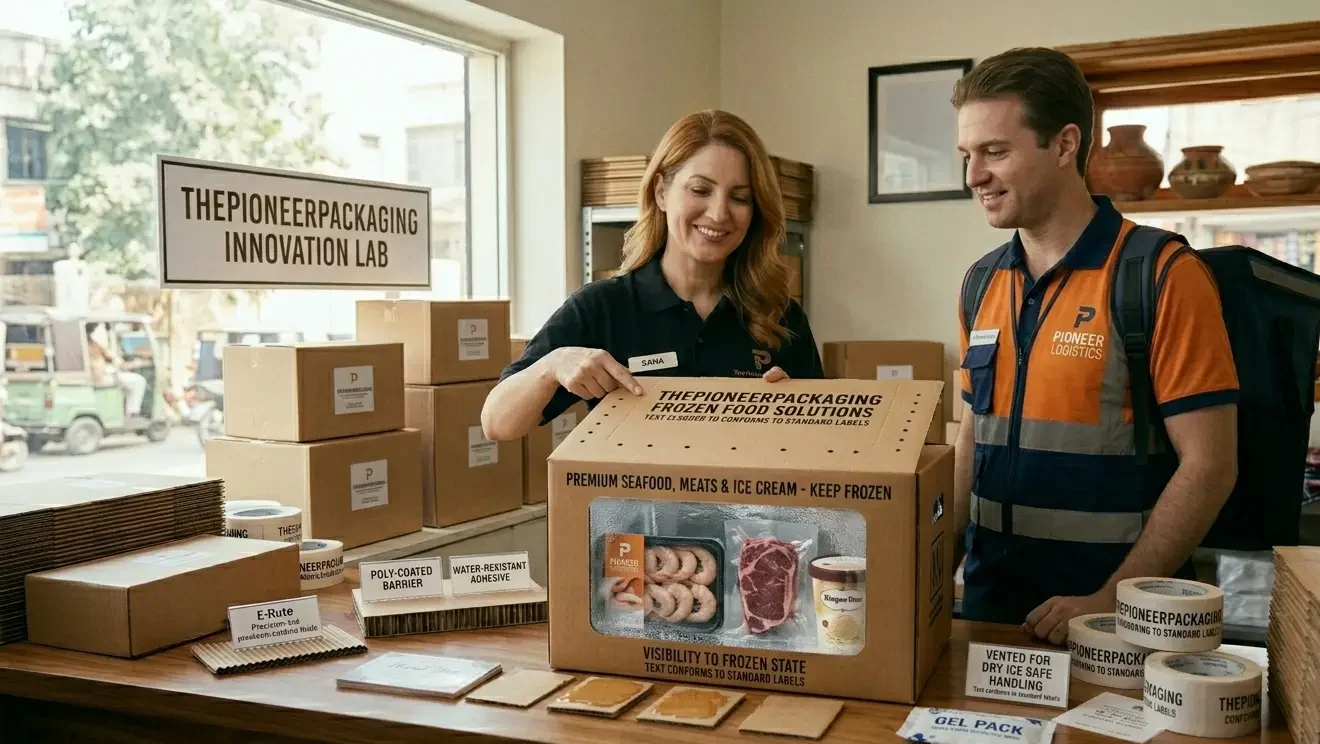
Picture your frozen shrimp, or a pint of small-batch ice cream, showing up on somebody’s porch half melted in a box that’s gone soft and soggy. That’s the one that keeps frozen food brands up at night, because it means a refund and probably a nasty review, and that customer isn’t coming back.
This guide is about corrugated packaging for frozen food shipping and how to keep that from happening. We’re a custom packaging shop, not a cold-chain lab, so we’ll tell you what we know about boxes and be upfront where the answer depends on your product and your carrier.
What Is Corrugated Packaging for Frozen Food Shipping?
How Corrugated Packaging Works in Cold-Chain Logistics
Ever torn a cardboard box and looked at the edge? Wavy paper squished between two flat sheets. That wave traps air, and air is your friend here.
B-flute if it needs cushion. E-flute if you care more about print. We go back and forth on this with clients all the time.
Why Frozen Foods Require Specialized Packaging
Anything frozen gets cranky once it warms past 0°F (-18°C) for a while. Grainy ice cream, nobody wants that.
And the box sweats. Like your iced tea glass on the porch in July. Wet cardboard? Goes floppy quick.
Types of Frozen Foods Commonly Shipped in Corrugated Packaging
- shrimp and fish, lobster tails sometimes
- steaks, ground beef, chicken
- ice cream and frozen desserts
- ready meals and meal kits
Common Shipping Failures Caused by Poor Packaging
We hear about the same few over and over. The box gets damp and caves in under the boxes stacked on top of it. The product thaws partway. Or air gets in and you get freezer burn, which honestly looks awful when the customer opens it.
Best Corrugated Materials for Frozen Food Packaging
Single-Wall vs Double-Wall Corrugated: Which Performs Better?
Shipping something light across town? Single-wall is fine. Anything heavy, or going far, or stacked six high in a cold room, we’d put in double-wall and not think twice about it. Our guide on single, double and triple wall corrugated boxes goes deeper on that.
Double-wall does cost more. One saved refund usually pays for a lot of boxes though.
Moisture-Resistant Corrugated Board Explained
- Wax-coated board: the old standby, keeps water out but it’s a headache to recycle
- Poly-coated liners: really good in damp, humid conditions
- Water-resistant adhesives: stop the layers peeling apart when the box sweats
Which one? Depends how long it’s on the road and how wet things get.
Insulated Corrugated Packaging Options
You’ll see thermal liners, foil-faced bubble and insulated inserts sold for this. We don’t make those ourselves, to be clear. They sit inside the corrugated box we print, and together they hold cold way longer.
Food-Grade Compliance and FDA Considerations
Food-contact rules apply to whatever touches the food. Usually that’s your own bag or tray, not our box, so the paperwork question goes to your liner or film supplier.
Need packaging built for frozen transit? Send us your product size and where it’s going, and we’ll suggest a board and size for the outer box.
How to Maintain Cold Chain Integrity During Shipping
How Long Can Frozen Food Stay Cold in Corrugated Packaging?
We get asked this constantly and the honest answer is, it depends on your route. A decent insulated setup might hold frozen for a day, maybe a few, but August in Phoenix is not March in Maine. Pack a test box, ship it to a friend, and see.
Using Dry Ice with Corrugated Boxes
Dry ice is great but it turns into CO2 gas as it warms up, and that gas has to go somewhere. So don’t seal it airtight. Your carrier will also have rules on labels and how much you can send, so read those first.
Gel Packs vs Dry Ice: Which Is Better?
Gel packs are easy and safe and you can reuse them. Dry ice is colder and lasts longer. For ice cream going cross-country we’d lean dry ice, for frozen cookie dough going two states over, gel packs are probably plenty.
Preventing Condensation and Moisture Damage
Liner, absorbent pad, good tape. Dry ice? Leave it a tiny bit of breathing room.
Packaging Mistakes That Cause Frozen Food Thawing
The big one is a box that’s too big. All that empty air warms up and eats your cold. After that it’s gaps in the insulation at the corners, and just not packing enough coolant for how long the trip really takes (not how long the carrier says).
Corrugated vs Foam Packaging for Frozen Food Shipping
Thermal Performance Comparison
On a lot of one and two day deliveries, insulated corrugated holds up well against an EPS foam cooler. Foam still wins on very long trips or brutal heat. That gap gets smaller every year.
Sustainability Comparison
Not even close, corrugated wins. People can put it at the curb. Foam is getting banned or restricted in more and more places and almost nobody can recycle it at home.
Shipping Cost Comparison
Carriers charge by size too, not just weight. A snug corrugated box usually wins there.
Which Industries Still Prefer EPS Foam and Why?
Some seafood exporters and pharma shippers still go with foam on long international routes. A lot of them are testing corrugated now because their customers keep asking.
Why Many Brands Are Switching to Insulated Corrugated Packaging
Customers want less foam. Retailers do too, and some cities are making it a rule. Corrugated also gives you a printable box instead of a white cooler, which is a nice bonus.
Sustainable Corrugated Packaging for Frozen Foods
Recyclable Insulation Alternatives to Foam
We’re seeing more paper liners and molded fiber lately. Some go right in the bin with the box.
How Sustainability Influences Consumer Buying Decisions
Ever tried snapping a foam cooler in half to fit the trash can? Your customers have, and they’ll notice sustainable packaging when you switch.
Certifications That Improve Packaging Credibility
Keep any sourcing paperwork your mill gives you. And don’t print a green claim on the box unless you can prove it, the FTC does care about that.
Balancing Sustainability with Thermal Protection
Sometimes the best-insulating liner is the worst for recycling. Annoying, but true. Ship a few test boxes and pick.
Compare insulated corrugated packaging options for your frozen food business.
Designing Custom Corrugated Packaging for Frozen Food Brands
How Custom Packaging Improves Shipping Efficiency
When the box fits, there’s less air to warm up and less dimensional weight to pay for. That’s the main reason we size our custom frozen food boxes to the product.
Branding Opportunities in Frozen Food Packaging
We’d print the inside flap with storage tips. Folks actually read it while unpacking.
Structural Design Features That Improve Durability
Corners crush first, so reinforce those. Locking flaps too if it gets stacked a lot.
Questions to Ask a Packaging Supplier Before Ordering
- What board and flute would you use for my weight and route?
- How low can I go on quantity, and how fast?
- Will you send a sample so I can freeze it and abuse it?
Our answers, if you’re curious: we’ll recommend a board, minimums are often around 50 boxes depending on the style, production is 10 to 12 business days after proof approval, and yes, you can get a sample.
Cost Factors in Frozen Food Corrugated Packaging
What Impacts Packaging Costs Most?
Mostly board thickness, insulation and box size, with print after that. Balance them and you’re not paying for protection you don’t need.
How to Reduce Frozen Shipping Costs Without Sacrificing Quality
Fewer box sizes, honestly. Most brands we see have five when two would do.
Hidden Costs Businesses Overlook
Spoiled food. The refund. A one-star review, and a customer who quietly never orders again. All of that costs more than a better box would have.
ROI of High-Performance Packaging
Better boxes mean fewer claims and less tossed product, and the customer orders again. It just doesn’t show up neatly on the packaging line of your budget.
Best Practices for Shipping Frozen Food Successfully
Pre-conditioning Products Before Shipping
Get it as cold as it safely goes before it goes in the box. More cold going in, more time on the road.
Choosing the Right Box Size
Snug, with room for the coolant. That’s it really.
Proper Refrigerant Placement
Cold sinks, so don’t put all the gel packs on top and call it a day. Spread them around the product.
Sealing Techniques That Preserve Temperature
Good tape on every seam. Corners and the lid leak the most, so we’d add a bit of extra insulation there.
Labeling Requirements for Frozen Shipments
Big “Keep Frozen” print and some arrows. Carriers move fast and won’t read small text.
Carrier Considerations for Frozen Deliveries
Pick a fast service. And maybe don’t ship on a Thursday, since a weekend sitting in some depot can wreck the whole order.
FAQ: Corrugated Packaging for Frozen Food Shipping
What is the best packaging for shipping frozen food? For most brands we’d say an insulated double-wall corrugated box with enough coolant and a moisture barrier.
Can corrugated boxes keep food frozen during shipping? Yep, with proper insulation and coolant, often for a day or a few days. Weather and route change that a lot, so test it.
How do you prevent frozen food from thawing in transit? Freeze it rock hard before packing, and don’t ship slow.
Are insulated corrugated boxes better than foam coolers? For shorter trips, often yes. They’re easier to recycle too, and you can print on them.
What type of corrugated board is best for cold storage? We’d go double-wall with something moisture resistant on it, like a poly-coated liner.
How long does dry ice last in corrugated packaging? Hard to say without knowing how much you pack and how hot it is outside. More insulation helps it last.
Is corrugated packaging recyclable for frozen shipping? Plain corrugated, yes, almost everywhere. Waxed board is trickier.
How do you stop moisture damage in frozen food boxes? A coated liner and an absorbent pad, plus a decent seal. Leave a little venting if dry ice is involved.
What are the FDA requirements for frozen food packaging? That’s one for the FDA’s own site, honestly, and your film supplier. We’d hate to guess on your behalf.
What is the cheapest way to ship frozen food safely? Smaller boxes. Seriously, that’s most of it. Just don’t skimp on insulation.
Conclusion
Corrugated packaging for frozen food shipping has gotten a lot better. Ours included, we like to think.
Key Takeaways:
- double-wall and insulated setups beat a plain box
- condensation is sneaky, so use barriers and some venting
- greener liners work fine now
- right-sizing saves money and keeps cold in
- test real routes before you scale
Ready to sort out your frozen shipping boxes?
Get quote or just send us your product size and how far it goes. Dieline and artwork setup is free, and ground shipping on your boxes is free anywhere in the USA.
Where to Go Next
Popular options for this topic include custom mailer boxes and product packaging boxes. Related guides: corrugated boxes for food delivery businesses and how long does food last in mylar bags? complete food storage shelf life chart.