

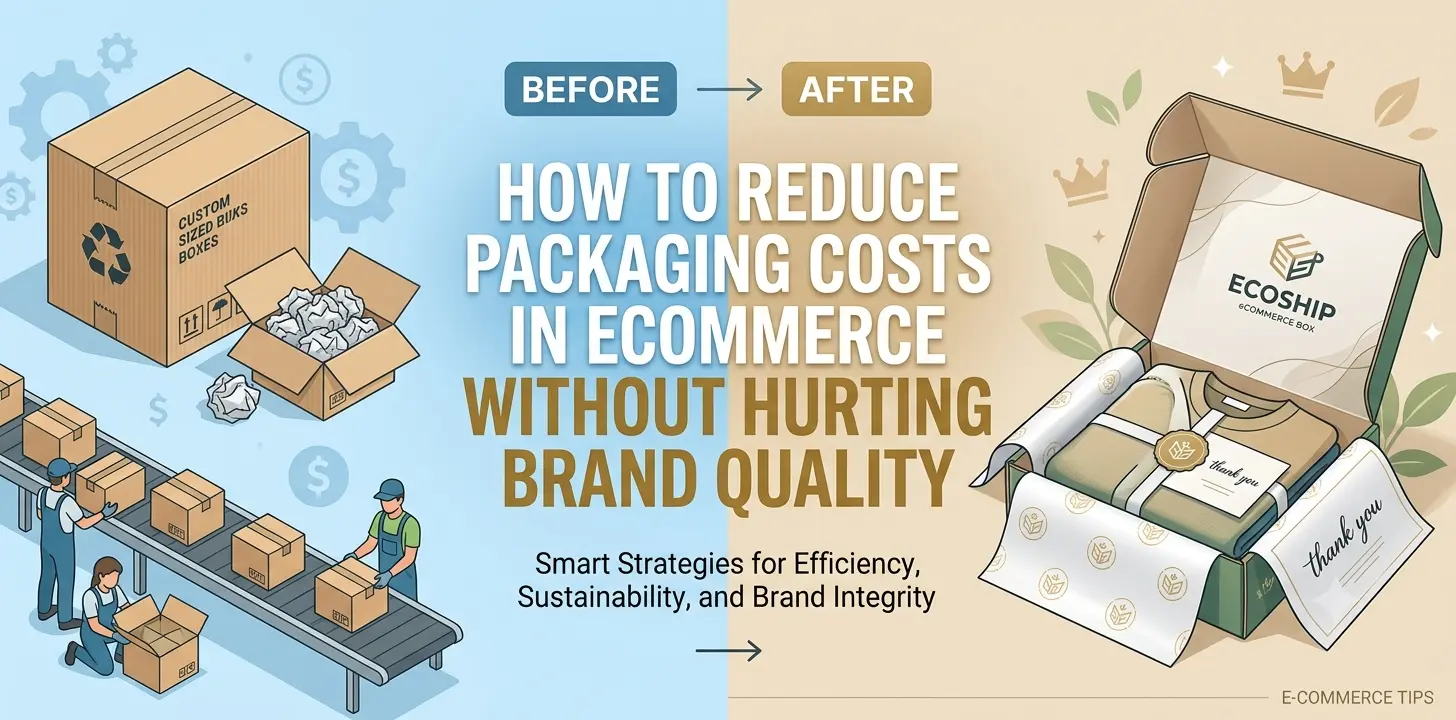
Packaging is one of the most underestimated cost centers in eCommerce. While most businesses focus on product sourcing and advertising, packaging quietly impacts profit margins, shipping expenses, return rates, and customer experience all at once.
The challenge is simple: how do you reduce packaging costs without making your brand look cheap or reducing product protection?
The answer lies in smarter design, material optimization, and strategic packaging decisions—not cutting corners.
Why Packaging Costs Matter More Than You Think
Packaging is not just a “box cost.” It includes:
- Material costs (boxes, inserts, fillers)
- Printing and branding costs
- Shipping and dimensional weight charges
- Damage-related replacement costs
- Storage and warehousing costs
Even small improvements in packaging efficiency can lead to significant long-term savings.
1. Switch to Right-Sized Packaging (Biggest Cost Saver)
Oversized packaging is one of the most expensive mistakes in eCommerce.
Why It Increases Costs:
- Higher dimensional weight (DIM) charges
- More filler materials needed
- Increased shipping volume
- Inefficient warehouse storage
How to Fix It:
- Design custom boxes based on exact product dimensions
- Reduce empty space inside packaging
- Eliminate unnecessary oversized stock boxes
Right-sized packaging alone can reduce shipping costs significantly while improving product safety.
2. Optimize Material Selection Without Losing Strength
Not all packaging materials are equal in cost or performance.
Common Material Options:
- E-flute corrugated (light, cost-efficient)
- B-flute corrugated (stronger, balanced)
- Kraft packaging (eco-friendly and affordable)
- Rigid boxes (premium but expensive)
Smart Strategy:
Use stronger materials only where needed. Many products do not require premium packaging strength.
Matching material to product type reduces unnecessary cost.
3. Reduce Printing Complexity
High-end packaging printing can significantly increase costs if not optimized.
Cost-Heavy Features:
- Full-color exterior + interior printing
- Multiple finishing layers
- Foil stamping and embossing on every unit
- Large ink coverage designs
Cost-Effective Alternatives:
- Minimalist branding
- Single-color printing
- Inside-only branding for impact
- Selective premium finishes only for hero products
Less can often mean more—both in cost and brand perception.
4. Eliminate Excess Void Fill Materials
Many businesses overuse packaging fillers without realizing the cost impact.
Common Fillers:
- Bubble wrap
- Air pillows
- Foam inserts
- Kraft paper
How to Reduce Costs:
- Use snug-fit custom boxes
- Design internal inserts only where necessary
- Replace plastic fillers with molded cardboard solutions
Better box design reduces the need for fillers entirely.
5. Standardize Packaging Sizes Across Products
Using too many box sizes increases:
- Inventory complexity
- Production costs
- Storage inefficiency
- Ordering minimums
Best Practice:
Create a small set of modular box sizes that fit multiple products.
This reduces manufacturing complexity and improves bulk pricing power.
6. Use Lightweight Packaging Materials Strategically
Weight directly affects shipping cost.
Lightweight Options:
- Thin corrugated board (for low-risk products)
- Paper-based inserts instead of foam
- Lightweight mailers for soft goods
Reducing package weight lowers shipping fees without affecting protection when designed correctly.
7. Reduce Return Rates Through Better Packaging Design
Returns are one of the hidden packaging-related costs.
How Packaging Impacts Returns:
- Damaged packaging leads to refunds
- Poor protection increases breakage
- Confusing unboxing creates dissatisfaction
Cost-Saving Fix:
- Improve internal product fit
- Strengthen fragile product protection
- Use inserts to prevent movement
Fewer returns = direct cost savings.
8. Choose Eco-Friendly Materials That Reduce Waste Costs
Sustainable packaging is not just good for branding—it can also reduce long-term costs.
Benefits:
- Lower material waste
- Reduced disposal costs
- Lightweight structures
- Improved customer perception
Kraft and recycled materials are often more cost-efficient than premium coated packaging.
9. Avoid Over-Engineering Your Packaging
Some brands spend too much on unnecessary structural complexity.
Examples of Over-Engineering:
- Magnetic closures for low-value items
- Multi-layer rigid boxes for simple products
- Excessively complex folding structures
Smart Approach:
Match packaging complexity with product value.
Simple products should use simple packaging.
10. Improve Supplier Strategy and Bulk Ordering
Packaging cost is heavily influenced by supplier decisions.
Cost Reduction Tips:
- Order in bulk when demand is stable
- Work with manufacturers offering low MOQs
- Standardize designs to reduce tooling costs
- Avoid frequent design changes
Consistency leads to better pricing and production efficiency.
Final Thoughts
Reducing packaging costs in eCommerce is not about using cheaper materials or cutting corners. It is about smarter engineering, better sizing, and more efficient design choices.
The most successful brands focus on:
- Right-sized packaging
- Optimized material selection
- Simplified printing
- Reduced filler usage
- Standardized box systems
When packaging is designed strategically, it becomes a cost-saving system rather than an expense burden.
Build Cost-Efficient Custom Packaging That Performs
If you want to reduce packaging costs without damaging your brand image, focus on:
- Custom box sizing optimization
- Lightweight structural design
- Minimalist branding strategy
- Eco-friendly material selection
- Smart packaging standardization
Better packaging design doesn’t just save money—it improves profitability, customer experience, and long-term brand growth.