

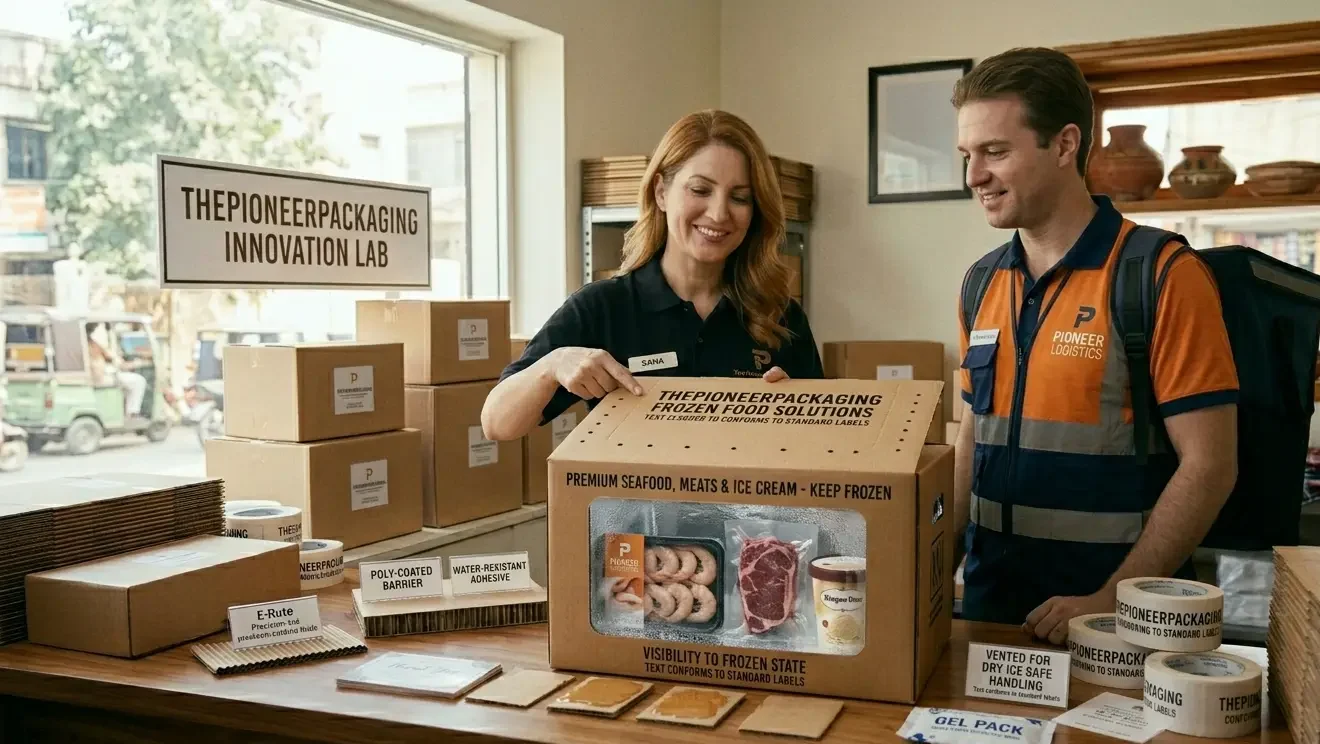
Your premium frozen seafood, ice cream, or meal kit arrives partially thawed, damaged, or soaked. For frozen food brands and e-commerce sellers, this nightmare scenario destroys customer trust, triggers refunds, and damages your reputation fast.
In this complete guide, you’ll discover how corrugated packaging for frozen food shipping solves these challenges. You’ll learn the best materials, proven cold-chain strategies, sustainability options, and smart ways to cut costs while protecting product integrity. By the end, you’ll know exactly how to ship frozen goods safely, sustainably, and profitably.
What Is Corrugated Packaging for Frozen Food Shipping?
How Corrugated Packaging Works in Cold-Chain Logistics
Corrugated board consists of liner sheets sandwiching a fluted (wavy) medium. This structure creates air pockets that provide natural cushioning, stacking strength, and thermal buffering essential for temperature-sensitive frozen products.
The flute design directly impacts performance. Larger flutes offer better insulation and shock absorption, while smaller flutes improve printability and space efficiency.
Why Frozen Foods Require Specialized Packaging
Frozen foods are highly sensitive to temperature fluctuations. Even brief exposure above 0°F (-18°C) can cause thawing, texture degradation, and bacterial risks.
Condensation forms easily when cold surfaces meet warmer air during transit. Long-distance shipping adds vibration, stacking pressure, and variable ambient temperatures that demand robust, moisture-resistant solutions.
Types of Frozen Foods Commonly Shipped in Corrugated Packaging
- Seafood: Shrimp, fish fillets, and lobster tails
- Frozen Meat: Steaks, ground beef, and poultry
- Ice Cream and frozen desserts
- Prepared Meals and ready-to-eat options
- Meal Kits with multiple temperature-sensitive components
Common Shipping Failures Caused by Poor Packaging
- Box collapse under stacking or moisture weight
- Water absorption leading to structural failure
- Partial or full product thawing
- Freezer burn from inconsistent temperatures and air exposure
Best Corrugated Materials for Frozen Food Packaging
Single-Wall vs Double-Wall Corrugated: Which Performs Better?
Single-wall corrugated works for shorter, lighter shipments with moderate protection needs. Double-wall offers superior compression strength and durability, making it the better choice for heavy loads, long-haul shipping, or stacked pallets in cold storage.
While double-wall costs more upfront, it reduces damage claims and often delivers better overall value.
Moisture-Resistant Corrugated Board Explained
- Wax-coated board: Traditional barrier against moisture but less eco-friendly
- Poly-coated liners: Excellent water resistance with strong performance in humid conditions
- Water-resistant adhesives: Prevent delamination when exposed to condensation
These treatments keep boxes rigid even in challenging cold-chain environments.
Insulated Corrugated Packaging Options
Advanced solutions include thermal liners, reflective foil barriers, and hybrid systems that combine corrugated strength with high-performance insulation. These maintain frozen temperatures far longer than standard boxes.
Food-Grade Compliance and FDA Considerations
Always select materials tested for direct or indirect food contact. Look for FDA-compliant liners, low-migration properties, and full traceability. Proper compliance prevents contamination risks and meets strict import/export regulations.
Need packaging engineered for frozen transit? Request a custom packaging consultation tailored to your product line.
How to Maintain Cold Chain Integrity During Shipping
How Long Can Frozen Food Stay Cold in Corrugated Packaging?
Transit duration, ambient temperature, insulation thickness, and refrigerant quantity all play major roles. Well-designed insulated corrugated systems can maintain frozen temperatures for 24–72+ hours depending on external conditions.
Using Dry Ice with Corrugated Boxes
Dry ice provides powerful cooling but requires proper ventilation to prevent pressure buildup and CO2 hazards. Use food-grade, vented corrugated designs and follow carrier regulations strictly.
Gel Packs vs Dry Ice: Which Is Better?
Gel packs are safer, reusable, and easier to handle for many applications. Dry ice offers deeper, longer-lasting cold for ultra-sensitive or long-haul shipments. Choose based on product type, transit time, and cost considerations.
Preventing Condensation and Moisture Damage
Use barrier liners, absorbent pads, and balanced ventilation. Proper sealing techniques minimize warm air entry while allowing necessary pressure equalization.
Packaging Mistakes That Cause Frozen Food Thawing
- Wrong box size creating excessive void space
- Poor insulation sealing around lids and corners
- Inadequate refrigerant quantity for the journey length
Corrugated vs Foam Packaging for Frozen Food Shipping
Thermal Performance Comparison
Insulated corrugated packaging now rivals EPS foam in many scenarios, especially for 24–48 hour deliveries. Foam still edges out in extreme long-haul or high-ambient conditions, but modern corrugated hybrids close the gap quickly.
Sustainability Comparison
Corrugated wins decisively here. It is widely recyclable, uses high recycled content, and enjoys strong positive consumer perception. Foam (EPS) faces growing restrictions and recycling challenges.
Shipping Cost Comparison
Corrugated often reduces dimensional weight fees and improves pallet efficiency. While material costs vary, overall freight savings and lower damage rates frequently favor corrugated solutions.
Which Industries Still Prefer EPS Foam and Why?
Seafood exporters and pharmaceutical shippers sometimes choose foam for maximum thermal protection on very long international routes. However, many are actively testing corrugated alternatives due to sustainability mandates.
Why Many Brands Are Switching to Insulated Corrugated Packaging
Brands face mounting pressure from consumers, retailers, and regulations. Corrugated delivers excellent performance plus superior branding opportunities and environmental credentials.
Sustainable Corrugated Packaging for Frozen Foods
Recyclable Insulation Alternatives to Foam
Paper-based liners, molded fiber insulation, and advanced recyclable thermal inserts are replacing foam. These options maintain strong thermal performance while being fully recyclable in standard streams.
How Sustainability Influences Consumer Buying Decisions
Eco-conscious customers trust and prefer brands using sustainable packaging. Beautiful, green unboxing experiences boost loyalty and encourage premium pricing.
Certifications That Improve Packaging Credibility
- FSC certification for responsible forestry
- SFI certification for fiber sourcing
- Clear recyclability labels and claims
Balancing Sustainability with Thermal Protection
Tradeoffs exist between maximum insulation and full recyclability. Smart hybrid designs minimize these compromises. Rigorous performance testing ensures your packaging meets both environmental and functional goals.
Compare insulated corrugated packaging options for your frozen food business.
Designing Custom Corrugated Packaging for Frozen Food Brands
How Custom Packaging Improves Shipping Efficiency
Custom sizing reduces void space, improves thermal retention, and lowers shipping costs through better dimensional weight optimization.
Branding Opportunities in Frozen Food Packaging
High-quality printed corrugated packaging creates memorable unboxing experiences. Use it to communicate quality, safety, and brand values that build consumer trust.
Structural Design Features That Improve Durability
Reinforced corners, locking flaps, and leak-resistant construction dramatically increase performance under cold, moist, and stacked conditions.
Questions to Ask a Packaging Supplier Before Ordering
- Can you provide thermal testing data for my specific products?
- What are your MOQ requirements and lead times?
- Which material certifications can you provide?
Cost Factors in Frozen Food Corrugated Packaging
What Impacts Packaging Costs Most?
Material thickness, insulation type, custom printing, and overall box dimensions are the primary drivers. Optimizing these factors delivers the best balance of protection and price.
How to Reduce Frozen Shipping Costs Without Sacrificing Quality
Right-size boxes, standardize designs, optimize pallet configurations, and use zone-based shipping strategies. Small design tweaks often yield significant savings.
Hidden Costs Businesses Overlook
Product spoilage, customer refunds, negative reviews, and lost lifetime value from failed deliveries can dwarf packaging expenses.
ROI of High-Performance Packaging
Superior corrugated solutions reduce claims, improve customer retention, and protect product integrity delivering strong returns through fewer headaches and higher satisfaction.
Best Practices for Shipping Frozen Food Successfully
Pre-conditioning Products Before Shipping
Fully freeze products to the lowest safe temperature before packing. This creates a larger thermal buffer during transit.
Choosing the Right Box Size
Minimize air space while allowing proper refrigerant placement. Too large or too small both create problems.
Proper Refrigerant Placement
Distribute gel packs or dry ice evenly around the product never place everything on top only.
Sealing Techniques That Preserve Temperature
Use strong tape on all seams and consider additional insulation wraps on lids and corners.
Labeling Requirements for Frozen Shipments
Clear “Keep Frozen” labels, handling instructions, and orientation arrows prevent mishandling by carriers.
Carrier Considerations for Frozen Deliveries
Choose carriers with proven refrigerated or expedited options. Monitor transit times and have contingency plans for delays.
FAQ: Corrugated Packaging for Frozen Food Shipping
What is the best packaging for shipping frozen food? Insulated double-wall corrugated boxes with proper refrigerants and moisture barriers currently offer the best combination of protection, sustainability, and branding.
Can corrugated boxes keep food frozen during shipping? Yes, when using insulated corrugated designs with adequate refrigerants, they maintain frozen temperatures effectively for 24–72 hours depending on conditions.
How do you prevent frozen food from thawing in transit? Pre-condition products, use correctly sized insulated boxes, distribute refrigerants properly, minimize void space, and choose reliable carriers.
Are insulated corrugated boxes better than foam coolers? For many shipments, yes they offer comparable thermal performance with far better sustainability, branding, and shipping efficiency.
What type of corrugated board is best for cold storage? Moisture-resistant double-wall board with poly-coated liners or advanced water-resistant treatments performs best in frozen and cold-chain applications.
How long does dry ice last in corrugated packaging? Duration depends on quantity, insulation quality, and external temperature. Proper venting and insulation can extend effectiveness significantly.
Is corrugated packaging recyclable for frozen shipping? Yes. Most high-quality corrugated used in frozen shipping is recyclable. Many modern insulated versions are designed for standard recycling streams.
How do you stop moisture damage in frozen food boxes? Use poly-coated or wax-coated liners, absorbent pads, and proper sealing combined with balanced ventilation.
What are the FDA requirements for frozen food packaging? Materials must be food-grade, prevent contamination, and comply with migration limits. Suppliers should provide compliance documentation.
What is the cheapest way to ship frozen food safely? Optimize package size, standardize designs, use efficient refrigerants, and negotiate bulk rates with reliable carriers while maintaining necessary insulation performance.
Conclusion
Corrugated packaging for frozen food shipping has evolved into a high-performance, sustainable solution that protects products, delights customers, and supports profitable growth. From moisture-resistant boards to custom insulated designs, the right packaging prevents thawing, reduces waste, and strengthens your brand.
Key Takeaways:
- Double-wall and insulated corrugated outperform standard boxes in cold chain
- Proper ventilation and barriers are essential against condensation
- Sustainable options now deliver excellent thermal performance
- Custom design and right-sizing deliver major cost and efficiency gains
- Testing and certifications build credibility and reduce risk
Ready to upgrade your frozen shipping system?
Get quote or Request a custom packaging consultation, compare insulated corrugated options, or get a free cold-chain packaging audit for your business. Protect your products, impress your customers, and grow with confidence.