Retail is mostly a fight for the shopper’s eyes, and good display packaging wins a surprising share of that fight. Lip balm, candles, gummies, phone cables, it doesn’t really matter what you sell. Where it sits in the store and what it sits in changes how often somebody grabs it.
Most brands end up choosing between two formats: a countertop display box or a floor display. Same job, honestly, but they differ a lot in size, placement and cost.
What Are Countertop Display Boxes?
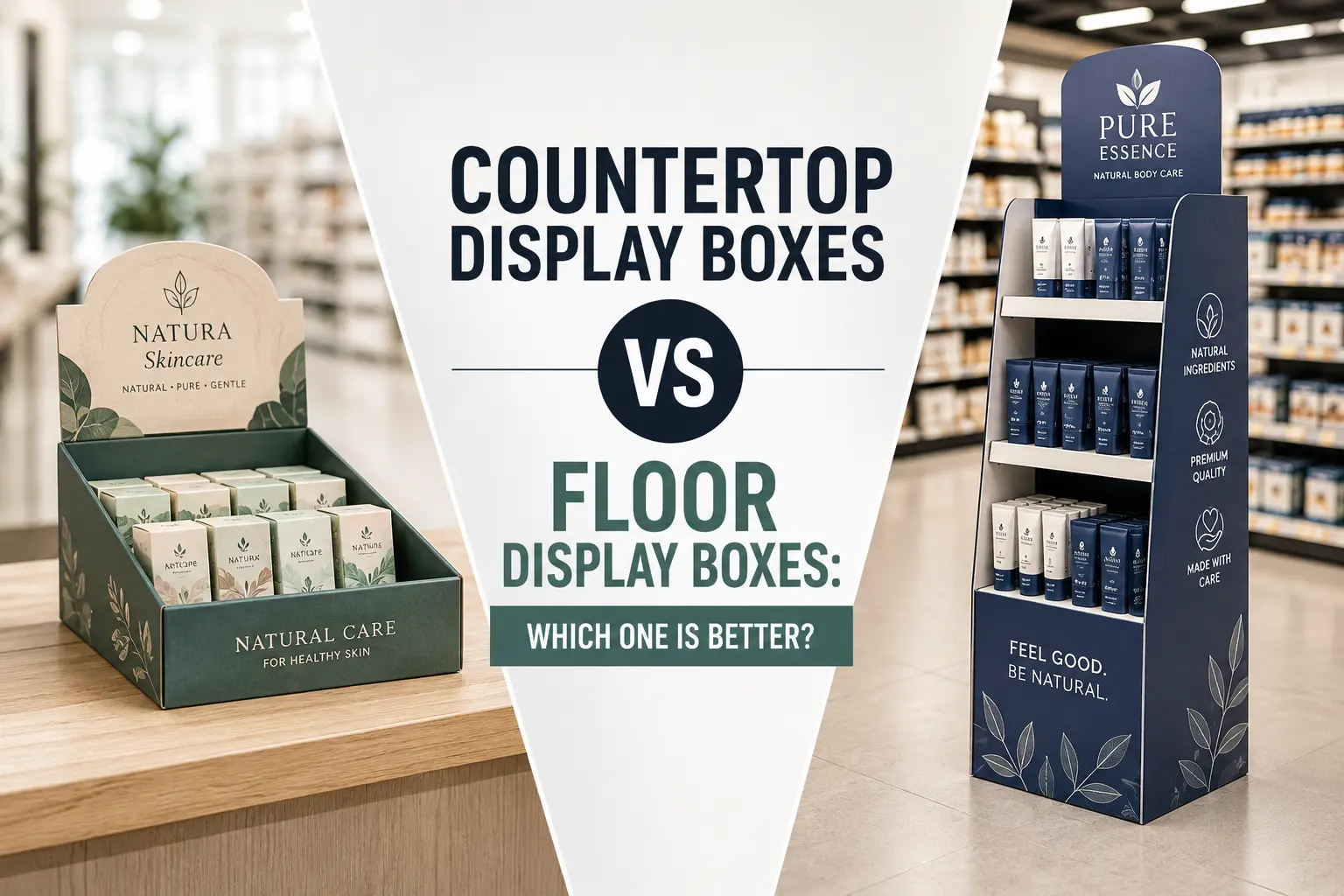
Small. A countertop display box is a little tray or open carton that sits by the register, on a checkout desk or on a short shelf, holding maybe 12 to 24 units right where people are already standing with their wallet out.
Key Features of Countertop Display Boxes
Most are folded from one piece of SBS board or E-flute corrugated, with a tall printed header card at the back and a front lip low enough to see the product. They pop together in under a minute. Store staff can move them around without asking anyone, and the whole thing is one big printable surface for your logo.
Common Uses
Lip balm is the classic one. We also print a lot of these for chocolate bars and lighters and travel-size skincare, basically anything light and cheap that a person adds to the pile while the cashier is scanning.
Advantages of Countertop Display Boxes
People buy on a whim at the register. A counter box is parked right there, it uses less board than a floor unit so the cost per piece is lower, it ships flat, and a manager can set one up between two customers (we’ve watched it happen). Your logo sits at chest height too. Not bad for something the size of a shoebox.
Limitations
Capacity is the catch. Heavy items or bulk stock just don’t work, and a counter box can’t pull anyone in from the far end of an aisle.
What Are Floor Display Boxes?
A floor display is a freestanding unit, usually corrugated, that stands on its own in an aisle, at an end cap or by the front door. It holds a lot more and is tall enough that people spot it from across the store.
Key Features of Floor Display Boxes
Three to five shelves is typical, sometimes hooks, with a big header on top. Most are double-wall corrugated because the bottom shelf takes real weight once it’s loaded.
Common Uses
Mostly drinks and chips? Sure, but we also see candles and home decor on them, and every fall a pile of holiday promos.
Advantages of Floor Display Boxes
Visibility. You can see a five-foot unit from way down the aisle and it carries a lot more stock than any counter tray, plus the side panels are big enough that your designer finally gets some room to work.
Limitations
Stores guard floor space like it’s gold. Floor units also cost more to make and to ship, and assembly takes a while, so small boutiques often just say no.
Countertop Display Boxes vs Floor Display Boxes: Detailed Comparison
Placement and Space Usage
A counter unit needs about a foot of counter. A floor unit needs floor, and getting floor means a conversation with the buyer first, which can drag on for weeks if the store is busy. Small shops? Counter, nearly always.
Product Capacity
Counter displays hold a couple dozen small items. Floor displays can hold several cases’ worth.
Customer Engagement
Different moments. Counter boxes catch people who are already buying and add one more thing, while a floor unit catches browsers wandering the aisle who weren’t looking for you at all.
Cost and Budget
Counter boxes are cheaper, full stop, because there’s less board and less freight. Floor units cost more per piece but move more stock if the placement is good.
Branding Impact
A counter box gives you one focused message at the register. A floor unit lets you tell a bigger story across the header and side panels, kind of like a small poster you can shop from.
When to Use Countertop Display Boxes
Go counter if your product is small, light and priced for impulse buys. It also makes sense on a tight budget, in shops where shelf space is tight, or for short seasonal runs. We see a lot of brands start here with a lip balm display box or something similar and grow into floor units later.
When to Use Floor Display Boxes
Floor units are for big pushes: a launch, a retail promo, high-volume products in supermarkets and department stores with heavy foot traffic. If you want to own a corner of the store for a month, this is the format. Our corrugated display boxes are what most brands use for that.
Final Verdict
There isn’t one winner. Countertop display boxes and floor displays do different jobs.
Counter boxes move quick, small impulse buys at checkout. Floor displays win on visibility and let you show a wider range.
The setup we like best, when the budget allows? Both. A floor unit in the aisle to get attention, and a countertop box by the register to catch the last-minute sale. Not sure what size you need? Our guide on picking a display box size walks through it.
Where to Go Next
Popular options for this topic include custom mailer boxes and product packaging boxes. Related guides: how to choose the right custom display stand and 10 industries that benefit most from custom display stands.