You’ve got maybe fifteen minutes, give or take, before a burger starts going wrong. Steam softens the bun, grease soaks the bottom, and if the box is too tall the whole stack slides sideways on the first corner. Custom burger boxes are made to buy you those fifteen minutes. The right size, a bit of venting, and a board that doesn’t go soggy halfway to the customer’s door.
Restaurants, food trucks, ghost kitchens, burger pop-ups and stadium concessions order these. Most of them come to us because their stock boxes are either too big (the burger slides) or too flimsy (the bottom goes see-through with grease).
Custom Burger Boxes Sized to Your Stack
Measure the burger as served. Width at the widest point, usually the bun, and height including toppings and any pick through the top. A slider needs a small box. A double with bacon and onion rings needs a much taller one. Leave a little room above the top bun so the lid doesn’t flatten it.
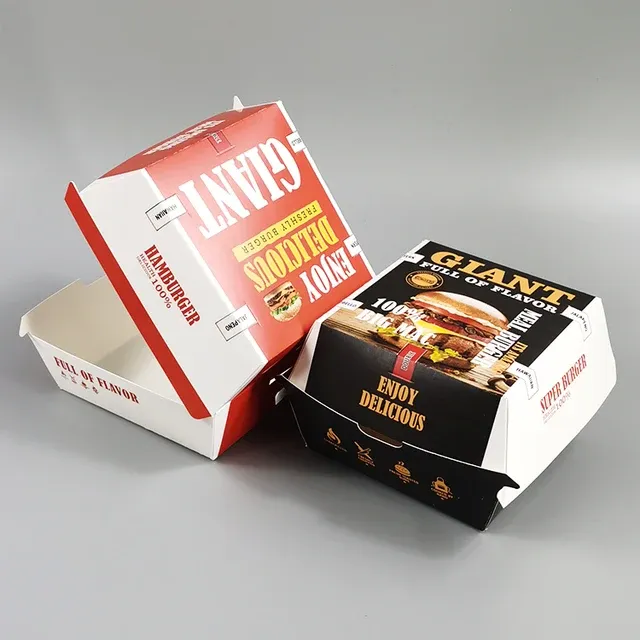
The clamshell style, with a hinged lid and a front lock, is the most common. It opens flat in the customer’s lap and works as a plate. Tuck-top boxes close more tightly for delivery. If you sell hot dogs or loaded fries too, our custom hotdog boxes and fast food boxes can share the same print design.
Grease, Steam and Board Choice
Grease. That’s the big one. We put a grease-resistant coating on the paperboard so the oil stays inside and your customer isn’t holding a box with a see-through spot on the bottom, and the print stays clean too. A lot of places go kraft (it looks kind of rustic and hides a little smudge way better than white does). Doing mostly delivery? We’d lean E-flute corrugated, it keeps heat in and doesn’t cave when four boxes get stacked in one bag.
Then there’s steam, and the cure is just a few little holes punched in the lid so the wet air gets out and the bun doesn’t go to mush on the way. Try shutting a hot burger in a box with no vents some time and open it ten minutes later. You’ll only do it once, trust us.
Printing Burger Boxes for Takeout
Your box gets photographed more than you’d think. Customers post their food, and the box is in the shot. Logo on the lid, nice and big. And don’t forget the inside of the lid, because when the box is open on someone’s desk that’s the bit pointing right at their phone. A short line or your social handle works well there.
We print with soy and water-based inks. Don’t have a dieline? No worries, our design folks build it and lay out your art for free, they’ll flag anything that won’t print well, and you see a digital proof before we run a single box. Mostly delivery? Have a read of our guide on corrugated boxes for food delivery. Fries and drinks carriers live in the food and beverage packaging range.
Burger Box FAQs
My burger slides all over the box, what do I do?
Go smaller. We’d size it just a touch wider than the bun so it can’t wander, and leave a little headroom so the lid isn’t squashing the top.
Can people recycle these burger boxes?
Kraft and corrugated mostly can, yes. A box soaked in grease though, some local pickups won’t take it, so it’s worth a quick check in your area.
What’s the minimum order, and when do I get them?
Not a lot, often around 50 boxes depending on the style, and you pay less per box the more you get. Production is 10 to 12 business days after proof approval, and ground shipping is free across the USA.
Related Packaging
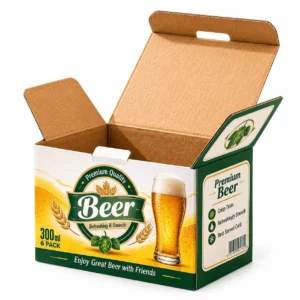
Brands ordering these often look at custom coffee boxes, tea packaging boxes & bag, custom milk carton and custom beer boxes as well. You can see the full range in food and beverage.