

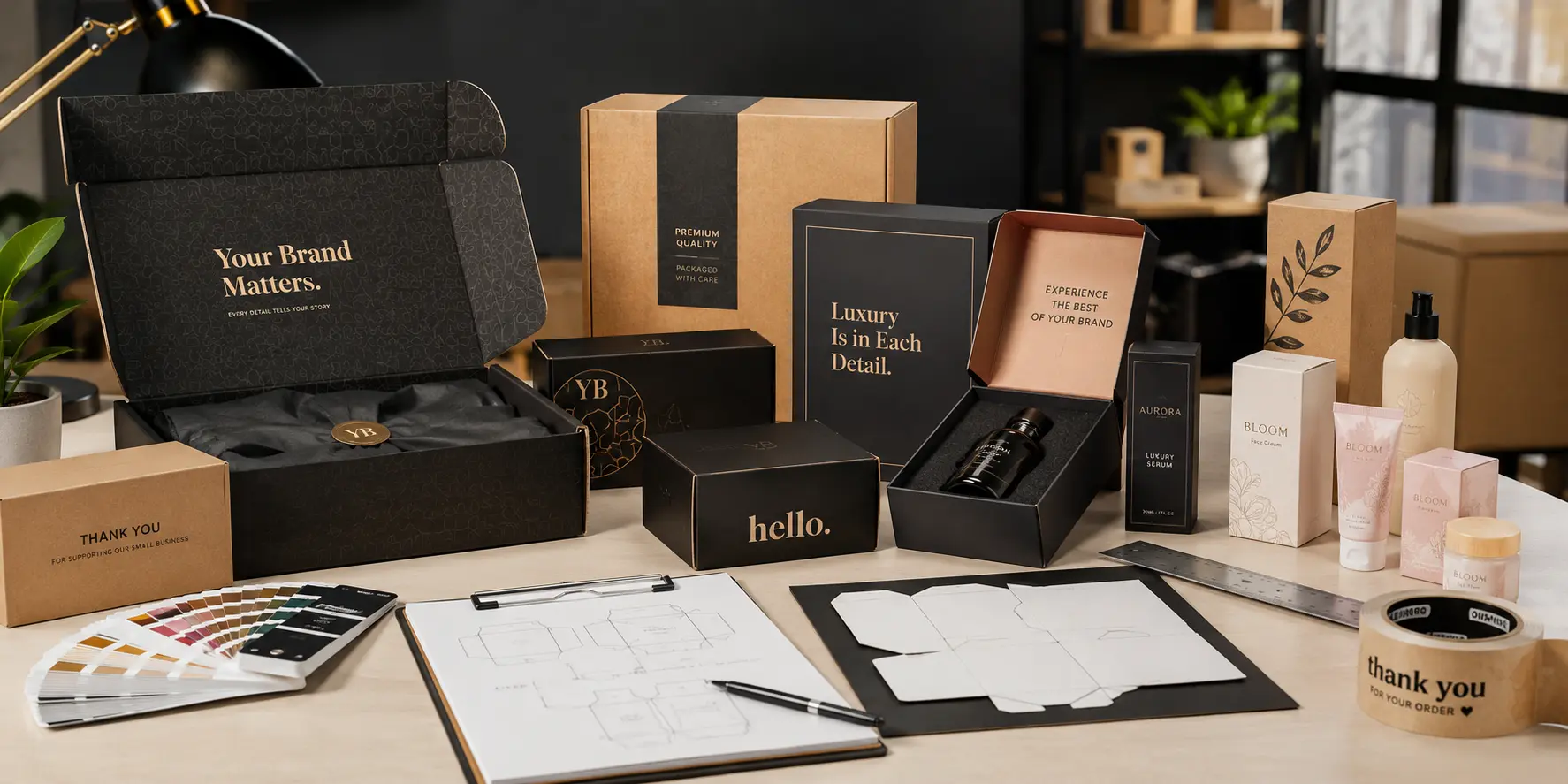
Custom packaging refers to packaging designed specifically for a brand, product, or business. Unlike plain stock boxes, custom packaging includes personalized sizes, materials, printing, finishes, colors, logos, and branding elements that help products stand out in the market.
Businesses use custom packaging to improve product presentation, protect products during shipping, and create a memorable customer experience. Today, companies across industries use custom boxes to strengthen branding and increase customer trust.
From ecommerce brands to luxury retailers, custom packaging has become a powerful marketing tool instead of just a shipping container.
Why Custom Packaging Matters for Businesses
Modern consumers pay attention to packaging. A well-designed package can influence buying decisions before customers even use the product.
Custom packaging helps businesses:
- Build strong brand identity
- Improve customer experience
- Increase product value perception
- Protect products during transit
- Improve shelf visibility
- Create social media unboxing moments
- Increase repeat purchases
Many successful brands invest heavily in custom printed packaging because packaging directly affects customer perception.
Types of Custom Packaging
Custom Product Boxes
These boxes are designed specifically for retail products. Businesses use them for cosmetics, food, electronics, supplements, jewelry, and many other industries.
Popular styles include:
- Tuck boxes
- Sleeve boxes
- Rigid boxes
- Mailer boxes
- Two-piece boxes
- Display boxes
Custom Mailer Boxes
Ecommerce businesses often use custom mailer boxes for subscription products and online shipping. These boxes protect products while promoting branding during delivery.
Custom Rigid Boxes
Rigid packaging offers premium presentation for luxury products like watches, perfumes, jewelry, and electronics.
Corrugated Packaging
Corrugated boxes provide extra durability for shipping and heavy products. Many businesses choose corrugated packaging for ecommerce and bulk shipping.
Flexible Packaging
Flexible packaging includes pouches, bags, wraps, and sachets commonly used for snacks, coffee, supplements, and pet products.
Common Materials Used in Custom Packaging
Different products require different packaging materials. Choosing the right material affects durability, cost, sustainability, and product presentation.
Cardboard
Cardboard remains one of the most popular packaging materials because it is lightweight, affordable, and printable.
Corrugated Board
Corrugated material includes fluted layers that provide additional protection for shipping.
Kraft Paper
Kraft packaging is eco-friendly and gives products a natural appearance. Many sustainable brands prefer kraft packaging.
Rigid Paperboard
Rigid material creates luxury packaging with a premium feel and strong structure.
Custom Packaging Printing Methods
Printing quality plays a major role in branding and product presentation.
Digital Printing
Digital printing works well for small orders and fast production timelines.
Offset Printing
Offset printing provides high-quality results for large-volume orders.
Flexographic Printing
Flexographic printing is commonly used for corrugated boxes and flexible packaging.
Popular Finishing Options in Custom Packaging
Finishing options improve packaging appearance and customer experience.
Common finishes include:
- Matte lamination
- Gloss coating
- Spot UV
- Foil stamping
- Embossing
- Debossing
- Soft-touch coating
- Window patching
Luxury brands often combine multiple finishing techniques to create premium packaging.
Industries That Use Custom Packaging
Almost every industry uses custom packaging solutions today.
Cosmetic Packaging
Beauty brands use custom cosmetic boxes to improve shelf appeal and brand identity.
Food Packaging
Restaurants and food brands use custom food packaging for freshness and branding.
CBD Packaging
CBD brands rely on compliant and secure packaging with premium printing.
Ecommerce Packaging
Online stores use custom ecommerce packaging to improve customer retention and reduce shipping damage.
Pharmaceutical Packaging
Medicine packaging requires durability, safety, and regulatory compliance.
Benefits of Custom Packaging for Ecommerce Brands
Ecommerce businesses benefit significantly from custom packaging because customers interact directly with the package during delivery.
Benefits include:
- Better unboxing experience
- Improved customer retention
- Increased social media sharing
- Reduced product damage
- Stronger brand recognition
Many online brands now treat packaging as part of their marketing strategy.
Sustainable Custom Packaging Trends
Sustainability has become a major factor in packaging decisions. Consumers prefer brands that use eco-friendly packaging materials.
Popular sustainable options include:
- Recyclable cardboard
- Biodegradable packaging
- Soy-based inks
- Compostable mailers
- FSC-certified paper materials
Eco-friendly packaging also helps businesses improve brand reputation.
How to Choose the Right Custom Packaging
Businesses should consider several factors before selecting packaging.
Product Protection
Packaging must protect products during storage and shipping.
Branding Requirements
The design should match brand identity and target audience.
Packaging Budget
Businesses should balance quality and production costs.
Shipping Requirements
Packaging dimensions and weight affect shipping expenses.
Customer Experience
Modern packaging should create a memorable experience for customers.
If you are looking for estimated prices for custom packaging, you can use our cost calculator.
How Custom Packaging Increases Sales
Custom packaging influences customer behavior more than many businesses realize.
High-quality packaging can:
- Increase perceived product value
- Encourage repeat purchases
- Improve customer trust
- Differentiate products from competitors
- Support premium pricing
Brands that invest in custom packaging often achieve stronger customer loyalty.
Future of Custom Packaging
Packaging trends continue evolving as brands focus on sustainability, personalization, and ecommerce growth.
Future packaging innovations may include:
- Smart packaging technology
- QR code integration
- Interactive packaging
- Minimalist packaging designs
- Eco-friendly materials
- Personalized unboxing experiences
Businesses that adapt to modern packaging trends can stay competitive in crowded markets.
Conclusion
Custom packaging is more than a box. It is a branding tool, marketing asset, and customer experience strategy. Businesses use custom packaging to protect products, increase brand recognition, and improve customer loyalty.
Whether you run an ecommerce store, cosmetic brand, food company, or luxury business, investing in custom packaging can help your products stand out in competitive markets.
The right packaging design improves customer perception and creates lasting impressions that support long-term business growth.
FAQs About Custom Packaging
What is custom packaging used for?
Custom packaging is used for branding, product protection, marketing, and improving customer experience. Businesses use it to create unique packaging that matches their products and brand identity.
Why is custom packaging important?
Custom packaging helps businesses increase brand recognition, improve product presentation, and create better customer experiences. It also helps products stand out from competitors.
What materials are used for custom packaging?
Common materials include cardboard, corrugated board, kraft paper, rigid paperboard, and flexible packaging materials.
Is custom packaging expensive?
The cost depends on box style, material, printing method, order quantity, and finishing options. Wholesale orders usually reduce packaging costs per unit.
What industries use custom packaging?
Industries including cosmetics, food, CBD, ecommerce, pharmaceuticals, jewelry, electronics, and retail use custom packaging.
Can small businesses afford custom packaging?
Yes. Many packaging companies offer low minimum order quantities and affordable digital printing solutions for small businesses.
What is sustainable custom packaging?
Sustainable packaging uses recyclable, biodegradable, or eco-friendly materials that reduce environmental impact.
How does custom packaging help ecommerce brands?
Custom packaging improves unboxing experiences, increases customer loyalty, protects products during shipping, and encourages social media sharing.