

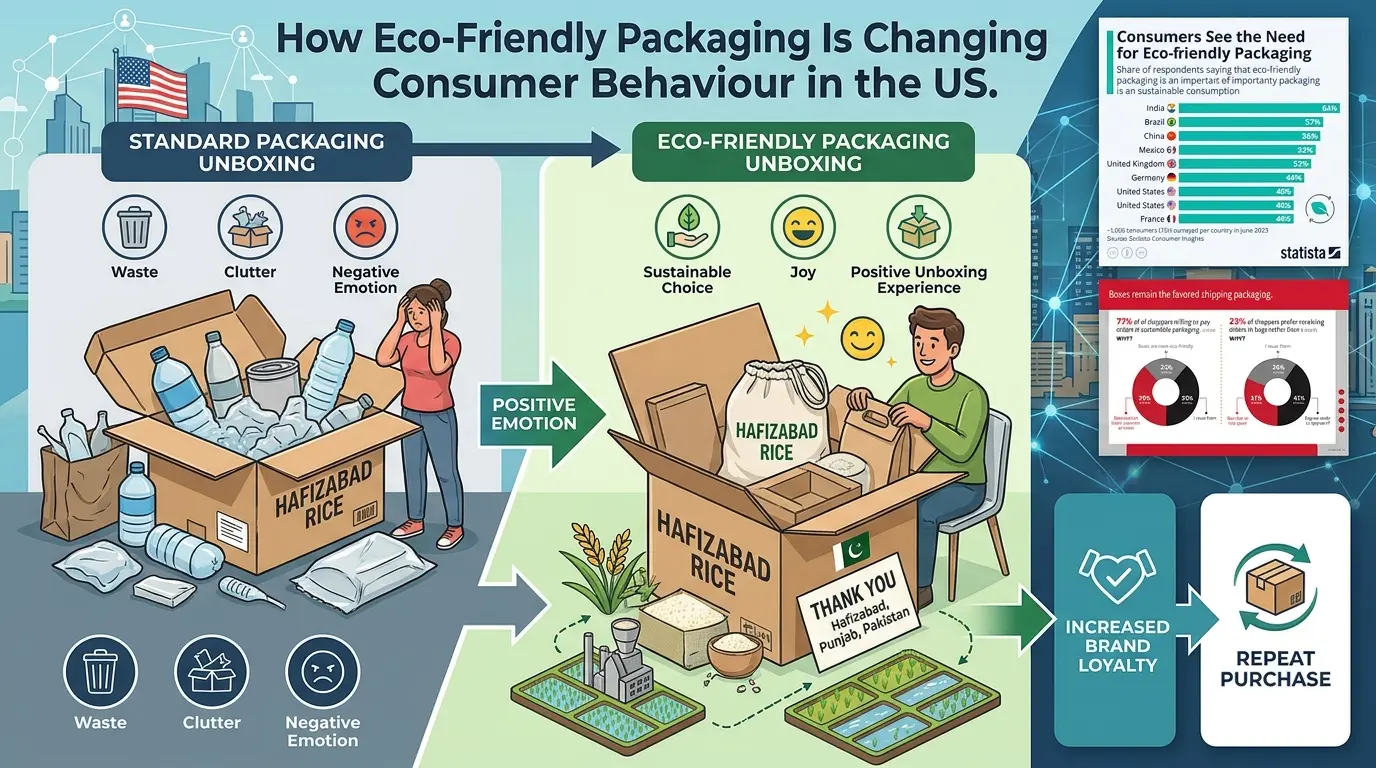
Eco-friendly packaging is no longer a niche trend in the United States—it has become a major factor influencing how consumers shop, what they buy, and which brands they trust. As environmental awareness continues to grow, packaging is now seen as a reflection of a brand’s values, not just a protective layer for products.
For businesses operating in the US eCommerce and retail markets, understanding this shift is essential. Sustainable packaging is directly shaping consumer expectations and purchasing decisions across industries like fashion, cosmetics, food, electronics, and subscription boxes.
Why Eco-Friendly Packaging Matters to US Consumers
American consumers are increasingly aware of environmental issues such as plastic pollution, landfill waste, and carbon emissions. As a result, they are paying closer attention to how products are packaged.
Eco-friendly packaging matters because it:
- Reduces environmental impact
- Aligns with ethical consumer values
- Reflects responsible brand behavior
- Influences purchase decisions
- Builds long-term trust with customers
Today, packaging is often viewed as part of a brand’s environmental responsibility.
Shift From Convenience to Conscious Buying
In the past, packaging was mainly judged on convenience, durability, and cost. Now, many US consumers are actively choosing brands that prioritize sustainability—even if it means paying slightly more.
What Is Driving This Shift
- Increased awareness of climate change
- Social media influence and activism
- Corporate sustainability campaigns
- Government pressure on plastic reduction
- Younger generations prioritizing ethical consumption
Millennials and Gen Z, in particular, are leading this change by supporting brands that demonstrate environmental responsibility.
How Eco-Friendly Packaging Influences Buying Decisions
Packaging now plays a key role in whether a customer decides to purchase or not.
1. Builds Immediate Brand Trust
Consumers often associate eco-friendly packaging with responsible business practices.
When a brand uses recyclable or biodegradable packaging, it signals:
- Transparency
- Responsibility
- Quality standards
- Ethical production
This trust directly influences conversion rates in competitive markets.
2. Increases Purchase Likelihood
Many US consumers prefer brands that use sustainable packaging.
Even small changes—such as switching from plastic to kraft paper or recycled cardboard—can improve customer perception and increase sales.
3. Strengthens Emotional Connection
Eco-friendly packaging creates emotional satisfaction.
Customers feel they are contributing to environmental protection simply by choosing that brand. This emotional benefit increases loyalty and repeat purchases.
The Rise of Minimalist and Waste-Reduced Packaging
One of the biggest behavioral shifts in the US market is the preference for minimal packaging.
What Consumers Prefer Now
- Less plastic usage
- Smaller, right-sized boxes
- Reduced packaging layers
- Simple, recyclable materials
- Clean and functional design
Over-packaging is increasingly seen as wasteful and outdated.
Impact on Brands
Brands using excessive packaging risk:
- Negative customer reviews
- Social media criticism
- Reduced brand credibility
- Lower repeat purchase rates
Minimal packaging is now associated with smarter, more responsible brands.
How Sustainability Impacts Unboxing Experience
Interestingly, eco-friendly packaging is also reshaping the unboxing experience.
Consumers no longer expect overly complex packaging—they prefer meaningful simplicity.
What Customers Appreciate
- Recyclable materials they can dispose of easily
- Clean and organized packaging design
- Clear sustainability messaging
- Thoughtful but minimal inserts
- Reduced waste after unboxing
A “clean unboxing experience” is becoming more desirable than a flashy one.
Social Media and Eco Packaging Trends
Social media plays a major role in shaping consumer behaviour around packaging.
How It Influences Buyers
- Customers share eco-friendly packaging experiences
- Brands gain organic visibility through sustainable messaging
- Influencers highlight sustainable product choices
- Viral content promotes “low-waste” lifestyles
Eco-friendly packaging is now part of online brand storytelling.
Impact on Brand Loyalty in the US Market
Sustainable packaging is strongly linked to customer retention.
Why Customers Stay Loyal
- Shared environmental values
- Positive brand perception
- Emotional satisfaction from responsible buying
- Trust in long-term sustainability efforts
Once customers identify a brand as eco-conscious, they are more likely to continue supporting it.
Industries Most Affected by Eco Packaging Trends
Some industries in the US are experiencing faster changes due to sustainability demands.
Fashion and Apparel
Consumers expect recyclable mailers and minimal packaging waste.
Cosmetics and Beauty
Eco packaging is now closely tied to product quality perception.
Food and Beverage
Compostable and biodegradable packaging is becoming standard.
eCommerce and Subscription Boxes
Right-sized and recyclable packaging is improving customer retention.
Challenges for Businesses Transitioning to Eco Packaging
While the shift is positive, businesses face certain challenges.
Common Challenges
- Higher initial packaging costs
- Supply chain limitations
- Material availability issues
- Redesigning existing packaging systems
- Balancing durability with sustainability
However, long-term savings and brand value often outweigh these challenges.
The Future of Eco-Friendly Packaging in the US
The future of packaging in the US is moving toward full sustainability integration.
Key Future Trends
- Plastic-free packaging becoming standard
- Fully recyclable eCommerce shipping systems
- Smart packaging with sustainability tracking
- Increased government regulations
- Greater consumer demand for transparency
Eco-friendly packaging is expected to become a baseline requirement rather than a competitive advantage.
Final Thoughts
Eco-friendly packaging is significantly changing consumer behaviour in the United States. It is influencing how people choose brands, how they perceive product value, and how loyal they remain after purchase.
Consumers are no longer satisfied with packaging that is only functional—they expect it to be responsible, minimal, and aligned with environmental values.
For businesses, this shift presents both a challenge and an opportunity. Companies that adapt to sustainable packaging practices will not only reduce environmental impact but also build stronger customer trust, improve brand perception, and increase long-term growth.
In today’s market, eco-friendly packaging is not just a trend—it is a powerful driver of consumer behaviour and brand success in the US.