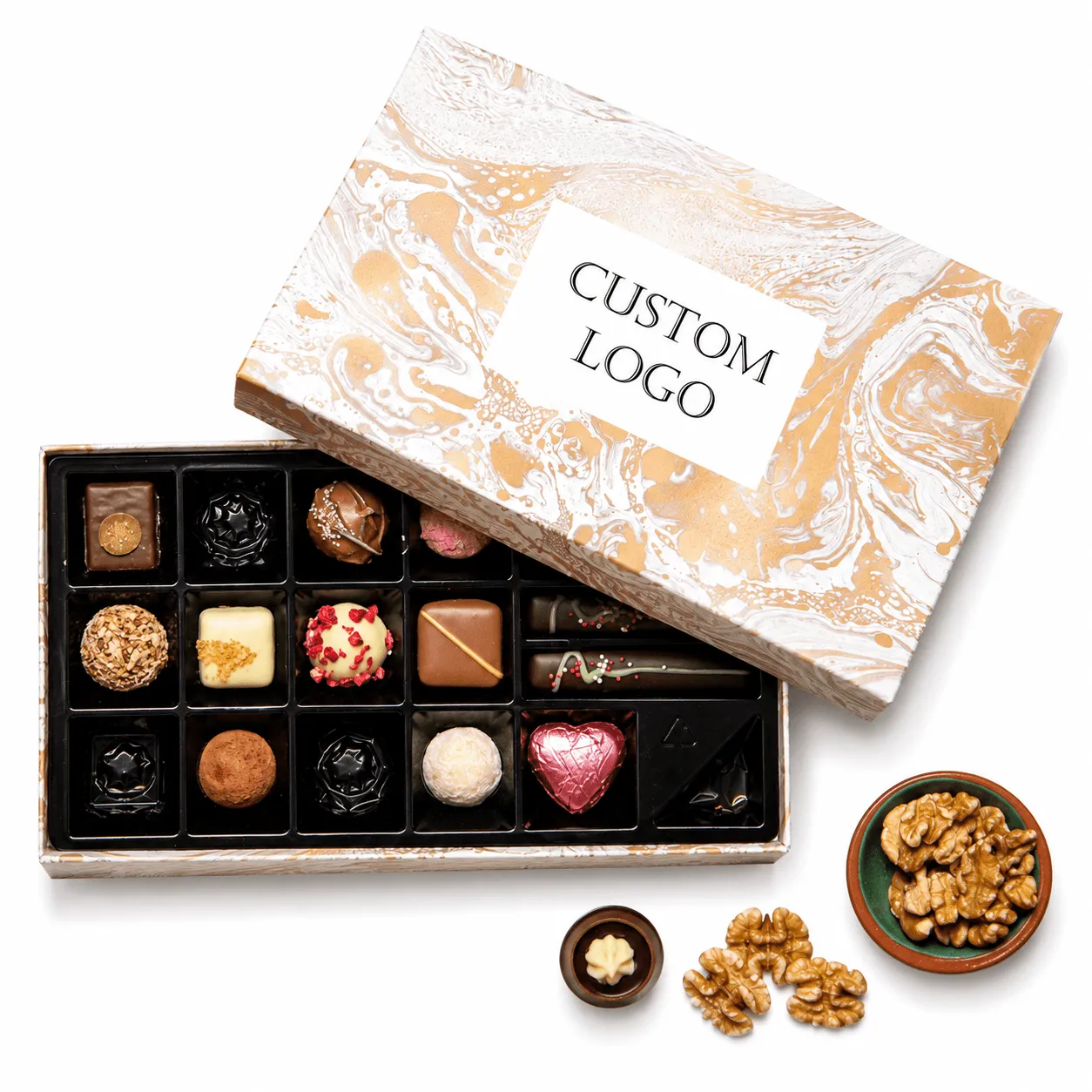
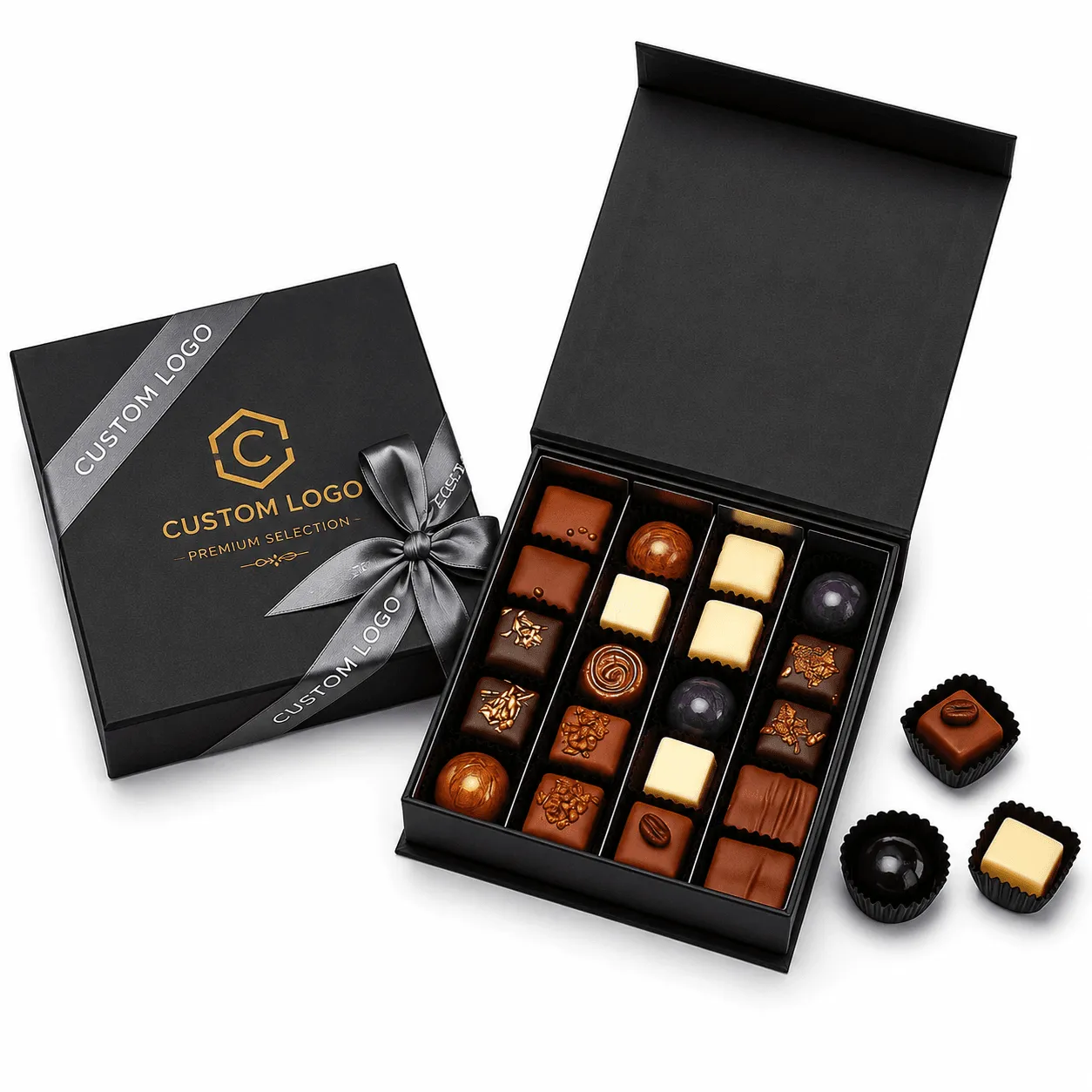
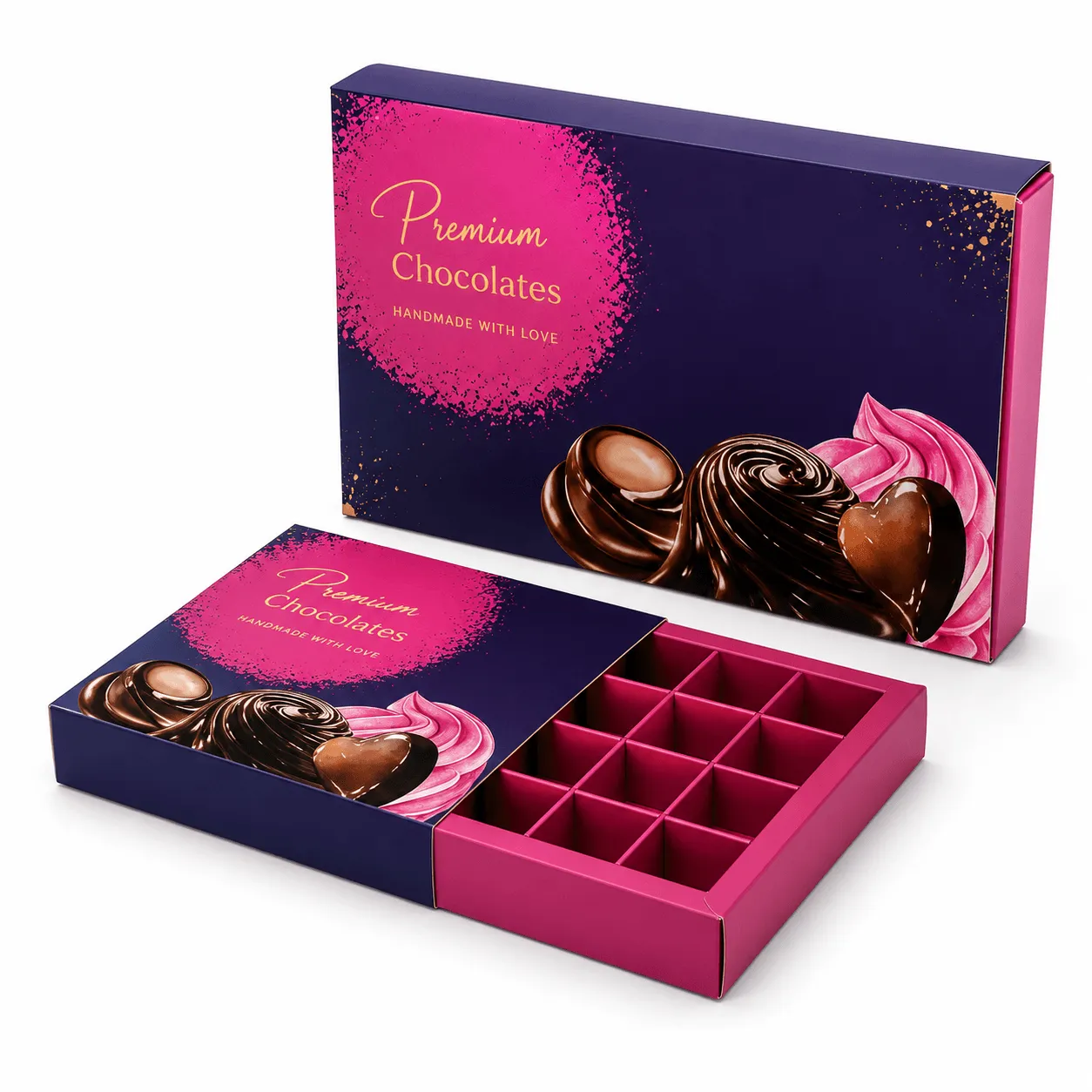
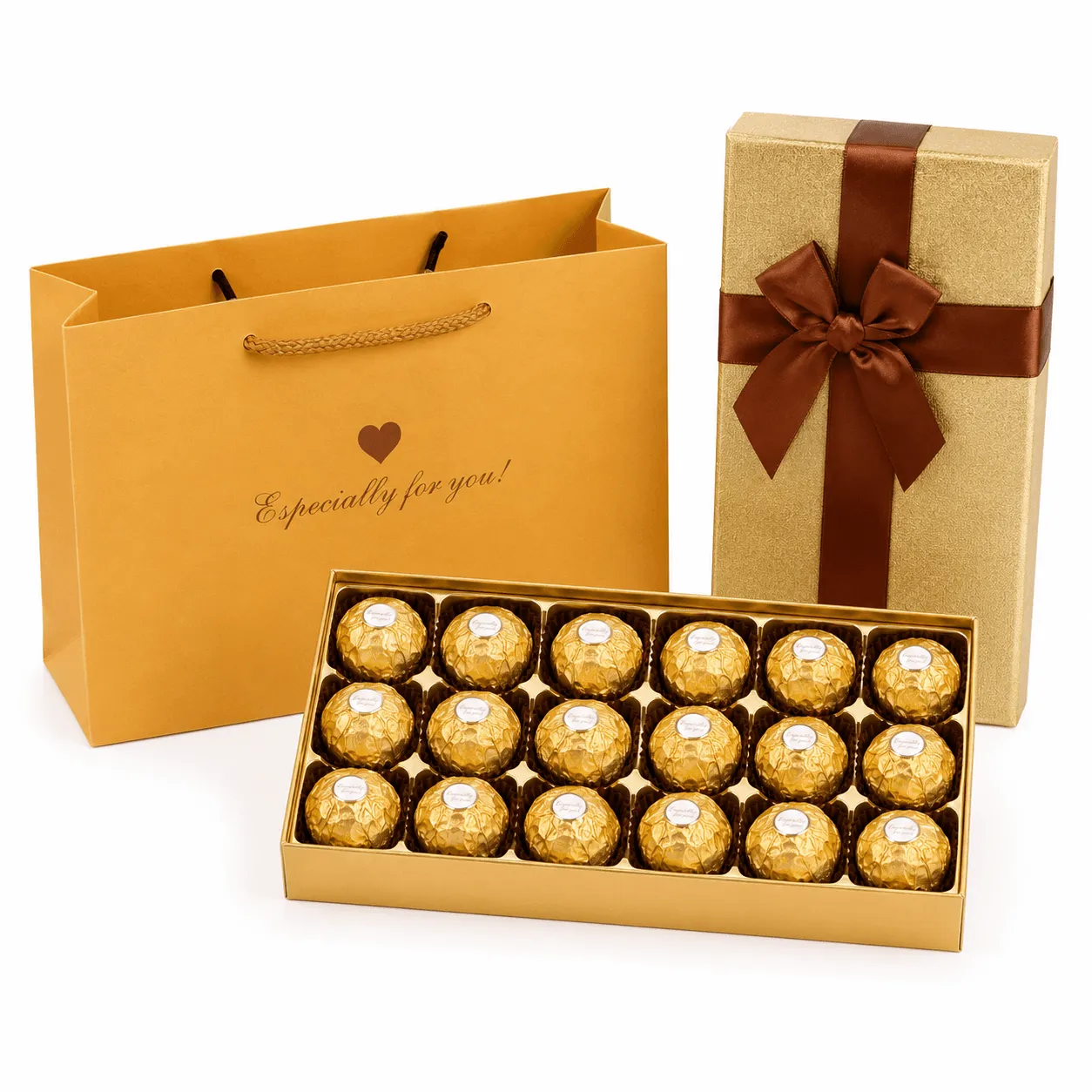
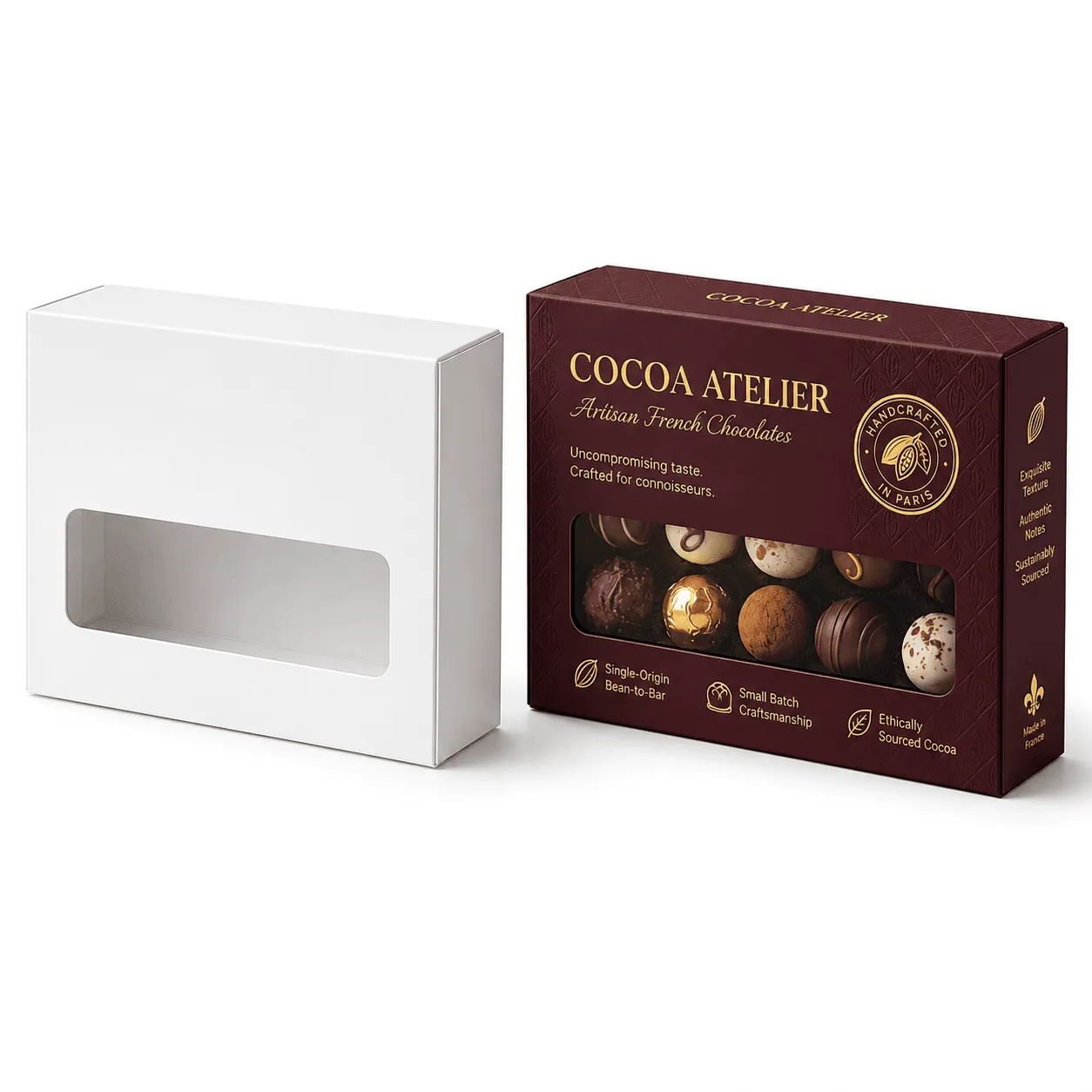
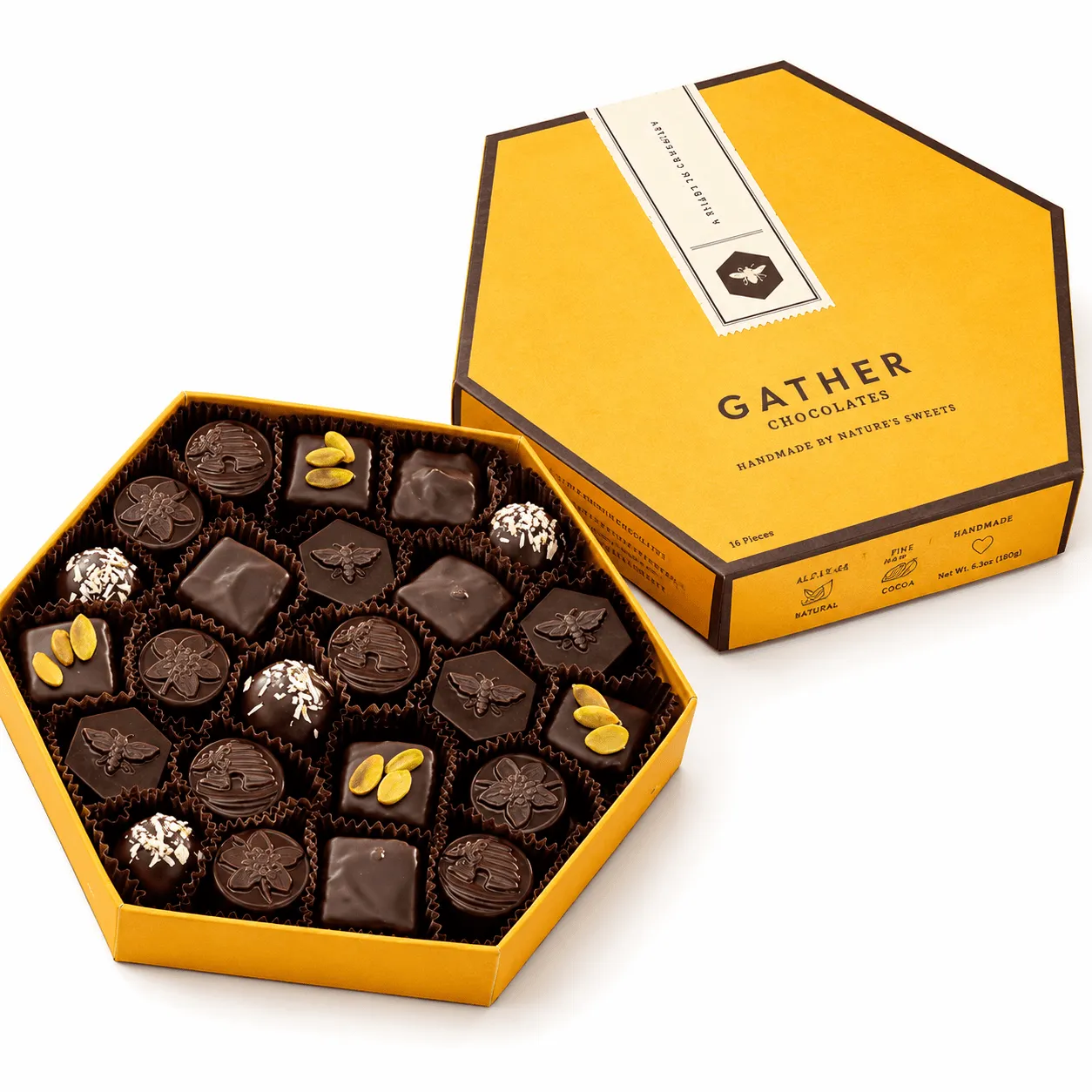
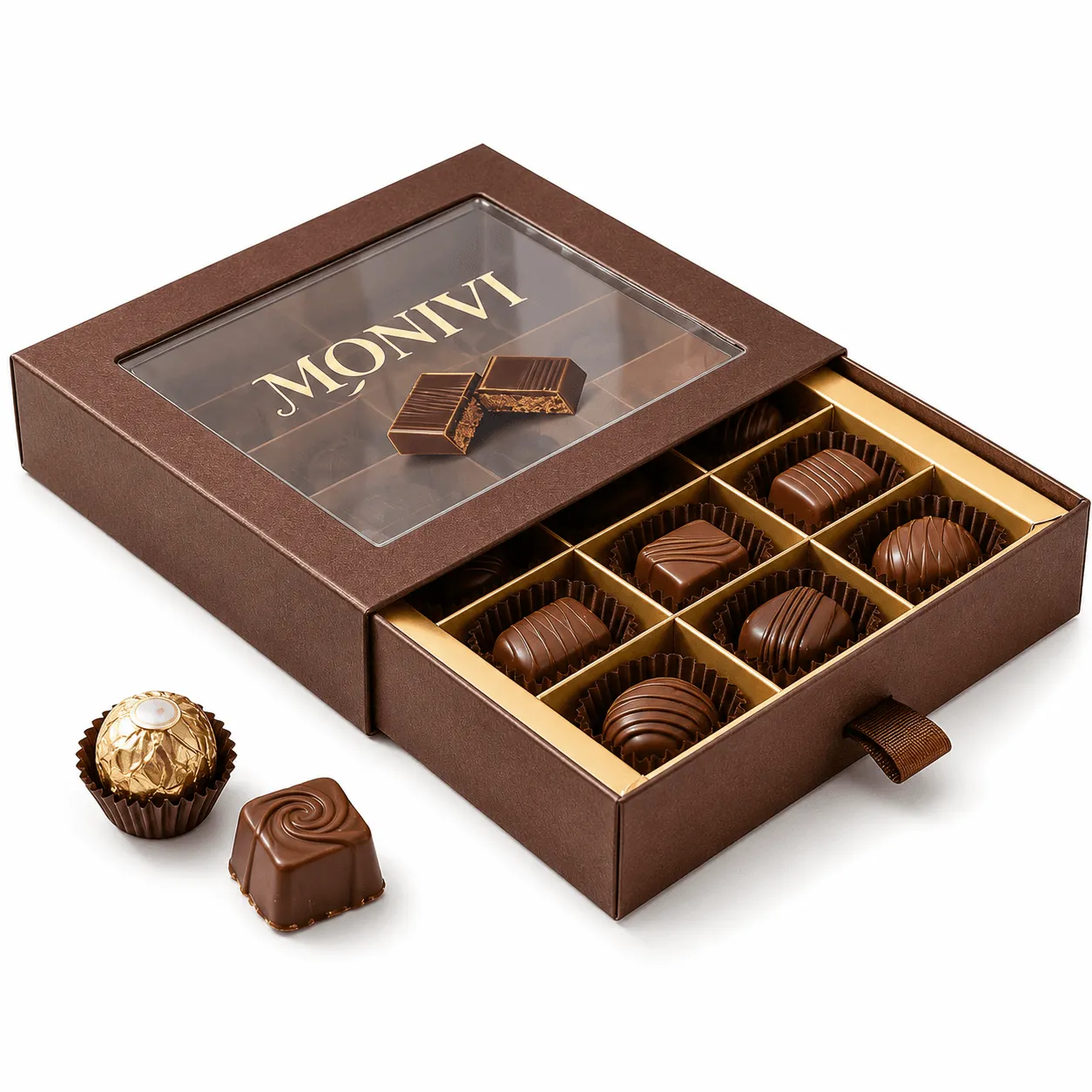
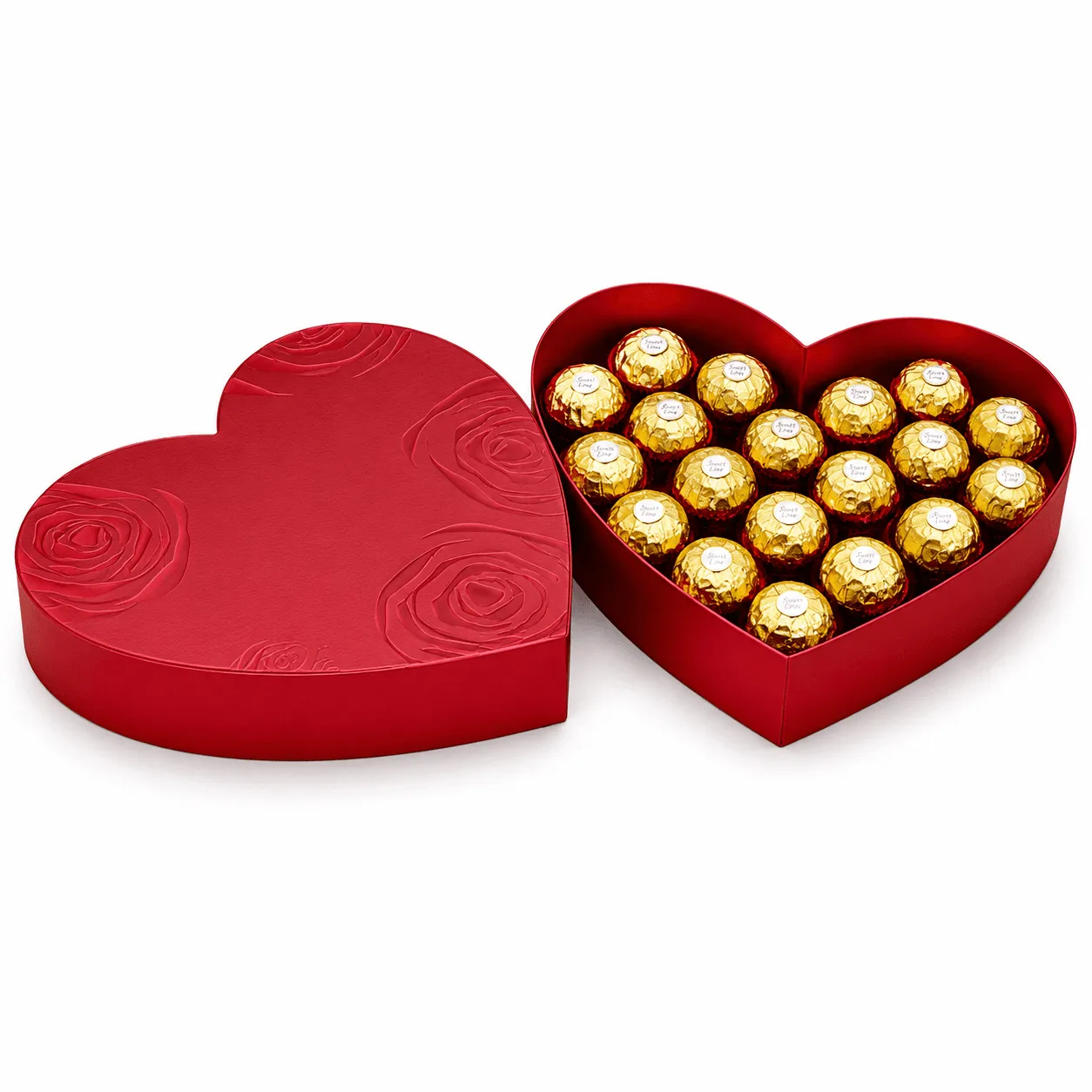
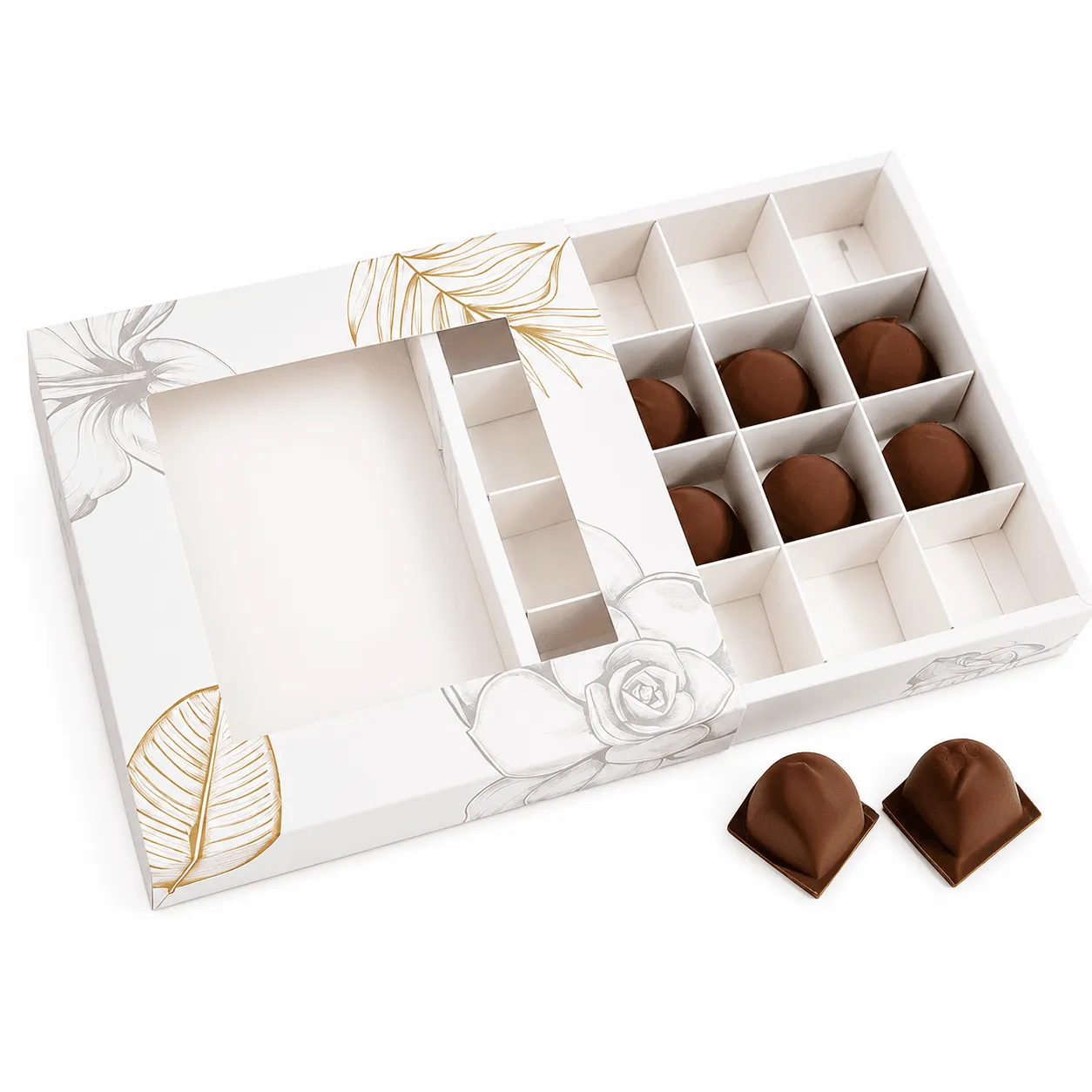
Ganache, a shell about as thin as an eggshell, and that’s your truffle. Bruises like a peach. Roll two together in a loose box and you get cocoa smudges and a dent in each one. Custom truffle boxes give every piece its own little pocket, so the lid comes up on a neat grid of round truffles. Not a pile.
Who buys them? Chocolatiers mostly, plus patisseries, gift shops, wedding planners and the odd hotel, and some of them sell one truffle at the till while others do boxes of 16 for the holidays (a lot do both).
Custom Truffle Boxes by Piece Count
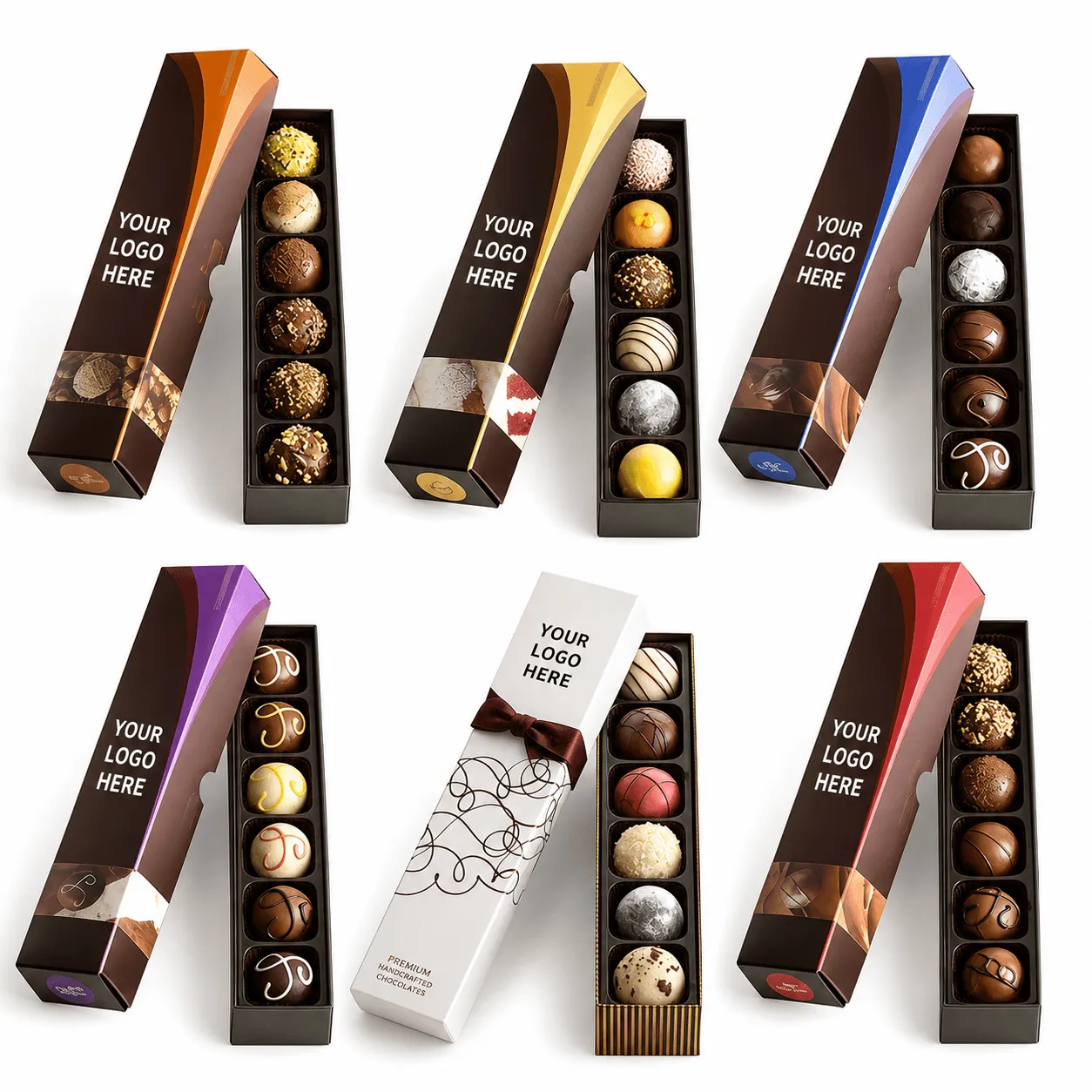
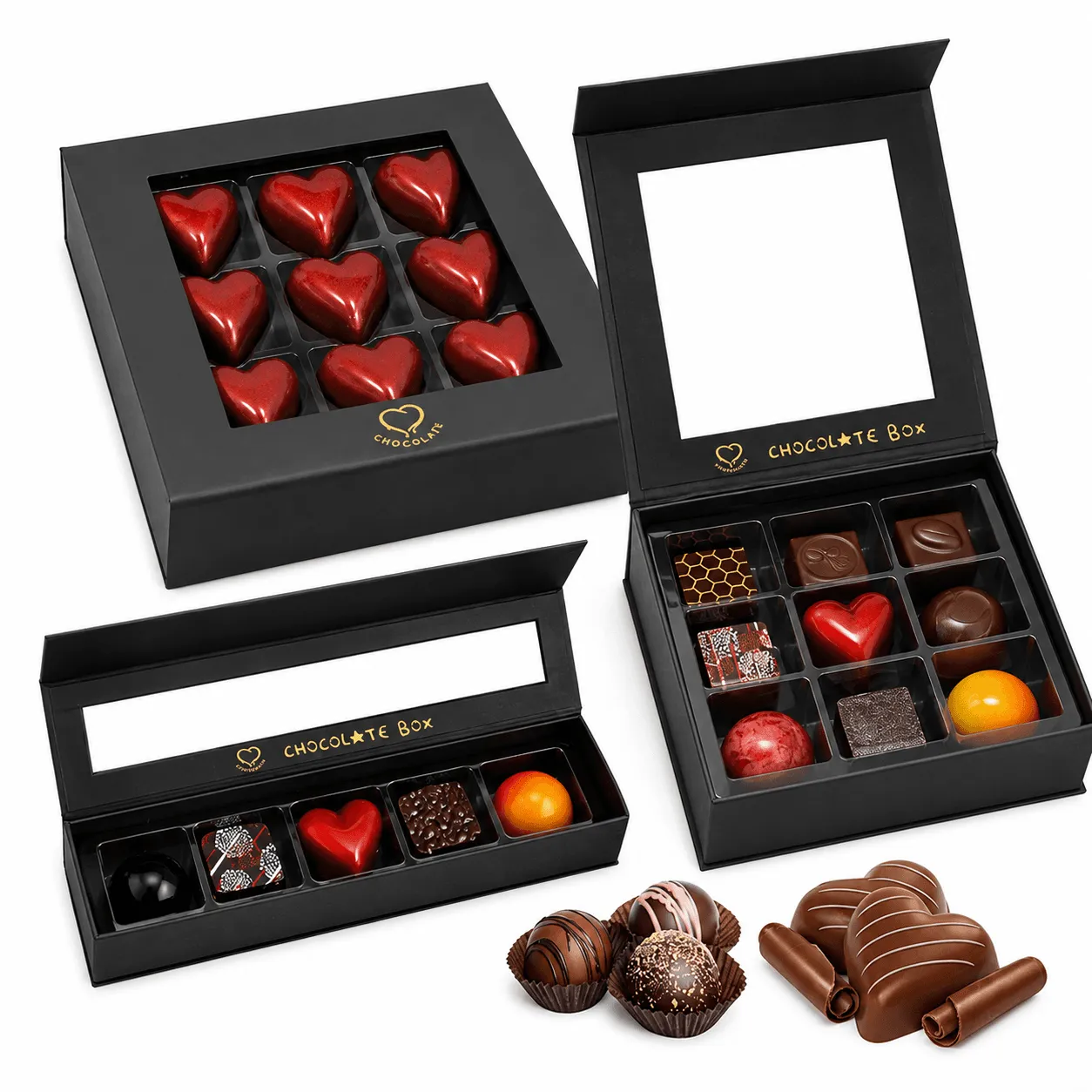
First question we ask is how many go in, and the answers we hear most are 4, 9, 12 and 16, though we’ve done a single and we’ve done 24. Your truffle’s probably about an inch across? Then each pocket comes out at roughly 1.1 to 1.25 inches. Square grids look tidy. For a tasting flight we kind of prefer a long skinny box with 6 or 8 in a row.
Depth catches people out. Too shallow and the lid squashes whatever’s on top, a flake of gold leaf, a piped swirl, gone. Too deep and they bounce. We size the inside to your tallest truffle plus a little air, and that’s about it.
Inserts That Keep Truffles Apart
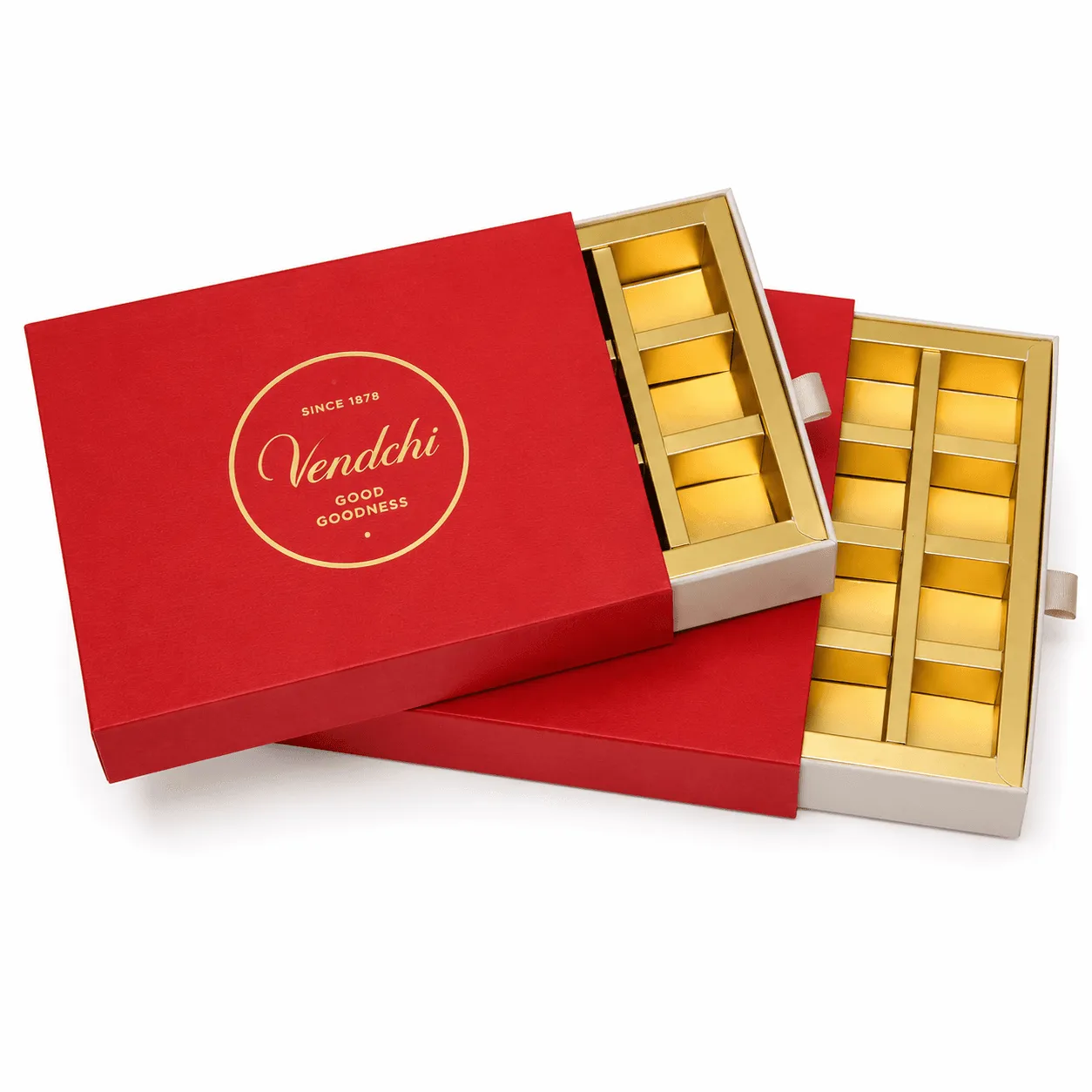
Here’s the thing, the insert is really the product. Paperboard dividers are crisp and cheap and stop pieces touching. Soft ganache or coated pieces? We’d go for a molded tray with round cavities that hold each truffle from the sides, and plenty of chocolatiers drop every truffle in a little paper cup before it goes in.
Then there’s heat. No box keeps chocolate cool in a hot car, to be fair, but a closed box that fits well keeps off direct sun and drafts, and a pale outside warms up a touch less in a shop window. Shipping in July? Insulated shipper, cold packs, no shortcuts.
Folding or Rigid Truffle Boxes
Folding boxes in SBS paperboard are light and cheaper and they print beautifully, so that’s what we’d use for everyday retail and the big seasonal runs. Rigid is a different feel. Thick chipboard wrapped in paper, a lift-off or magnetic lid, and people keep it after the chocolate’s gone, which is why we steer wedding favors and corporate gifts that way.
Finishes? Customers expect gold foil on a nice truffle box, so we’d start there, maybe some embossing or soft-touch on top, on dark brown or black or cream (a deep jewel green looks great too, if you’re feeling brave). Selling bars and bonbons as well? Our chocolate packaging boxes cover those, and the macaron boxes use a similar insert idea for another fragile sweet.
Ordering Truffle Boxes for the Holidays
Valentine’s, Mother’s Day, the winter holidays. Every chocolatier orders packaging in the same few weeks, so get in early, because standard production is 10 to 12 business days after you approve the proof and then there’s delivery on top (rush is there if you’re cutting it fine).
Minimums are low, often around 50 boxes depending on the style, and the per-box price drops on bigger orders. New to custom packaging? Our guide to ordering custom boxes in small quantities is a good start. Design help is free, you get a digital proof, and ground shipping is free across the USA. More styles are in the full chocolate packaging range.
Custom Truffle Boxes FAQs
What size cavity do I need for my truffles?
Measure your biggest one and add a few millimeters. Usually that’s 1.1 to 1.25 inches, but hand-rolled ones wander a bit, so get a physical sample.
Should I use paper cups as well as an insert?
Lots of chocolatiers do. Cocoa powder stays off the insert, and each piece lifts out easier.
Can truffle boxes be shipped in warm weather?
The box looks after the shape, not the temperature. Summer orders go inside an insulated shipper with cold packs.
Not sure which size you need? Our guide to chocolate box sizes lists the common ones and how to measure.
Related Packaging
Brands ordering these often look at custom cookie boxes with logo, custom donut boxes, tall cake boxes and snacks boxes as well. You can see the full range in bakery packaging boxes, and our guide to packaging cakes and pastries helps with sizing.