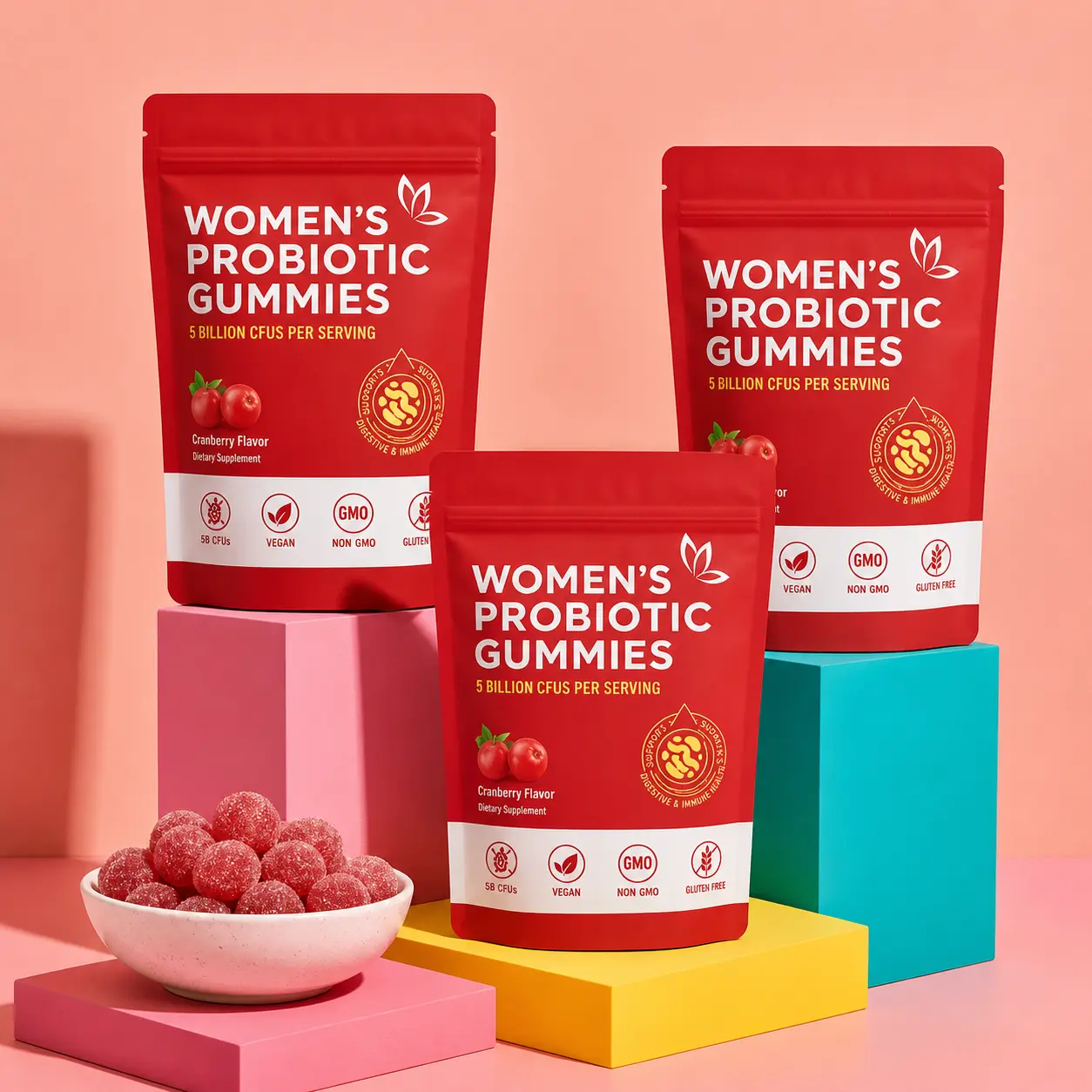
Easy to sell, annoying to pack. That’s gummies. Leave them in a hot car and they weld into a brick, leave the bag open and they go hard, and on top of that the label has to say more than a cereal box does, so honestly the CBD gummy packaging you pick matters more than people think.
So how do you sell? Most brands we talk to do both, they ship online orders (the pack gets thrown around by the carrier) and they also sit on the counter at a smoke shop or a dispensary, where a buyer gives it maybe three seconds before moving on.
CBD Gummy Packaging: Pouch, Jar Box or Both
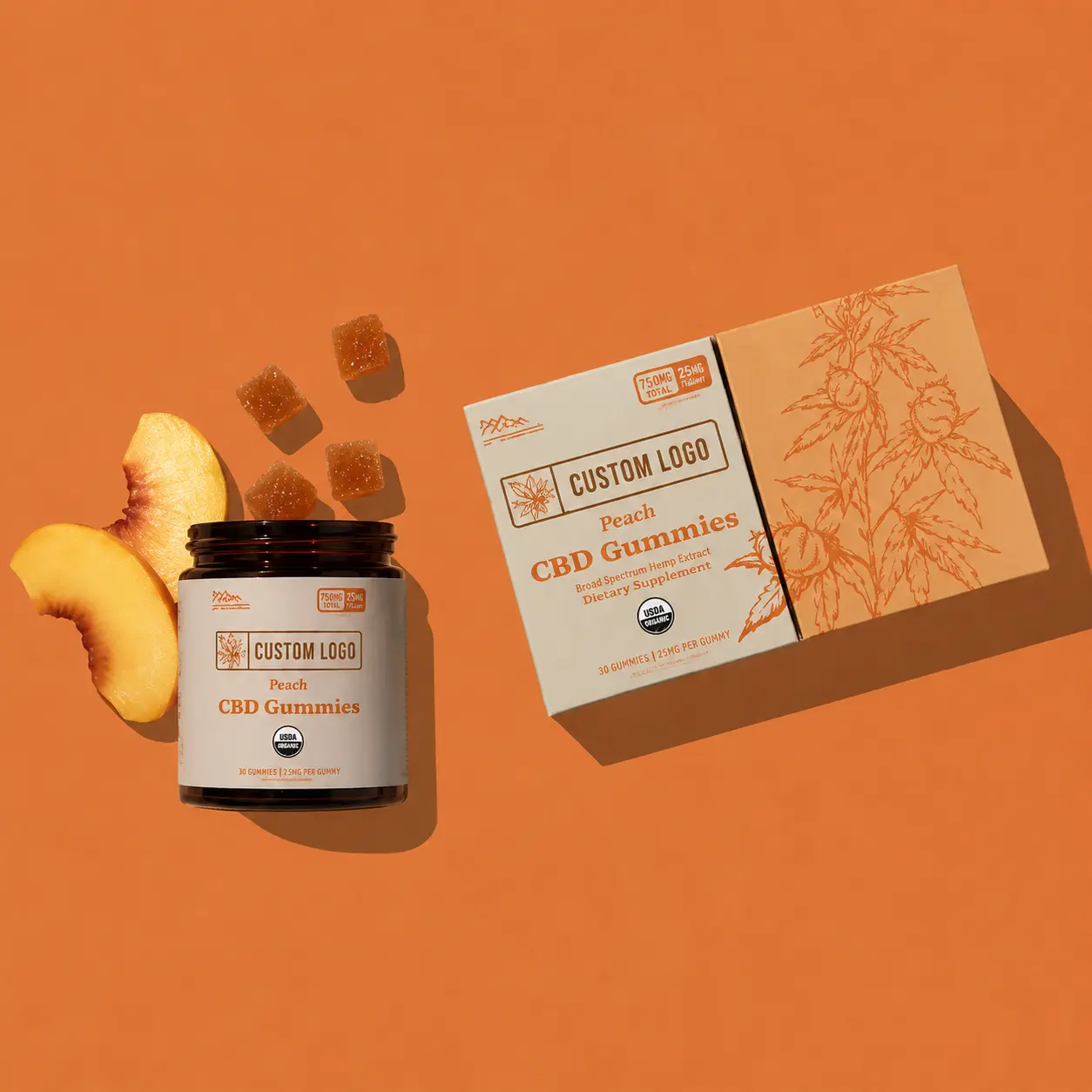
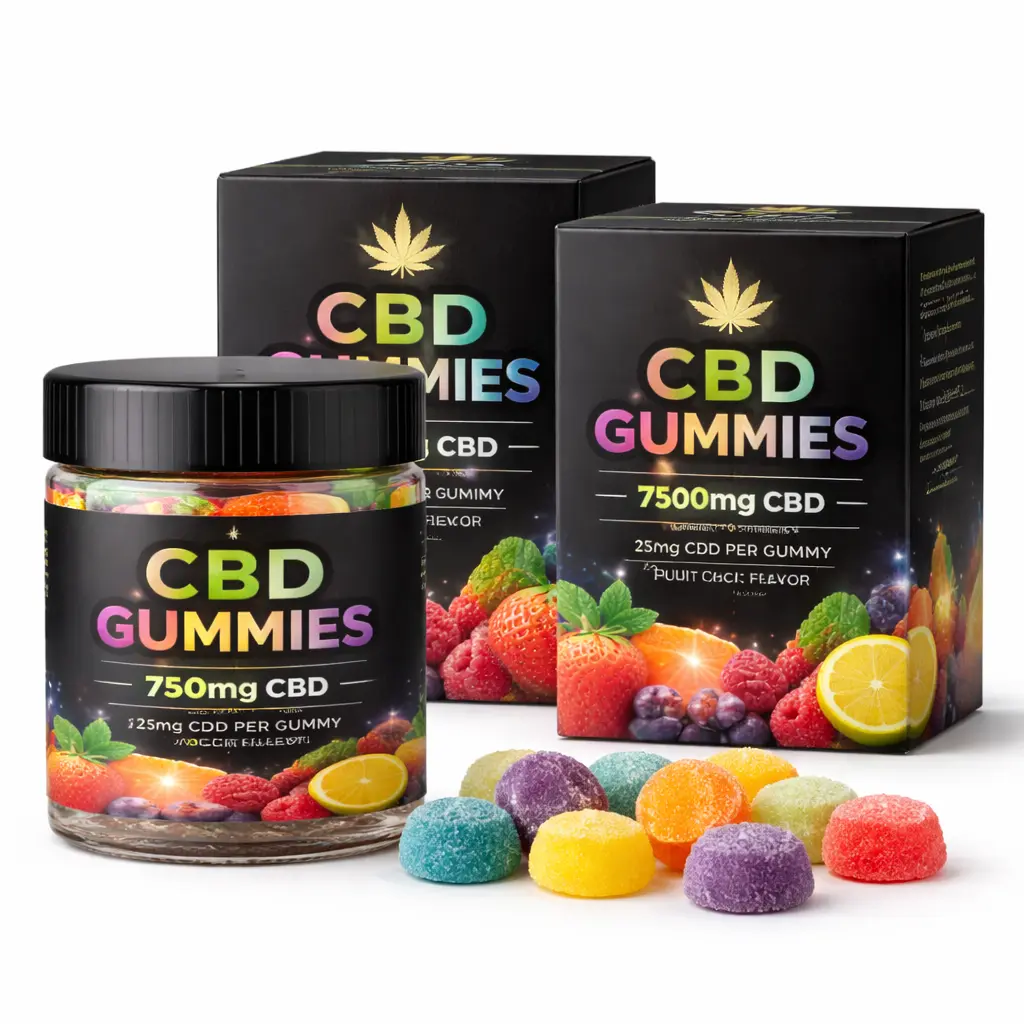
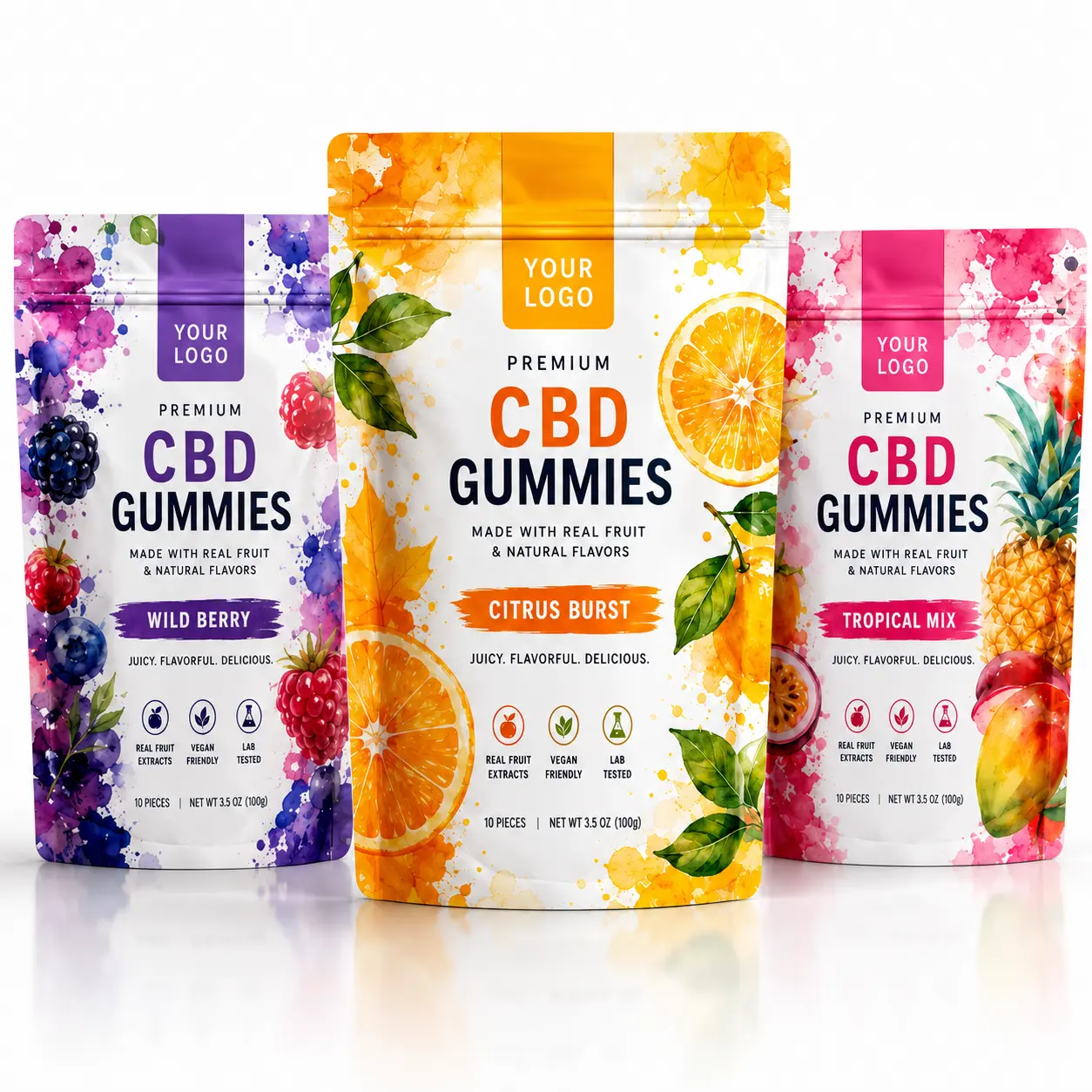
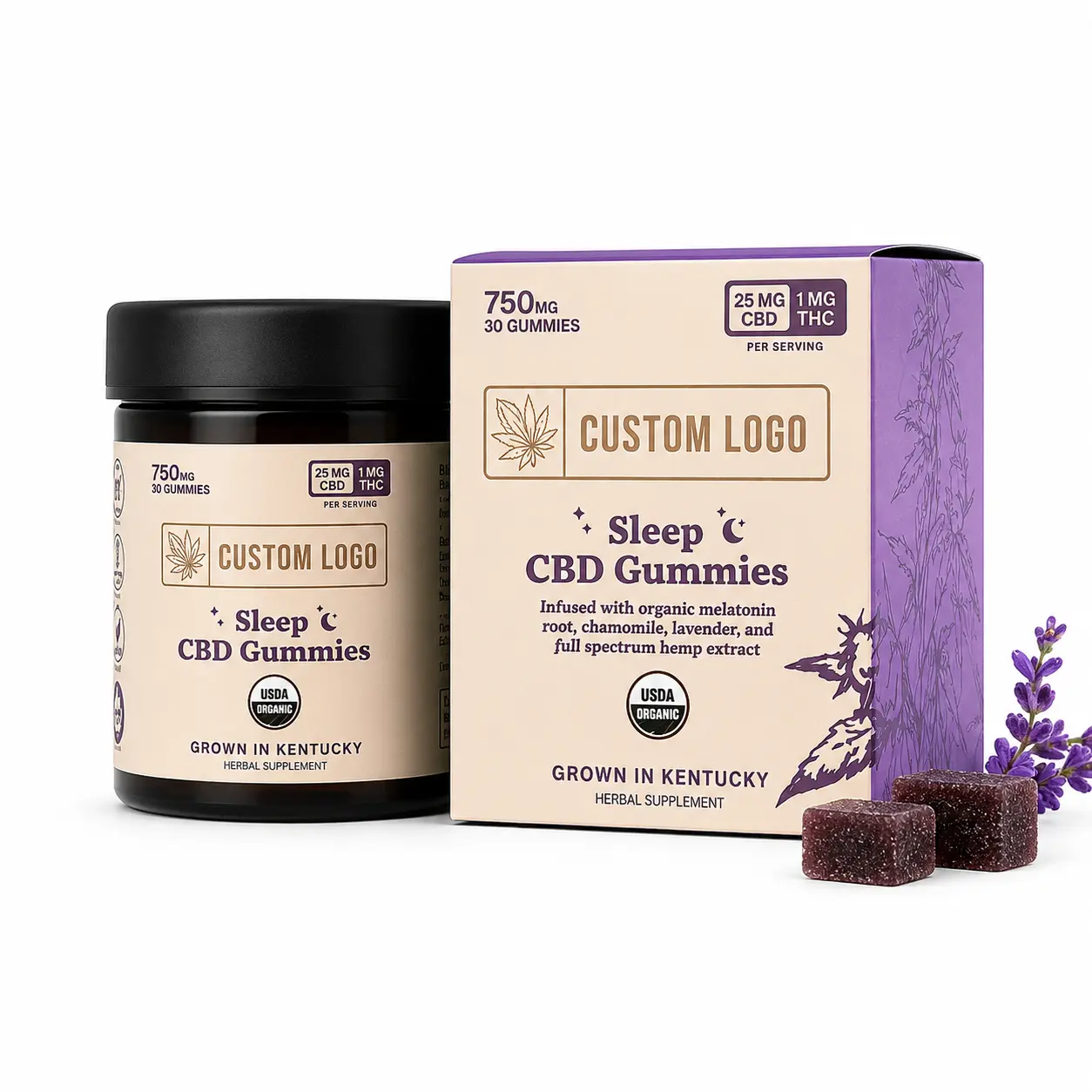
A stand up mylar pouch with a zipper is the simplest option. It’s light, cheap to ship, and the barrier film helps keep gummies soft. Our edible mylar bags are built for exactly this. A plastic or glass jar inside a printed carton is the other common route. The carton gives you a lot more print space and makes the product feel more premium on a shelf.
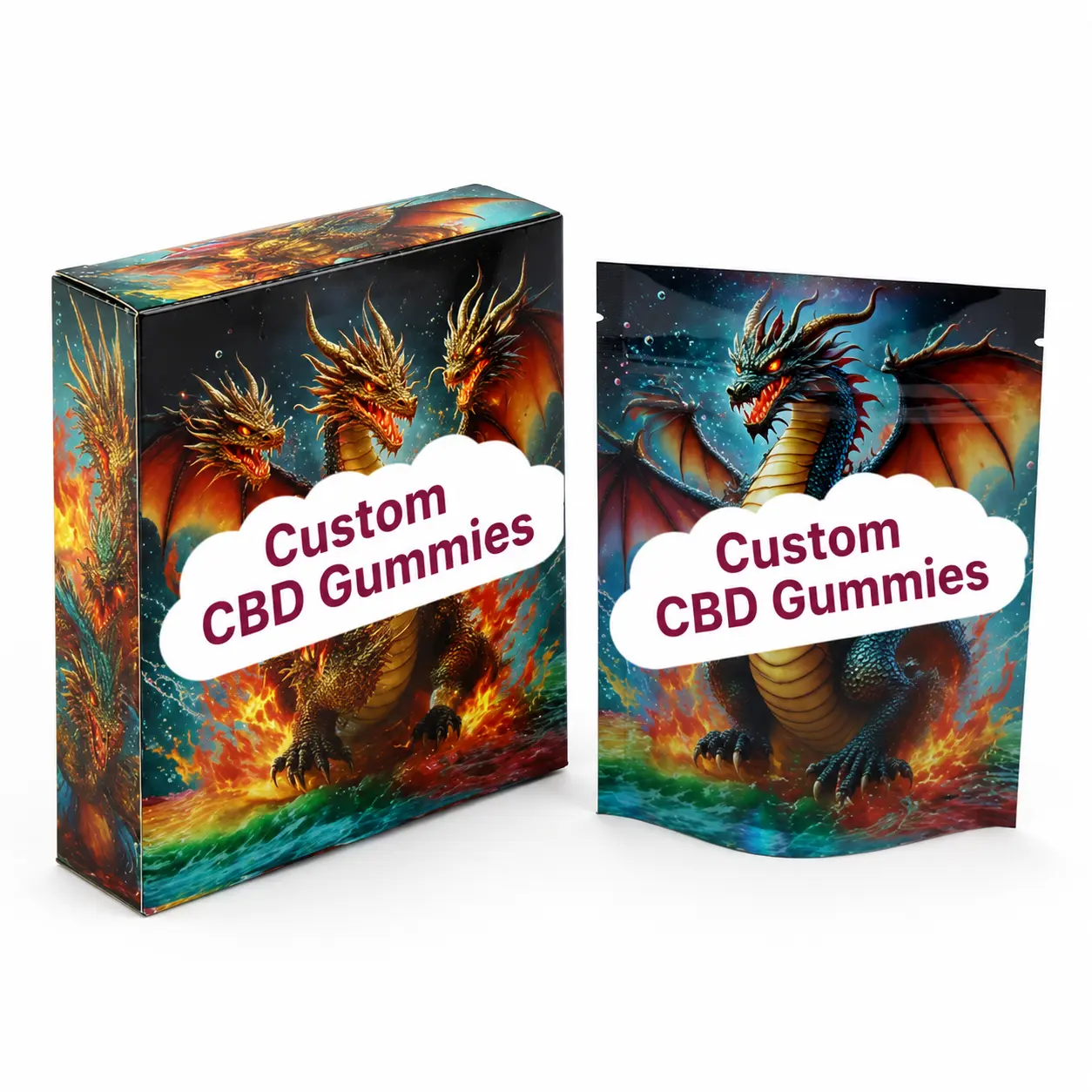
Some brands do both. Pouches for 10-count trial packs, jars in boxes for the 30-count. Same artwork, two formats. For stores that want a counter unit, a printed CBD display box holds a dozen pouches or cartons upright by the register.
Gummies, Heat and Humidity
Leave a pouch of gummies in a warm stockroom and they fuse into one lump. That’s not a packaging fault exactly, but packaging can help. A good barrier film slows down moisture loss and gain. A snug pouch with little trapped air does better than an oversized one. And dusting or a sugar coating on the gummies themselves, which is up to your kitchen, does a lot of the work.
For jars, the carton protects the label from scuffing and keeps light off the product, which some formulators prefer. Corrugated shippers go around the cartons for online orders. If retailers ask you for a resistant closure, see our child resistant mylar bags, and confirm with your compliance advisor what your state expects.
Label Panels for CBD Gummy Boxes
First-time brands are always a bit shocked by how much has to go on there, total CBD and the per gummy number, count, serving size, the ingredient list, allergens, a batch number, warnings, and usually a QR code that opens the lab report on a phone. Rules vary by state, and they change, so we’d point you to our CBD packaging and labeling guide as a starting point and your own advisor for the final word.
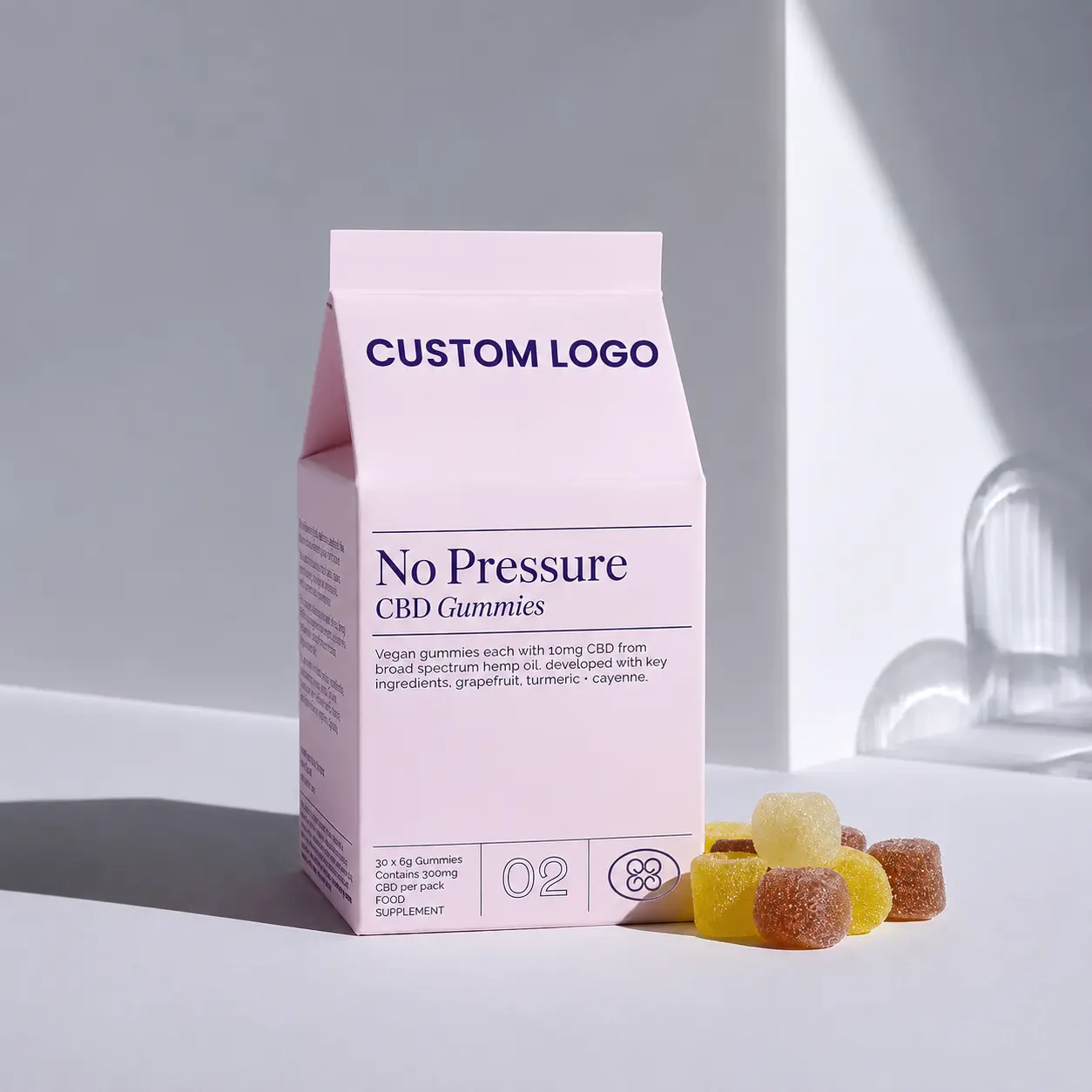
What we focus on is making it all fit and stay readable. Front panel: brand, flavor, strength per gummy. Back and sides: everything else. We’d go matte over gloss here, since tiny type under shiny film catches the store lights and nobody can read it. Want some sparkle? Put holographic foil on the logo only, or a bit of spot UV, and leave the label area alone. (Inks are soy or water-based, if anyone asks.)
Our team sets up the dieline and lays out your artwork free, and checks for type that’s too small to print cleanly. You’ll approve a digital proof, and you can ask for a physical sample. Minimums are low, often around 50 pieces depending on the style, with unit prices dropping as quantity grows. Standard production is 10 to 12 business days after approval, with free ground shipping anywhere in the USA. The full CBD packaging boxes range covers tinctures, creams and pre-rolls too.
CBD Gummy Packaging FAQs
Pouch or jar for a 30-count gummy pack?
Either works. Pouches are cheaper to ship. Jars in a printed carton feel more premium and give more label room.
Where should the QR code for lab results go?
The back or side panel, near the batch number, at a size most phones can scan easily, roughly an inch square.
Can you print different flavors on the same box size?
Yes. One structure with different artwork per flavor is the usual approach and keeps costs down.
Pair It With
Plenty of customers order this alongside custom CBD oil packaging boxes, custom vape cartridge boxes, CBD pre roll boxes and CBD cosmetic packaging boxes. More styles are in CBD packaging boxes, and CBD packaging compliance covers the common sizes.