

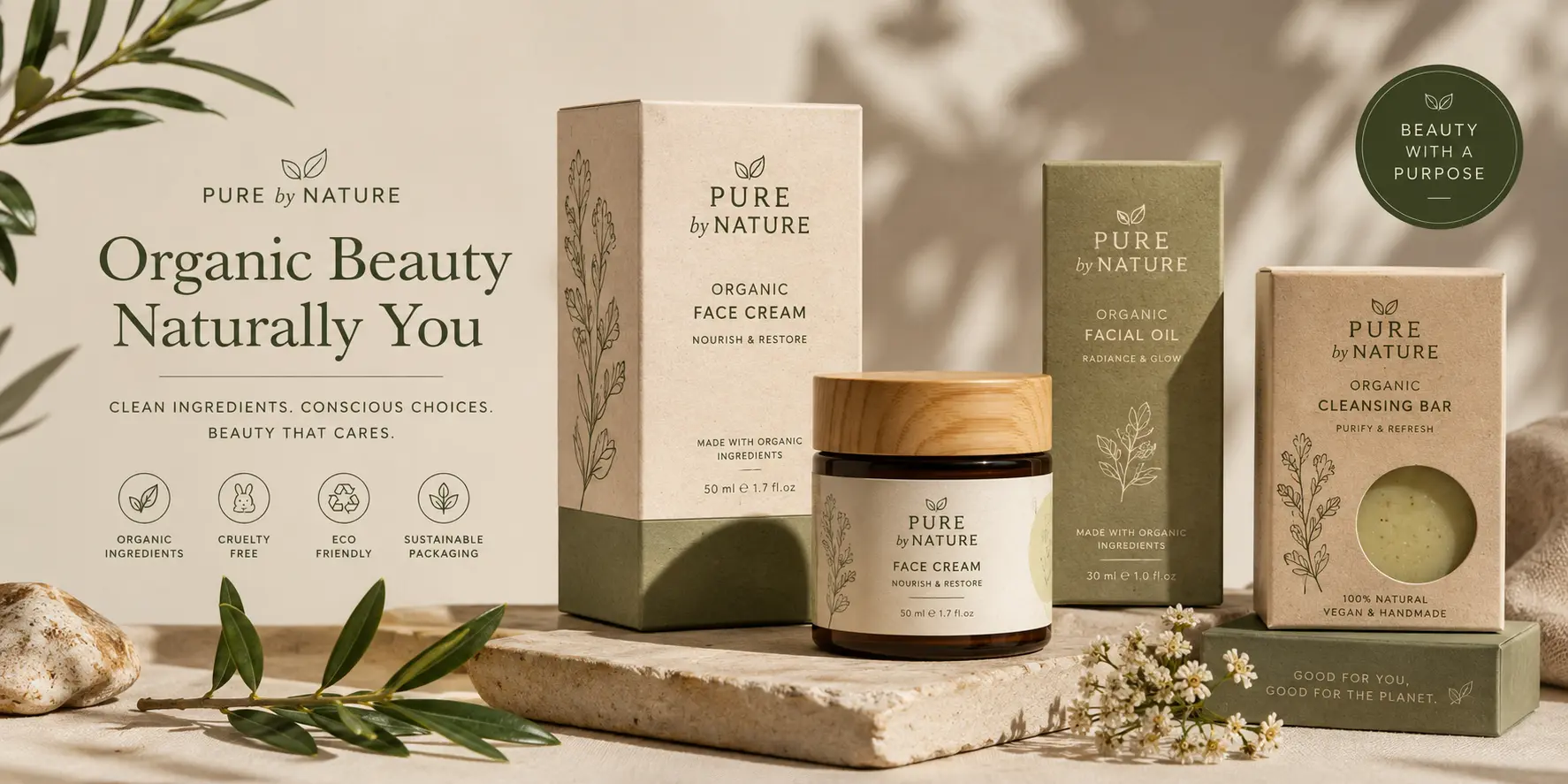
Your organic serum leaks during shipping. Your natural cream oxidizes too quickly. Or your eco-friendly packaging looks cheap and fails to convince skeptical customers. For organic beauty brands, packaging is one of the biggest challenges and one of the greatest opportunities.
This comprehensive guide reveals exactly why packaging for organic skincare products matters more than ever. You’ll discover the best materials, design strategies, cost-saving approaches, and future trends that help clean beauty brands protect formulations, build trust, and drive sales while staying true to their values.
Why Packaging Matters More for Organic Beauty Brands
How Packaging Influences Trust in Clean Beauty
Organic and clean beauty buyers are highly skeptical. They scrutinize every detail. Packaging that looks cheap or overly synthetic instantly raises doubts about your ingredient claims, even if your formula is outstanding.
Why Eco-Conscious Buyers Inspect Packaging Closely
These customers don’t just buy products they buy values. They check for sustainable materials, recyclability symbols, and honest design. Thoughtful packaging reassures them that your brand walks the talk.
The Connection Between Sustainability and Premium Perception
High-quality sustainable packaging elevates perceived value. It signals that your brand is premium, intentional, and responsible allowing you to command higher prices with confidence.
How Packaging Affects Repeat Purchases
A delightful, functional unboxing experience creates emotional connection. When corrugated packaging protects the product perfectly and feels aligned with your values, customers return and become loyal advocates.
Common Mistakes Organic Brands Make with Packaging
Many focus exclusively on ingredients while using generic or poorly performing packaging. This mismatch leads to damaged products, low trust, and lost sales.
Best Packaging Materials for Organic Skincare & Beauty Products
Glass Packaging: Pros, Cons, and Ideal Products
Glass offers superior barrier protection, no chemical leaching, and a luxurious feel. It’s excellent for serums, oils, and toners but is heavier and more fragile during shipping.
Aluminum Packaging for Sustainable Beauty Brands
Aluminum is lightweight, infinitely recyclable, and provides excellent protection against light and air. It works beautifully for creams, balms, and deodorants.
PCR Plastic vs Virgin Plastic
Post-Consumer Recycled (PCR) plastic reduces virgin resource use while maintaining performance. It’s a practical step for brands balancing sustainability with functionality.
Compostable and Biodegradable Packaging Explained
Compostable materials break down into nutrient-rich soil under industrial or home conditions. Biodegradable options eventually break down but may leave microplastics. Choose certified compostable for stronger claims.
Bamboo Packaging: Luxury or Gimmick?
Bamboo adds a natural, premium aesthetic and is rapidly renewable. When sourced responsibly, it’s a strong choice for lids, compacts, and outer packaging.
Glass vs Plastic for Organic Skincare:
Glass wins on purity and perception; plastic wins on weight, durability, and shipping cost. Airless Pumps vs Jars: Airless systems better protect actives from oxidation and contamination.
Request free packaging samples to test real performance with your organic formulations.
Sustainable Packaging Trends Dominating the Beauty Industry
Refillable Beauty Packaging Systems
Refillable pods and containers reduce waste while creating recurring revenue and stronger customer relationships.
Minimalist Packaging Design Trends
Clean lines, neutral tones, and honest materials dominate clean beauty, emphasizing transparency over decoration.
Waterless Beauty Packaging Innovations
Solid bars, powder formats, and concentrated products require less packaging and reduce shipping weight.
Smart Packaging and QR Transparency Labels
QR codes linking to ingredient stories, traceability data, and educational content build deeper trust.
Zero-Waste Beauty Brand Strategies
Brands are moving toward fully circular systems, including return programs and compostable mailers.
Carbon-Neutral Shipping Packaging
Lightweight corrugated with carbon offset programs helps brands meet growing consumer expectations.
How to Choose Packaging Based on Product Type
Packaging for Organic Face Oils
Dark amber or cobalt glass dropper bottles with secure caps protect light- and oxidation-sensitive oils.
Best Containers for Natural Creams
Airless pumps or glass jars with inner liners prevent contamination and maintain texture.
Packaging for Serums with Active Ingredients
Opaque airless or vacuum systems are essential to preserve potency of vitamin C, retinol, and peptides.
Lip Balm and Solid Beauty Packaging Ideas
Recyclable aluminum tins or compostable push-up tubes offer protection and convenience.
Packaging Solutions for Handmade Skincare Brands
Simple kraft mailers with custom labels and molded pulp inserts provide an artisanal yet professional look.
What packaging prevents essential oils from degrading? Dark glass combined with airtight seals and cool storage recommendations. Which containers are safest for organic ingredients? Inert materials like glass and high-quality aluminum.
How Sustainable Packaging Impacts Brand Perception & Sales
Why Customers Pay More for Eco-Friendly Packaging
Conscious consumers associate sustainable corrugated packaging with higher quality and ethical practices, making them willing to spend more.
The Psychology of Premium Sustainable Branding
Authentic green packaging creates pride of ownership and emotional connection that drives loyalty.
Unboxing Experience and Social Sharing
Beautiful sustainable packaging generates organic content on Instagram and TikTok, amplifying reach at zero extra ad cost.
How Packaging Affects Conversion Rates
Premium, trustworthy packaging reduces cart abandonment and increases perceived value on product pages.
Packaging Elements That Increase Perceived Value
Matte finishes, elegant typography, tactile materials, and clear sustainability badges all contribute to higher willingness to pay.
The Real Cost of Eco-Friendly Cosmetic Packaging
Why Sustainable Packaging Costs More Initially
Specialized materials, certifications, and smaller production runs drive higher upfront prices.
Hidden Costs Brands Overlook
Frequent damage, high return rates, and lost customers from poor packaging often exceed material savings.
How to Reduce Packaging Expenses
Standardize sizes, order in bulk, optimize designs for lower dimensional weight, and start with semi-custom solutions.
Low MOQ Packaging Suppliers for Startups
Digital printing and hybrid stock-custom options make premium sustainable packaging accessible for small brands.
Is Eco-Packaging Profitable Long Term?
Yes. Stronger brand perception, higher retention, lower returns, and positive reviews deliver excellent ROI.
Get a free packaging cost estimate for your beauty brand.
How to Find the Right Sustainable Packaging Supplier
Questions to Ask Packaging Manufacturers
- What certifications do your materials hold?
- Can you provide samples and durability tests?
- What are your MOQs and lead times?
- Do you support custom design?
Red Flags When Sourcing Eco-Packaging
Vague sustainability claims, lack of third-party certifications, inconsistent quality, and poor communication.
Certifications That Actually Matter
FSC, GRS (Global Recycled Standard), compostability certifications, and FDA compliance for safety.
Domestic vs Overseas Suppliers
Domestic offers faster lead times and easier collaboration. Overseas can reduce costs at higher volumes.
How to Test Packaging Quality Before Scaling
Conduct drop tests, temperature trials, and real shipping simulations with actual products.
Request packaging samples from verified eco suppliers.
Packaging Design Tips That Make Organic Beauty Products Look Premium
Color Psychology in Clean Beauty Branding
Soft earth tones, gentle greens, and warm neutrals convey natural purity and calmness.
Typography Styles That Signal Luxury
Elegant serif fonts paired with clean sans-serif create sophistication and readability.
Minimalism vs Vibrant Natural Branding
Minimalist designs build trust for clinical organic brands. Vibrant botanical illustrations work for wellness-focused lines.
Label Design Mistakes Hurting Conversions
Overcrowded labels, tiny text, and poor contrast reduce readability and perceived professionalism.
Sustainable Packaging That Still Feels Luxurious
Matte soft-touch finishes, embossing, and strategic use of natural textures create premium appeal without greenwashing.
Common Packaging Mistakes Organic Beauty Brands Must Avoid
- Choosing aesthetics over product protection
- Over-packaging in the name of “eco”
- Using misleading sustainability claims
- Ignoring shipping durability for e-commerce
- Poor label readability that confuses customers
These errors lead to damaged trust, spoiled products, and wasted marketing budgets.
Future of Packaging for Organic Beauty Brands
AI-Driven Sustainable Packaging Design
Artificial intelligence is helping optimize material use, shapes, and structures for minimal waste.
Biotech Packaging Materials
Innovations like mycelium, algae-based films, and lab-grown cellulose are emerging as next-generation options.
Refillable Retail Systems
In-store refill stations combined with durable home packaging are gaining momentum.
Smart Traceability Packaging
QR and NFC technology allows customers to verify authenticity and learn the full product journey.
Circular Packaging Economy
Brands are designing for multiple use cycles and closed-loop recycling systems.
FAQ: Sustainable Packaging for Organic Beauty Brands
What is the best packaging for organic skincare products?
Glass, aluminum, and high-quality PCR plastic with airless systems offer the best balance of protection and sustainability for most formulations.
Is glass packaging better for natural beauty products?
Yes. Glass is inert, recyclable, and provides excellent protection against light and air for sensitive ingredients.
What packaging materials are biodegradable for cosmetics?
Compostable plant-based films, bagasse, and certain molded pulp options are leading biodegradable choices.
How can small beauty brands afford sustainable packaging?
Start with digital printing for lower MOQs, standardize sizes, and work with suppliers offering startup-friendly programs.
What is PCR plastic in cosmetic packaging?
Post-Consumer Recycled plastic uses waste that has already been used by consumers, significantly reducing environmental impact.
Does eco-friendly packaging increase sales?
Yes. Many organic brands report higher conversion rates and customer loyalty when using credible sustainable packaging.
How do you package handmade organic skincare products?
Simple kraft mailers with custom labels, molded pulp inserts, and glass or aluminum inner containers work very well.
What are the safest containers for natural ingredients?
Glass and aluminum are the most inert and safest options for preserving the integrity of natural and organic formulations.
How can beauty brands reduce packaging waste?
Adopt refillable systems, lightweight materials, right-sizing, and recyclable or compostable designs.
Are refillable beauty products the future of skincare?
They are a major and growing trend, offering both environmental benefits and stronger customer retention.
Conclusion
Sustainable packaging for organic beauty brands is no longer optional it’s a powerful competitive advantage. The right packaging protects sensitive natural ingredients, builds deep customer trust, creates shareable moments, and supports profitable growth while staying true to your values.
Key Takeaways:
- Align packaging with both product needs and brand values
- Choose materials that protect actives while reducing environmental impact
- Invest in design that feels premium and authentic
- Test thoroughly and select reliable suppliers
- View packaging as a long-term investment in customer loyalty
Ready to elevate your organic beauty packaging?
Get quote a packaging strategy consultation for your organic beauty brand today. Get expert guidance, request samples, or download resources to make confident, future-proof decisions. Create packaging that protects your products and makes your brand unforgettable.