Steam is the enemy. A burger leaves the kitchen perfect, then sits fifteen minutes in a closed box on a driver’s back seat and turns into a limp, sweaty bun, and that’s really what custom fast food boxes are about fixing (that, and making sure your name is still on the box when somebody finally eats).
Burger joints order these from us, plus chicken shops and food trucks, ghost kitchens, a few small franchises. Most started on plain stock clamshells. They come to us annoyed about two things, soggy food and nobody remembering where it came from.
Custom Fast Food Boxes for Every Menu Item
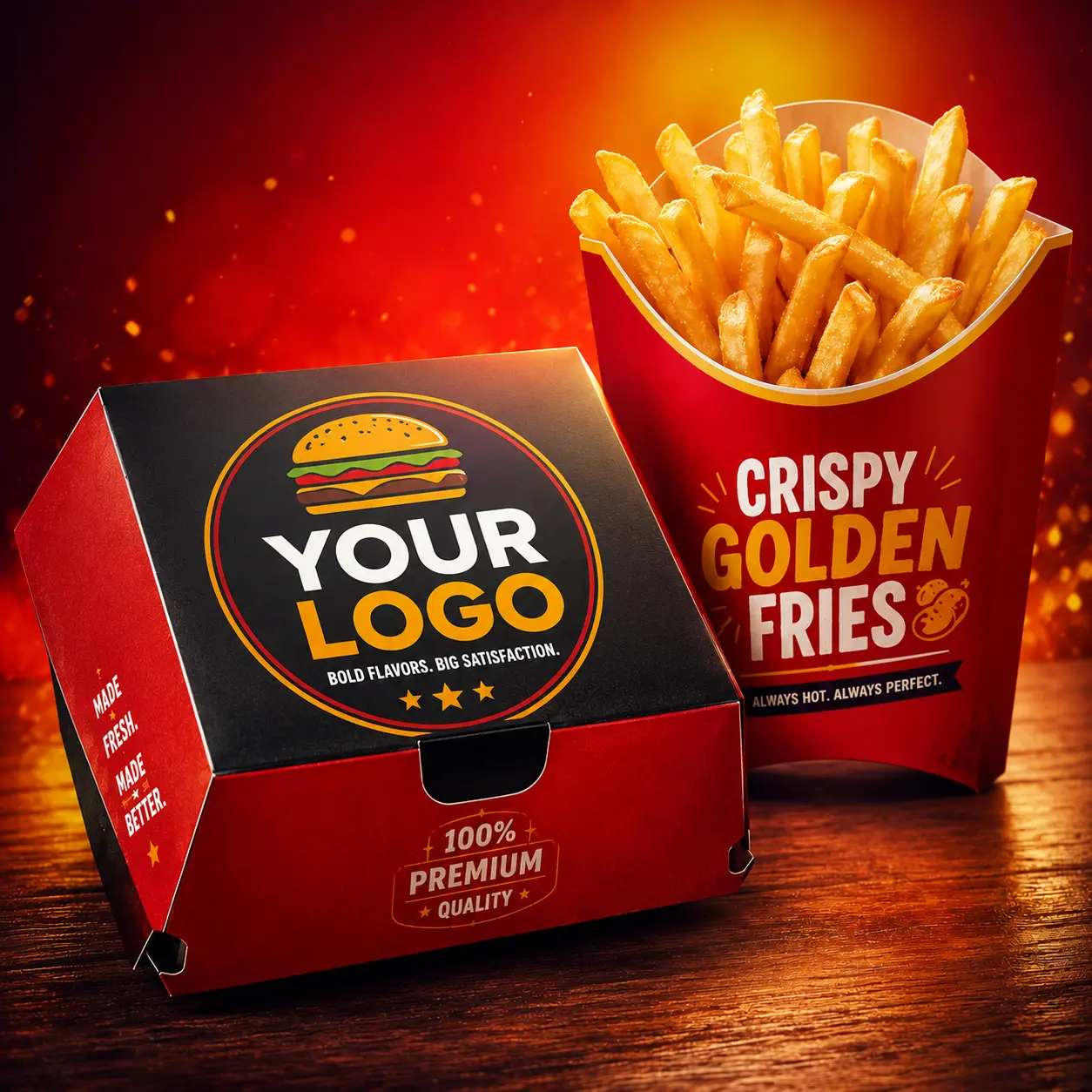
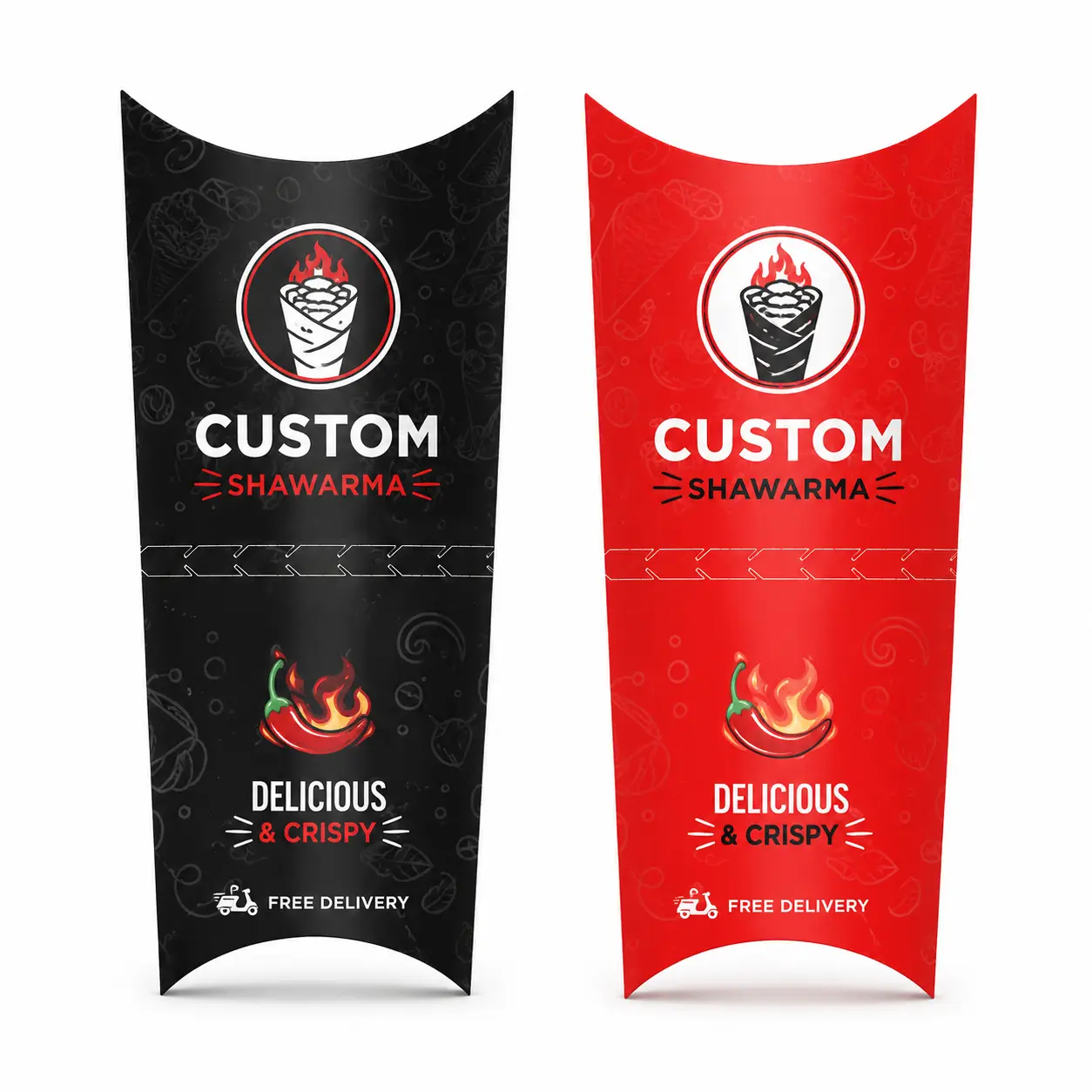
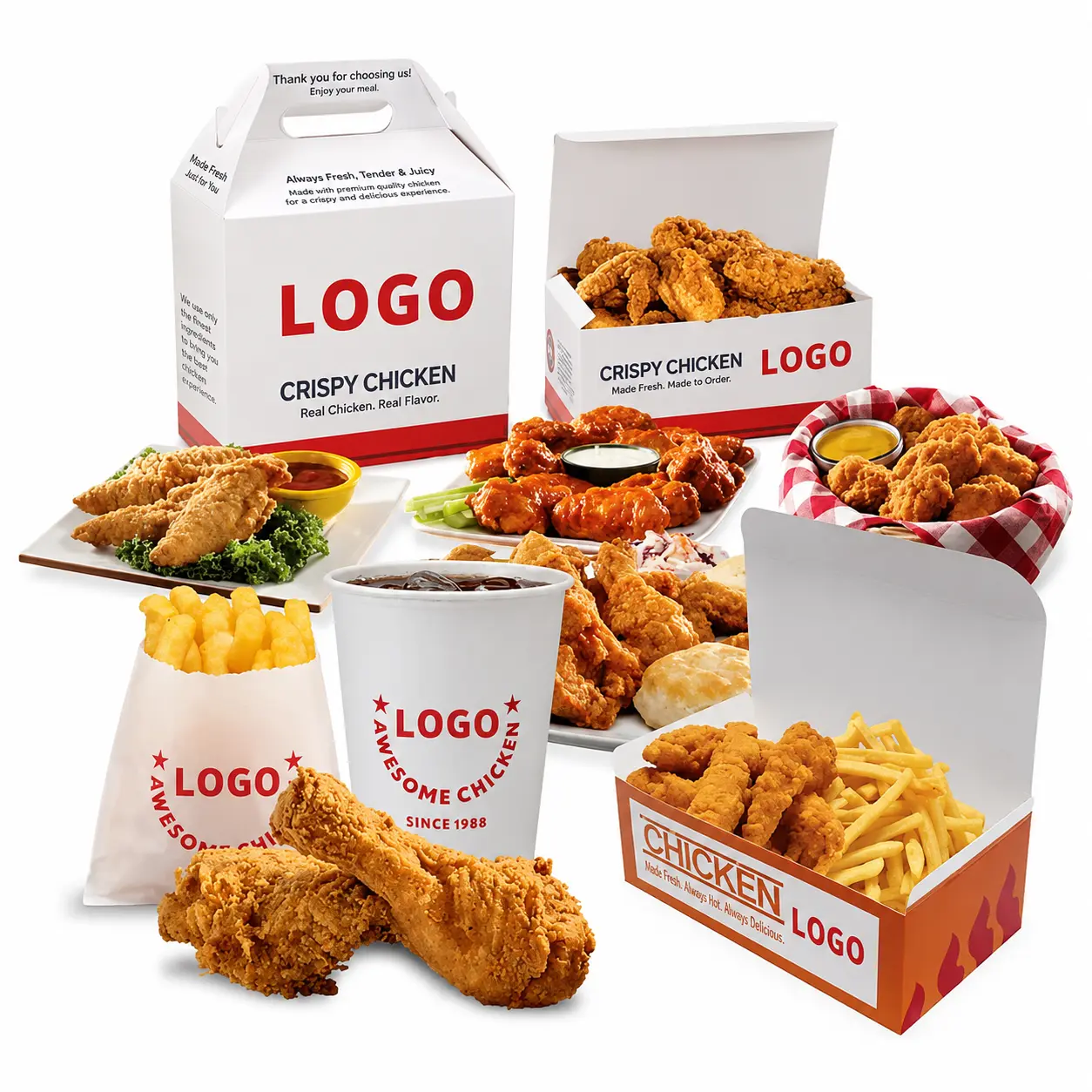
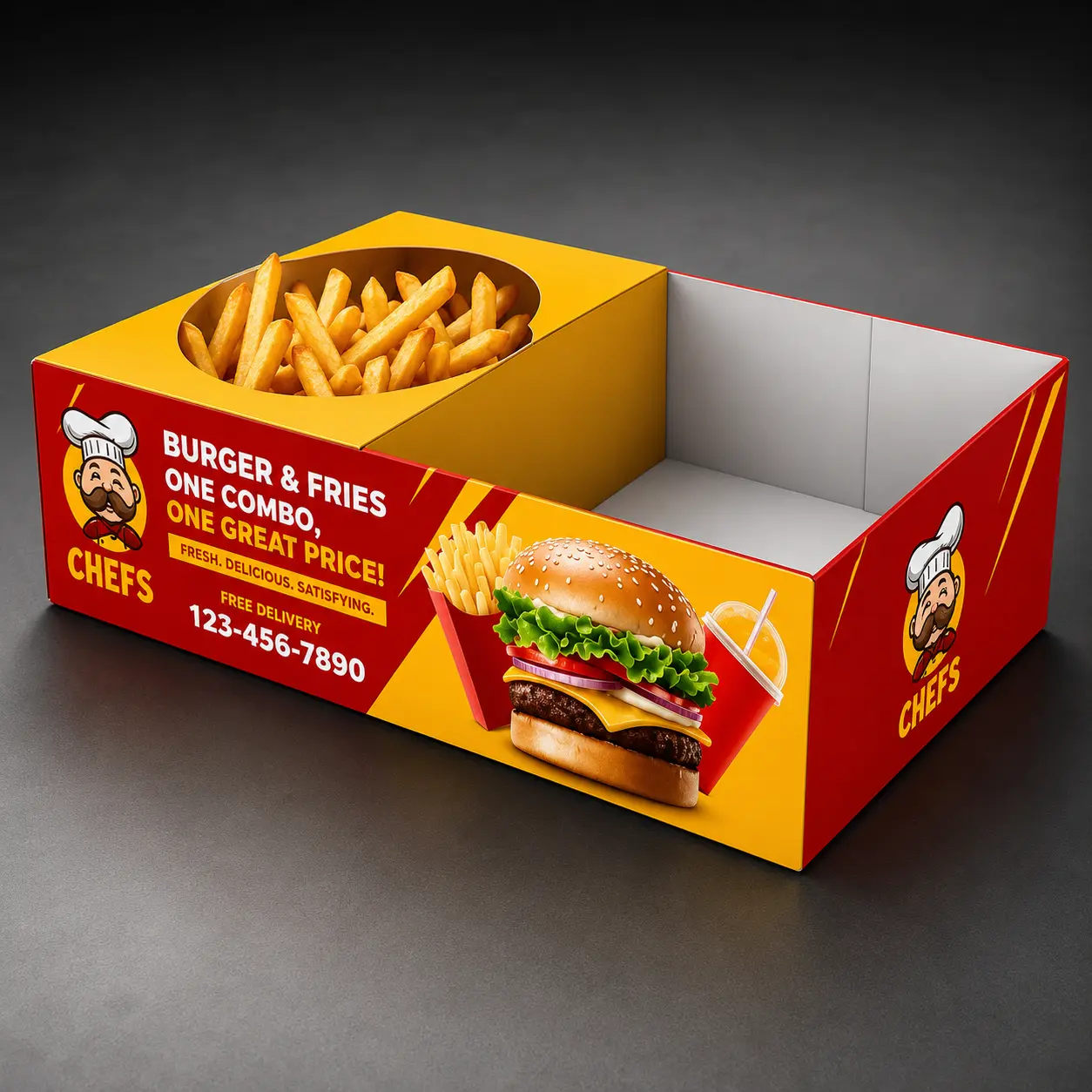
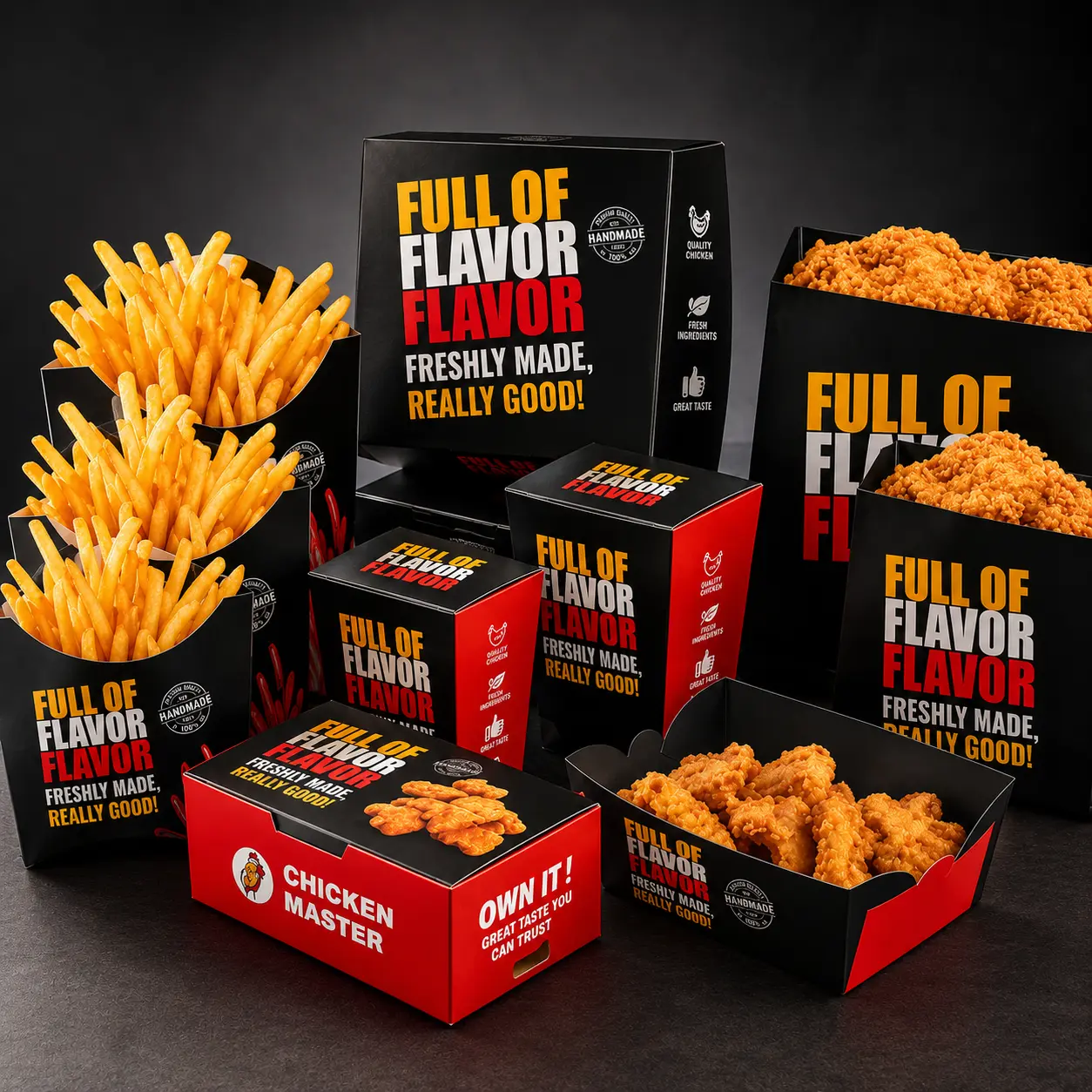
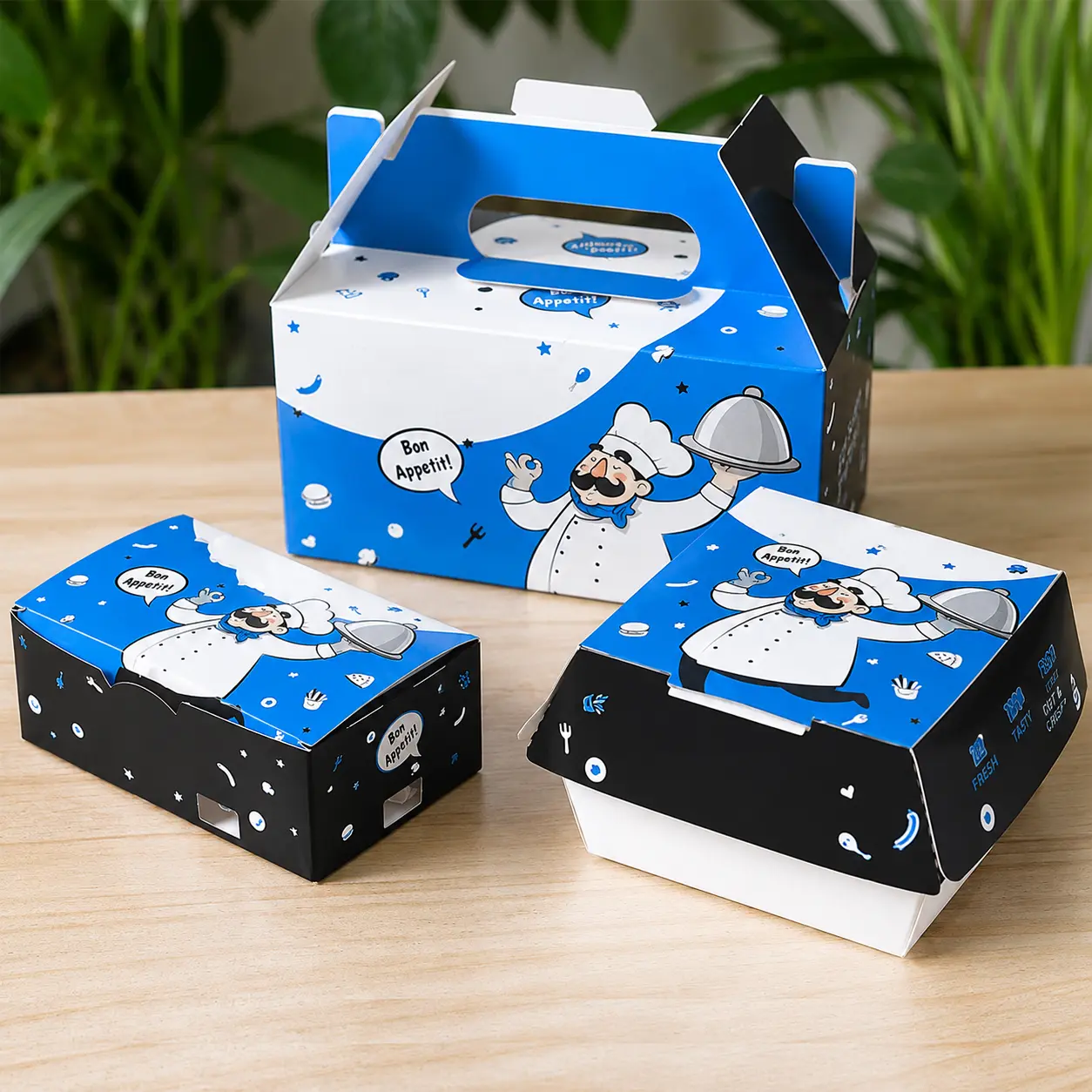
One box won’t cover a menu. Burgers? Clamshell, snug lid. Fries go in a scoop or tall carton, and wings in something deeper. If you do combos we’d honestly split it into a bigger tray or a two-part box, because we’ve seen what a fry carton does to a sandwich after ten minutes of sliding on top of it (and wraps, those just live in a narrow sleeve).
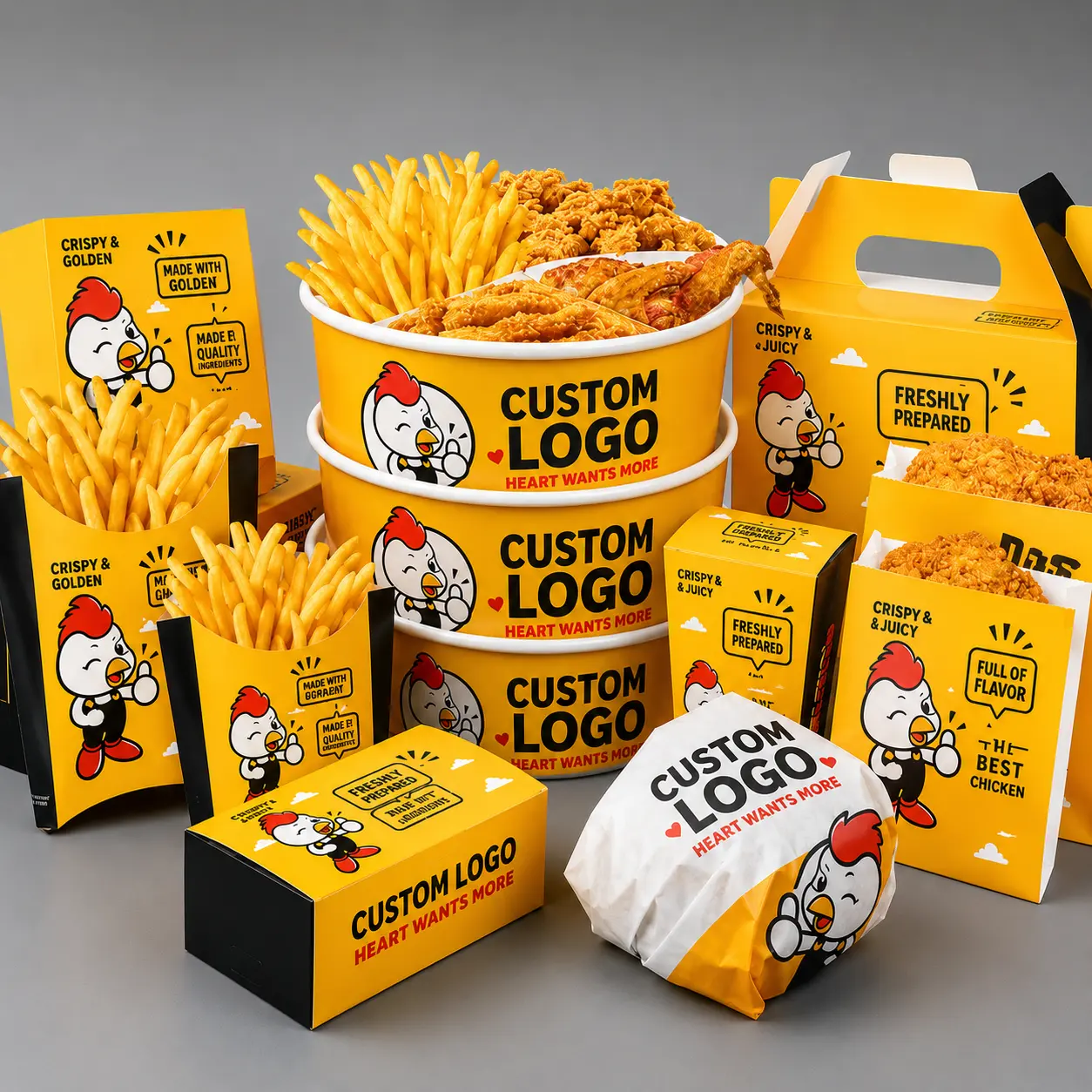
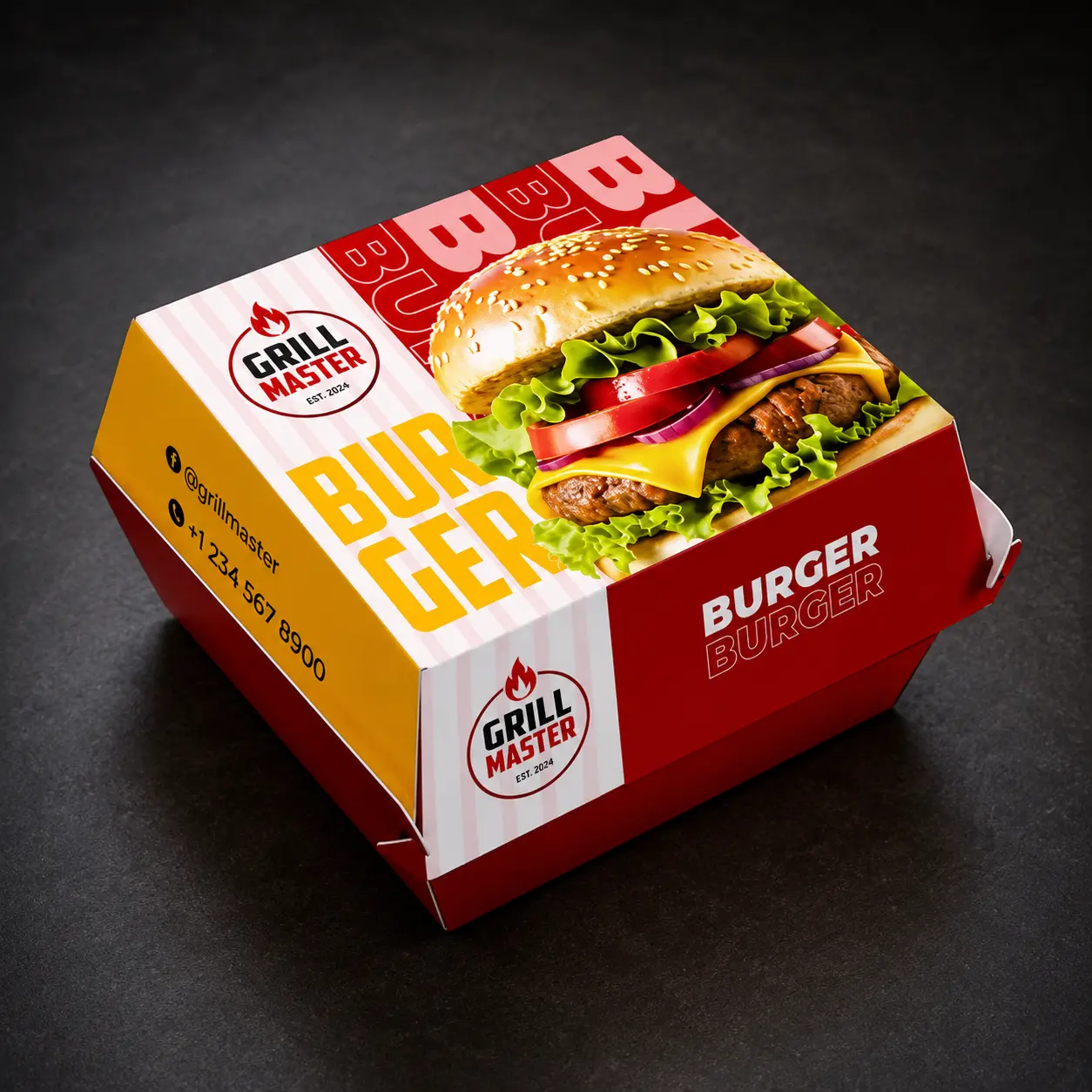
Our burger boxes and hot dog boxes handle the usual shapes. We can match the print across the lot, which matters more than you’d guess when a customer opens one bag with four different items in it.
Keeping Food Hot Without Making It Soggy
You can’t have it both ways, not fully. Shut the lid tight and you keep the heat but you also keep every bit of steam, and fifteen minutes of that turns crispy fries into something sad, so what we do is punch a few small vent holes or slots up top and let some of that wet air escape. Fried food? Vents, always.
Then grease. Plain board drinks oil and goes see-through around a patty, looks awful, gets weaker too. We’d put a coating on the board or drop in a liner. And kraft (everyone loves the look, we get it) shows a grease spot faster than anything, so if you go kraft, go coated.
- Vent slots for fried items
- Grease-resistant coating or liner
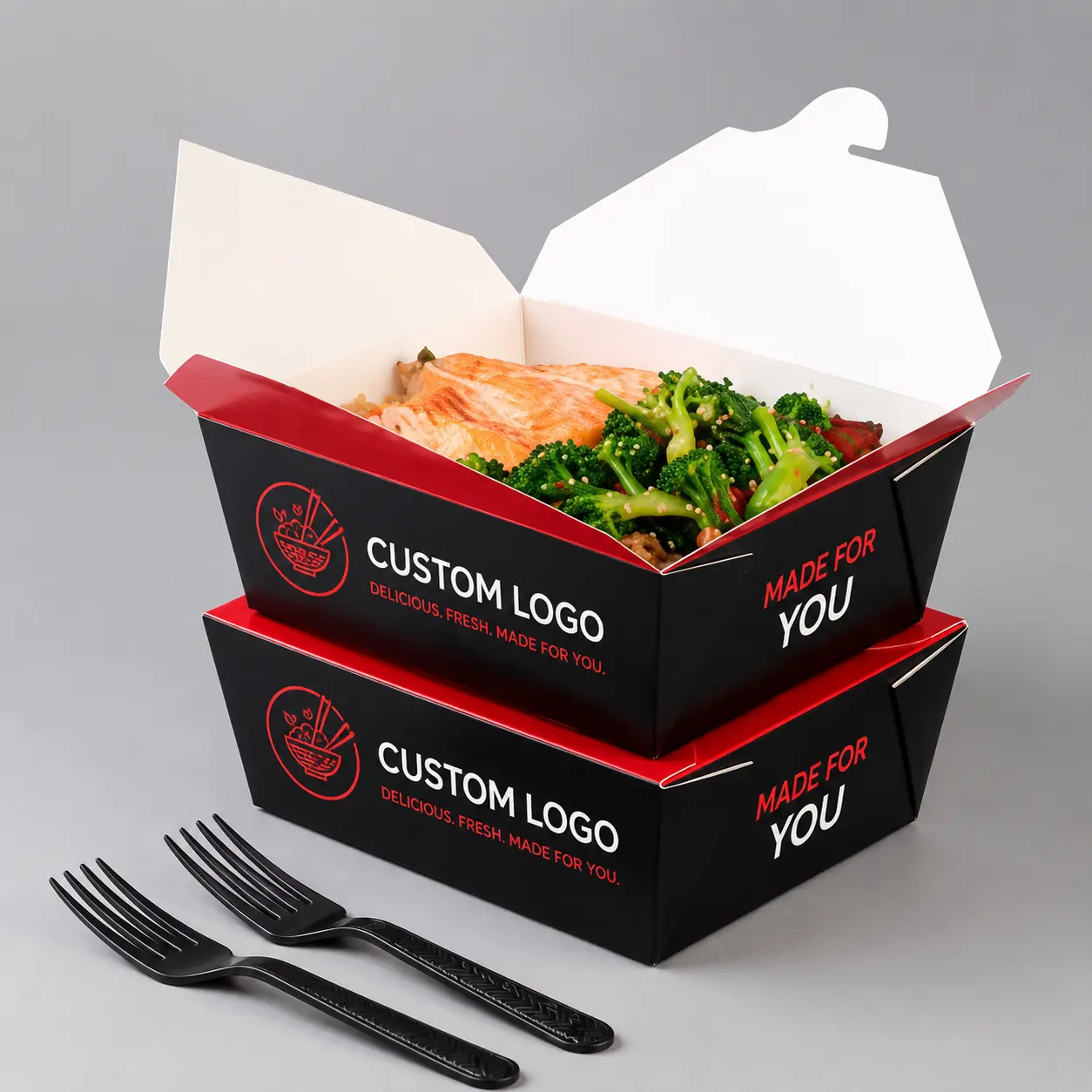
- Locking tabs so lids don’t pop open in the bag
Boxes Built for Delivery Bags
Delivery brings its own headache, which is stacking. Three meals piled in an insulated bag put all their weight on the bottom box, and a flimsy clamshell caves straight in on the food, so we’d go a slightly heavier board, or E-flute corrugated for big platters, and keep the lids flat because rounded tops slide around in the bag.
If delivery is a big chunk of your sales, our guide to corrugated boxes for food delivery businesses goes further into strength and sizing. Cups, trays and carriers are in the wider food and beverage packaging range.
Printing and Ordering Your Fast Food Packaging
Bold and simple wins on food boxes. Logo, your colors, maybe your Instagram handle or a QR code for reordering, that’s plenty. We print with soy-based and water-based inks. Our team sets up the dieline and lays out the design at no extra cost, you approve a digital proof, and if you want to test with real food first just ask for a physical sample.
Minimums are low, often around 50 boxes depending on the style, and the per-unit price drops as volume goes up. Production is usually 10 to 12 business days after you approve the proof, with free ground shipping across the USA. Tell us what’s on your menu and we’ll suggest boxes.
Custom Fast Food Boxes FAQs
Will kraft fast food boxes show grease?
Uncoated kraft does, and pretty quickly. Coated kraft board or a paper liner keeps it clean.
Can I get vents in a burger clamshell?
Sure, it’s the first thing we’d add for a burger place. Two or three little slots and the bun survives the drive.
Can one design work across different box sizes?
It can. We adapt the same artwork to each dieline, so burger box, fry carton and combo tray all match.
More From This Range
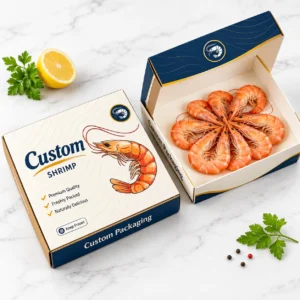
Similar options include custom hotdog boxes, custom frozen food boxes, custom chinese takeout boxes and custom printed pizza boxes. Browse all of them in food and beverage.