

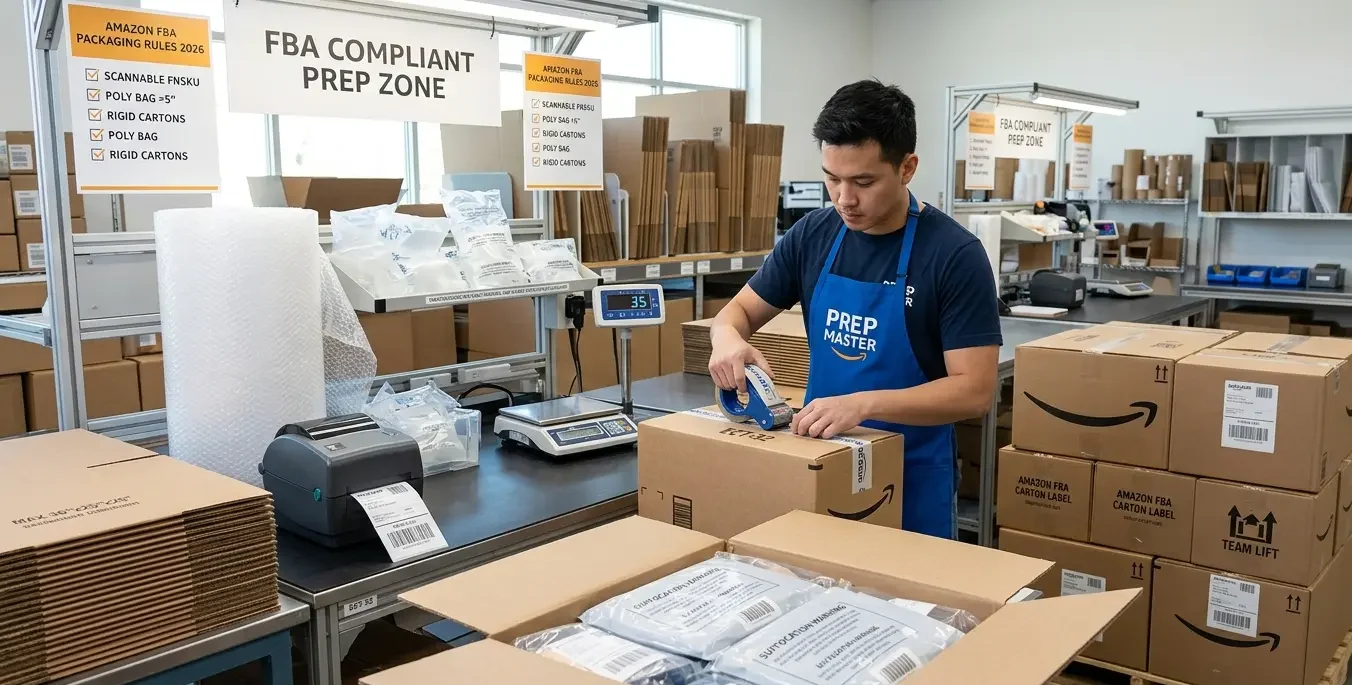
Selling on Amazon FBA can transform your business with Prime shipping, storage, and fulfillment handled by Amazon. But one wrong box, missing label, or overlooked poly bag can lead to rejected shipments, surprise fees, damaged inventory, and lost sales.
If you’re a new or scaling seller frustrated by confusing rules, shipment rejections, and rising costs, this guide delivers clear, actionable advice. You’ll learn exactly what Amazon requires in 2026, how to package products correctly, and how to avoid costly mistakes that sink first-time sellers.
By the end, you’ll have a complete playbook to get your inventory accepted, protected, and selling fast.
What Amazon Considers “FBA-Compliant Packaging”
Amazon defines compliant packaging as protection that keeps products sellable through warehouse handling, picking, and shipping. Every unit must arrive clean, scannable, and undamaged. Non-compliant inventory risks rejection, repackaging at your expense, or inbound defect fees.
Core requirements include:
- Scannable barcodes on every unit.
- Secure, protective packaging that prevents shifting or damage.
- Proper carton standards: rigid six-sided corrugated boxes with intact flaps.
- No theft-prevention devices attached.
- Compliance with product-specific rules (fragile, liquid, etc.).
Amazon may add custom requirements based on damage history. Since January 1, 2026, sellers are fully responsible for all prep and labeling.
Difference Between Packaging, Prep, and Labeling
Sellers often confuse these terms, leading to errors.
- Packaging: Outer materials protecting the product (poly bags, bubble wrap, boxes). It shields from damage and meets safety rules like suffocation warnings.
- Prep: Specific actions like bagging, bundling, bubble wrapping, or adding inserts to meet FBA standards.
- Labeling: Applying FNSKU labels, expiration dates, or warnings so Amazon can track and sell the item.
These overlap but serve different purposes. Strong packaging without correct labeling still fails. Proper labeling on weak packaging leads to damage.
Amazon FBA Packaging Rules for Individual vs Case-Packed Products
- Individual items: Each unit needs its own FNSKU label and any required prep (e.g., poly bag for apparel). Ship loose if not bundled.
- Case-packed: Multiple identical units in one manufacturer case. Most sellers label individuals for flexibility.
Mixing non-identical items in one box often triggers issues unless correctly prepared as a bundle.
Which Products Require Extra Prep
Certain categories always need more attention:
- Apparel and soft goods (poly bags).
- Fragile items (bubble wrap, double boxing).
- Liquids (leak-proof, double-sealed).
- Sharp objects (safety covering).
- Multi-packs or sets (bundling).
- Anything with small parts or choking hazards.
Review your category requirements carefully in Seller Central.
How Amazon Decides Inventory Acceptance
Amazon scans barcodes, inspects packaging, and checks carton compliance upon arrival. Issues trigger defects, fees, or rejection. Consistent compliance builds trust and faster processing.
Pro Tip: Monitor your Inbound Performance Dashboard regularly to catch and fix issues early.
How to Package Products for Amazon FBA Step-by-Step
Follow this process to minimize delays and rejections.
Step 1: Choose the Right Packaging Material
Match materials to your product. Use 1.5 mil minimum thickness poly bags for apparel. Add bubble wrap for fragile items. Select sturdy corrugated cartons (ECT-32 or better). Avoid soft mailers or overly large boxes that waste space and increase fees.
Lightweight yet protective options help control storage and fulfillment fees.
Step 2: Protect Products from Warehouse Handling Damage
Warehouse processes involve stacking, conveyor movement, and drops.
- Add 2+ inches of cushioning around items.
- Use void fill (air pillows, paper) to prevent shifting.
- Double-box fragile goods.
- Seal everything securely.
Real-world example: One seller shipping glassware reduced returns by 40% after switching to proper foam inserts and double boxing.
Step 3: Apply FNSKU Labels Correctly
Print labels in black ink on white, non-reflective, removable adhesive paper. Place on a flat surface, away from edges or seams. Ensure the barcode scans clearly. Include product name and condition.
Label Placement Tip: Test scannability before shipping. Cover with clear tape if needed, but avoid glossy materials that cause glare.
Step 4: Use Approved Cartons and Dimensions
2026 Carton Limits (US FBA):
- Max: 36″ length x 25″ width x 25″ height.
- Max weight: 50 lbs (unless single oversized item).
- Use rigid six-sided corrugated boxes with sealed flaps. Contents must not shift when shaken.
Visual Workflow:
- Individual product prep and labeling.
- Inner protection and void fill.
- Secure carton packing and sealing.
- Carton labeling.
- Final verification.
Step 5: Create Shipment Plans Inside Seller Central
Create a new shipment, enter quantities accurately, and follow the prompts for labeling and routing. Print carton labels and affix them properly. Schedule delivery appointments when required.
Common Pain Point Fix: Always double-check dimensions and weights in your shipment plan.
Amazon FBA Labeling Requirements Sellers Often Miss
FNSKU vs UPC vs ASIN Explained
- UPC/EAN: Manufacturer barcode.
- FNSKU: Amazon’s unique seller-specific barcode. Required for most items.
- ASIN: Amazon’s product identifier not used for physical labeling.
Where Labels Must Be Placed
Flat surfaces only. One per unit, easily scannable without opening packaging. Carton labels go on the outside.
Barcode Scannability Rules
High contrast, no wrinkles, tears, or obstructions. Always test with a scanner before shipping.
Common Label Rejection Reasons
- Poor print quality.
- Labels placed on curves or edges.
- Duplicate or incorrect barcodes.
- Missing expiration dates on dated items.
Expiration Date Labeling Requirements
Perishable or dated products need clear “Best By” or expiration labels in addition to FNSKU.
Real Example: A full pallet was rejected due to unscannable labels from low-quality printing, resulting in major losses.
Packaging Materials Best for Amazon FBA Products
Poly Bags: When They Are Required
Required for clothing, textiles, and small parts. Minimum 1.5 mil thick, transparent, and fully sealed. Bags with openings 5 inches or larger need suffocation warnings.
Bubble Wrap Requirements
Use for fragile items with full coverage and secure taping.
Corrugated Boxes vs Mailer Boxes
Always choose rigid corrugated boxes for FBA shipments. Mailers frequently fail inspection.
Dunnage and Void Fill Options
Air pillows, kraft paper, or foam. Choose based on protection needs and weight.
Eco-Friendly Packaging Alternatives
Recycled poly bags, biodegradable bubble wrap, and paper-based options that still meet strength standards.
Cheap vs Durable: Cheap materials often lead to higher damage and returns. Durable options protect your margins long-term.
Amazon FBA Packaging Mistakes That Lead to Rejections
Many sellers only discover these issues after expensive rejections:
- Missing suffocation warnings on poly bags.
- Incorrect carton weights or missing heavy labels.
- Oversized or under-protected packaging.
- Weak box sealing that allows contents to shift.
- Mixing different SKUs without proper bundling.
Costly Reality: One rejected shipment can erase weeks of profit. Create and follow a pre-shipment audit checklist every time.
Expert Tip: Photograph your packed cartons and scanned labels for records.
How to Reduce Amazon FBA Prep Fees
With Amazon no longer offering prep services, proper self-prep or outsourced prep prevents costly inbound defect fees.
What Triggers Amazon Prep Fees (Defect Fees)
Non-compliant shipments missing labels, poor packaging, or routing errors can result in significant per-unit charges.
When to Prep Inventory Yourself
Best for smaller volumes where you want full control. Invest in quality supplies and tools.
When to Outsource Prep
Scale beyond 100–200 units per month or when handling fragile, liquid, or complex items.
Cheapest Packaging Strategies That Still Meet Compliance
Buy compliant materials in bulk, standardize your SKUs, and optimize protection without excess.
Packaging Automation for Scaling Sellers
Thermal printers, label applicators, and auto-baggers reduce errors and speed up operations.
Packaging Rules for Fragile, Liquid, and Oversized Products
Fragile Item Prep Checklist
- Full bubble wrap or foam protection.
- Double boxing with 2–3 inches of cushioning.
- “Fragile” and “This Side Up” labels.
- Physical shake test before sealing.
Leak-Proof Packaging Requirements for Liquids
- Double-sealed caps.
- Individual poly bagging.
- Absorbent material inside the box.
- Clear leak warnings if applicable.
Sharp Product Safety Prep
Cover all edges and points. Use rigid protection and outer poly bags.
Oversized Inventory Carton Rules
Stay within size and weight limits. Minimize empty space and use appropriate palletization.
DIY FBA Prep vs Professional Prep Service
Cost Comparison: DIY has lower per-unit cost but higher time and error risk. Professional prep centers charge more per unit but ensure compliance.
Time Investment: DIY works for low volume. Outsourcing frees you to focus on sourcing and marketing.
Who Should Outsource? Growing private label and high-volume sellers benefit most from prep centers.
Small vs Large Sellers: Start DIY, then transition to professional help as volume increases.
Amazon FBA Packaging Checklist for Sellers
Use this checklist before every shipment:
Product Protection Checklist
- Sufficient cushioning and void fill.
- No movement inside the carton.
- Category-specific prep completed.
Labeling Checklist
- Scannable FNSKU on every unit.
- Correct carton labels applied.
- All required warnings and dates present.
Carton Checklist
- Within size and weight limits.
- Rigid, properly sealed boxes.
- Contents secure when shaken.
Shipment Creation Checklist
- Accurate details in Seller Central.
- Correct routing and appointments.
Final Compliance Verification
- Visual inspection.
- Barcode scan test.
- Documentation photos taken.
FAQ: Amazon FBA Packaging Requirements
Do all Amazon FBA products need labels? Yes. Every unit requires a scannable barcode typically an FNSKU.
What packaging does Amazon require for FBA? Protective materials that keep items sellable, compliant poly bags where needed, and rigid cartons meeting size and weight limits.
Can I use my own branded packaging for Amazon FBA? Yes, as long as it meets all protection, labeling, and safety requirements.
What happens if my shipment doesn’t meet Amazon packaging rules? Rejection, return shipping at your cost, or defect fees.
Does Amazon package products for sellers? No. As of 2026, sellers (or prep services) must handle all packaging and prep.
What size boxes are allowed for Amazon FBA shipments? Maximum 36″ L x 25″ W x 25″ H and 50 lbs for standard cartons.
Are poly bags required for Amazon FBA? Yes for many items like apparel and small parts, with proper suffocation warnings.
How do I avoid Amazon prep fees? Meet all packaging and labeling requirements before shipping.
Can I send fragile products to Amazon FBA? Yes with proper double boxing, cushioning, and clear labeling.
What is the cheapest way to package Amazon FBA inventory? Buy quality materials in bulk, prep in-house for smaller volumes, and focus on sufficient (not excessive) protection.
Conclusion: Master FBA Packaging for Long-Term Success
Amazon FBA packaging rules protect your products, speed up acceptance, and maximize profitability. By following compliant processes, choosing the right materials, and avoiding common pitfalls, you turn potential headaches into competitive advantages.
Ready to get a quote with confidence and stop losing money on rejections?
Key Takeaways:
- Take full responsibility for prep and labeling.
- Prioritize scannability, protection, and carton standards.
- Standardize your process as you scale.
- Audit every shipment carefully.