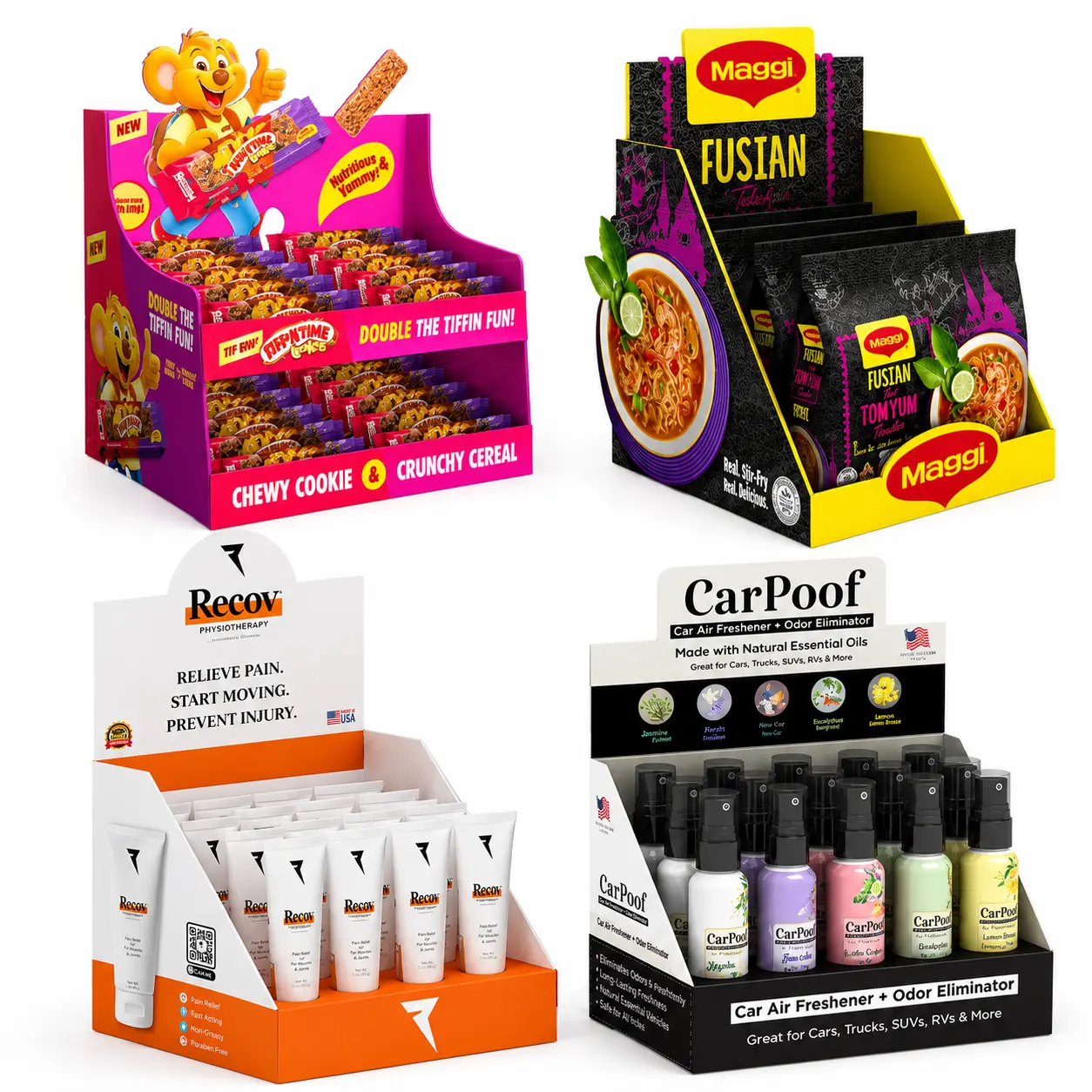
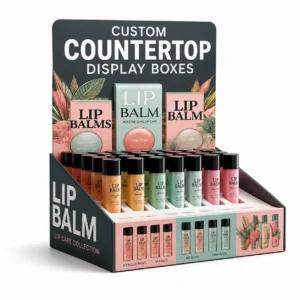
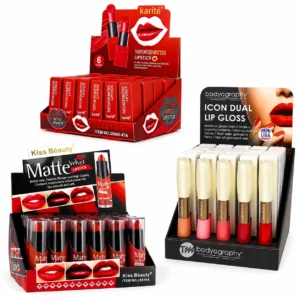
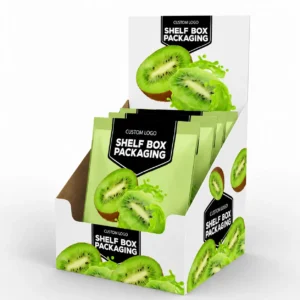
What was the last thing you grabbed at a checkout that wasn’t on your list? Gum, maybe, or a lip balm or one of those cheap phone chargers, and odds are it was sitting in a little printed box right by the till. Custom display boxes put your product in that spot, organized and branded, so a store can stock a dozen units in a few square inches of counter.
Small brands use them to get into local shops, since a store owner is much happier to take a product that comes with its own display. Lip balm makers, candy and snack brands, CBD companies, keychain sellers, supplement brands and cosmetics lines are our regulars.
Custom Display Boxes for the Checkout Counter
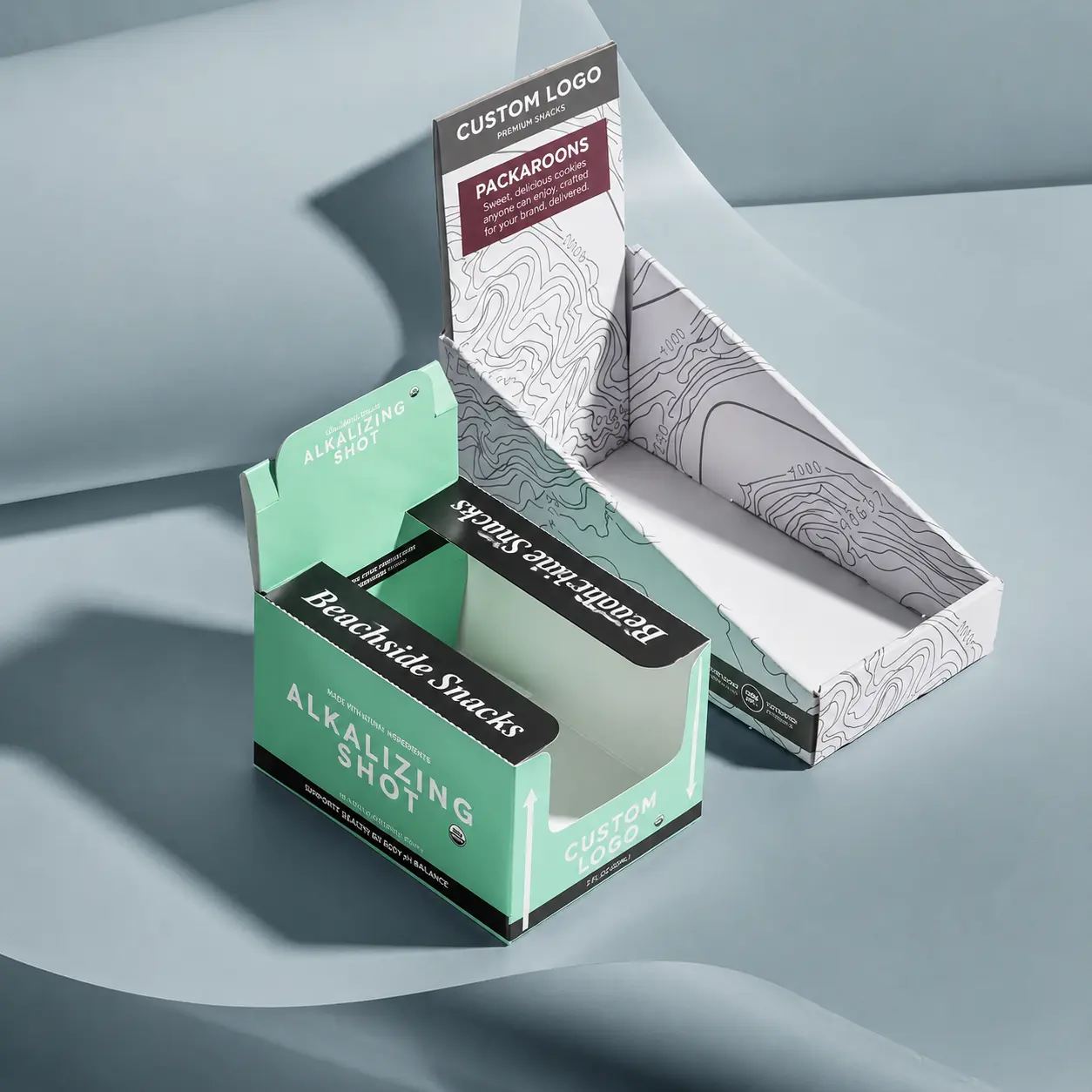
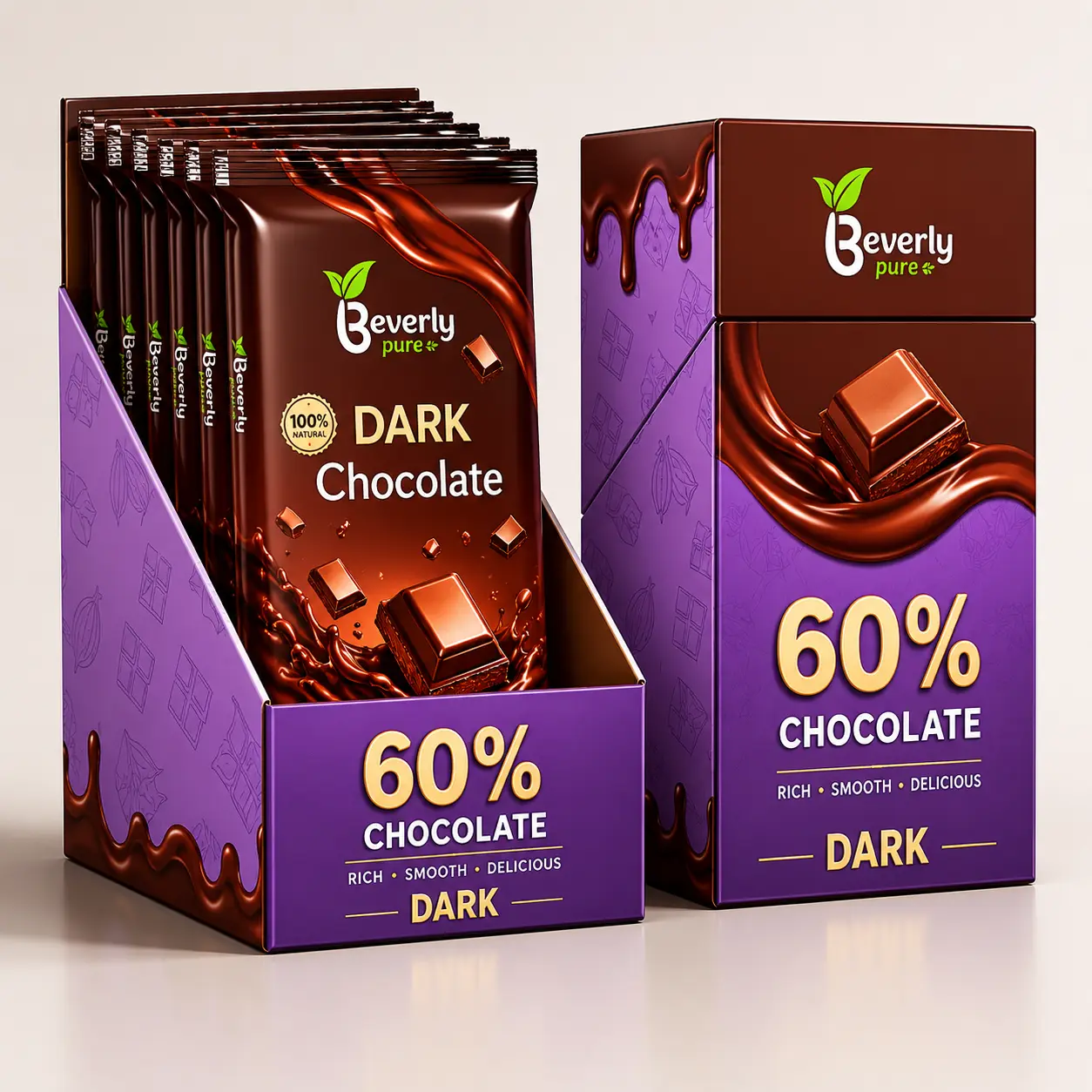
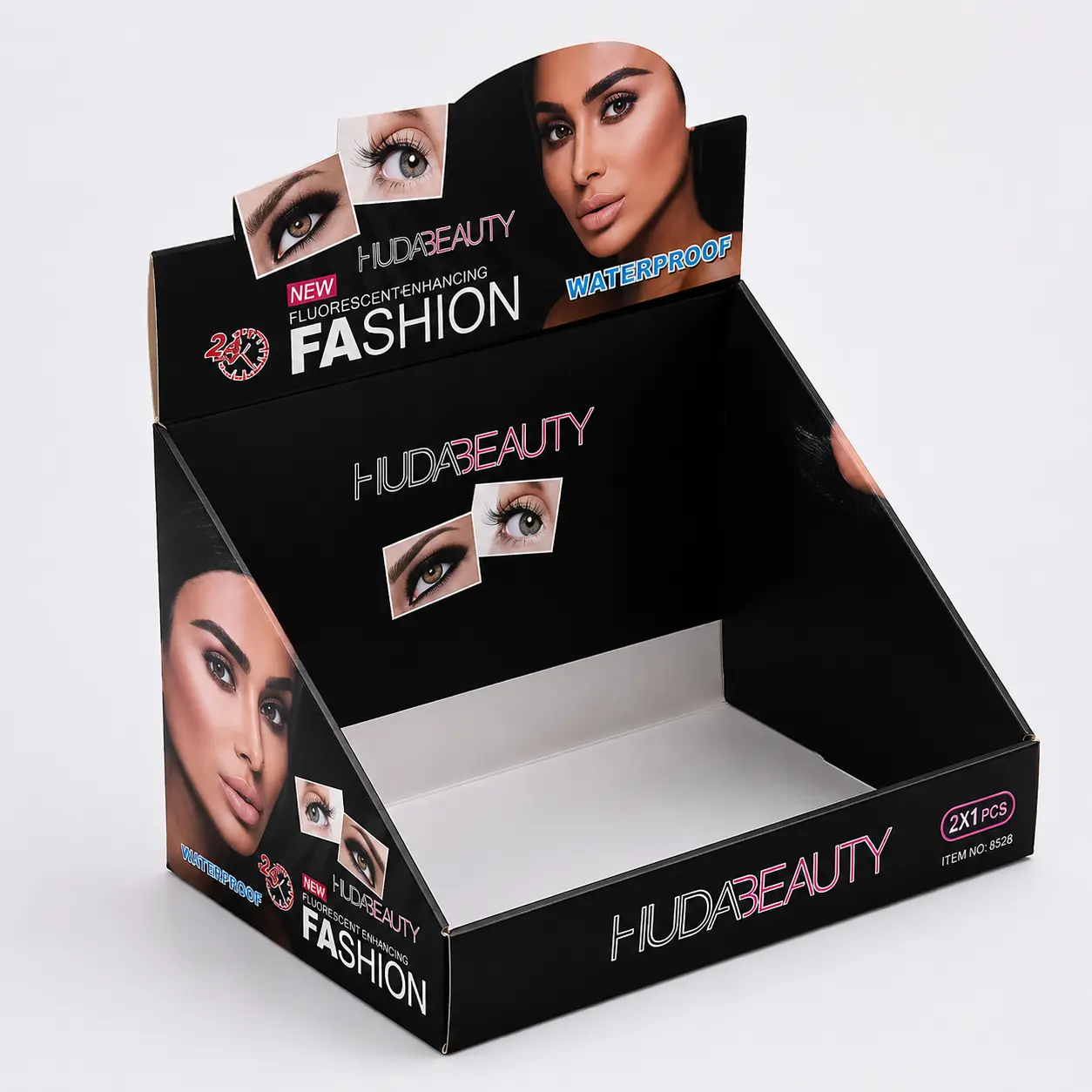
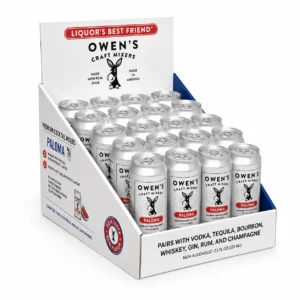
The most common style is a tray with a raised back panel, sometimes called a lid-up display. The box ships closed with product inside. Somebody at the store flips the lid up and back so it stands as a header, and that’s the display done. Nothing extra to set up. A tear-away style works similarly, with a perforated front panel that comes off to reveal the product.
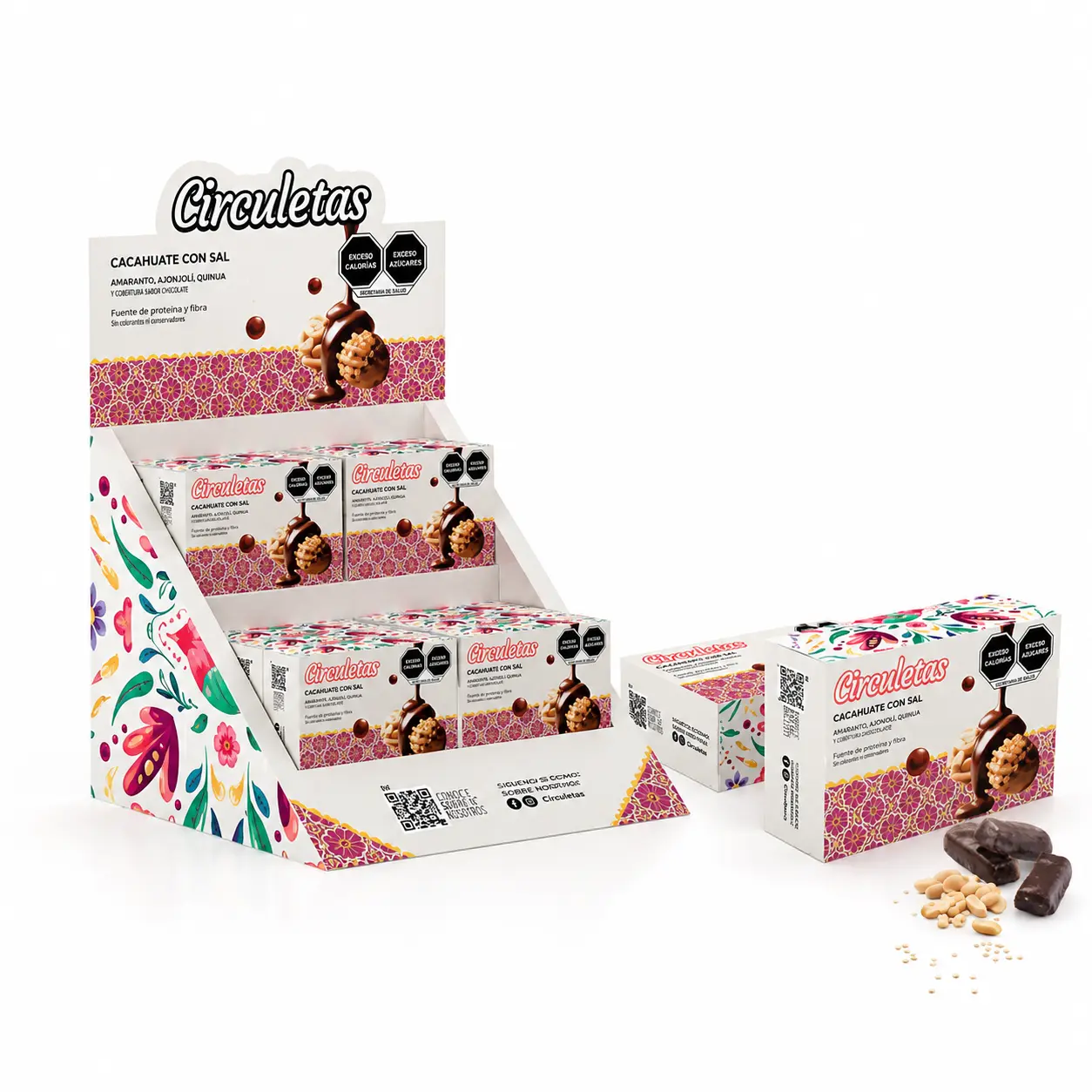
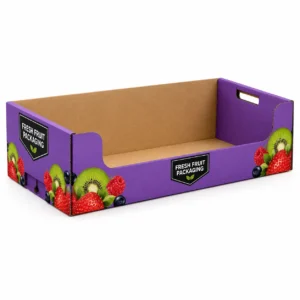
Shelf displays are a little different. They sit on a regular shelf and hold more product in rows, often with a shorter front lip so customers can see every unit. Our post on what size display box you need helps you work out the footprint.
How Many Go In, and How Heavy
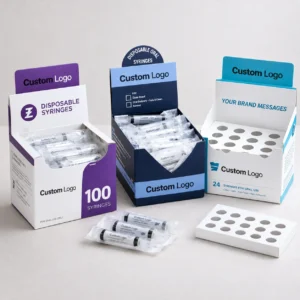
First question we ask: how many units per display? Usually 12 or 18 or 24, because shops tend to buy by the dozen. After that it’s about how the thing sits, so a lip balm tube wants to stand up in a grid insert while a candy bar is happier leaning back at an angle, and small cartons just stack in rows. The insert holds everything neat even after half the units are gone, which is when a display either looks good or looks picked over.
Heavier products push the material choice. SBS paperboard works for light items and gives bright print. Kraft has a natural look. E-flute corrugated is stiffer and handles bottles, jars and anything shipped to stores already filled. If you’re weighing materials, our guide on the best material for display boxes covers it.
Printing Display Packaging for Small Spaces
A counter display is seen from a few feet away, so the header needs to say what’s inside and why someone should grab it, in very few words. A big logo, a product name and maybe a price line or a single benefit. Store lights are harsh, so we’d go matte to kill the glare. A bit of foil or spot UV on the logo? Fine, just keep it to the logo.
The dieline and artwork setup are on us (no charge), and nothing gets printed until you’ve said yes to a digital proof. A physical sample is available so you can load it with real product before the bulk run. Minimums are low, often around 50 displays depending on style, production takes 10 to 12 business days after approval, and ground shipping is free in the USA. For more specific builds, see countertop display boxes and tear away display boxes, or browse all display packaging.
Display Box FAQs
Do display boxes ship with product inside?
Most do. The box ships closed, then the store opens it and folds the lid back into a header display.
How many products should one display hold?
Twelve to twenty-four is typical for counter displays. Fewer than that looks a bit empty, more and the shop owner starts grumbling about counter space.
Tray or tear-away, which is which?
A tray display has a lid that folds back into a header. A tear-away has a perforated front panel that the store removes to open it.
More From This Range
Similar options include custom display stands, shelf ready packaging, retail ready packaging and corrugated display boxes. Browse all of them in display packaging. For measurements, see types of display packaging.