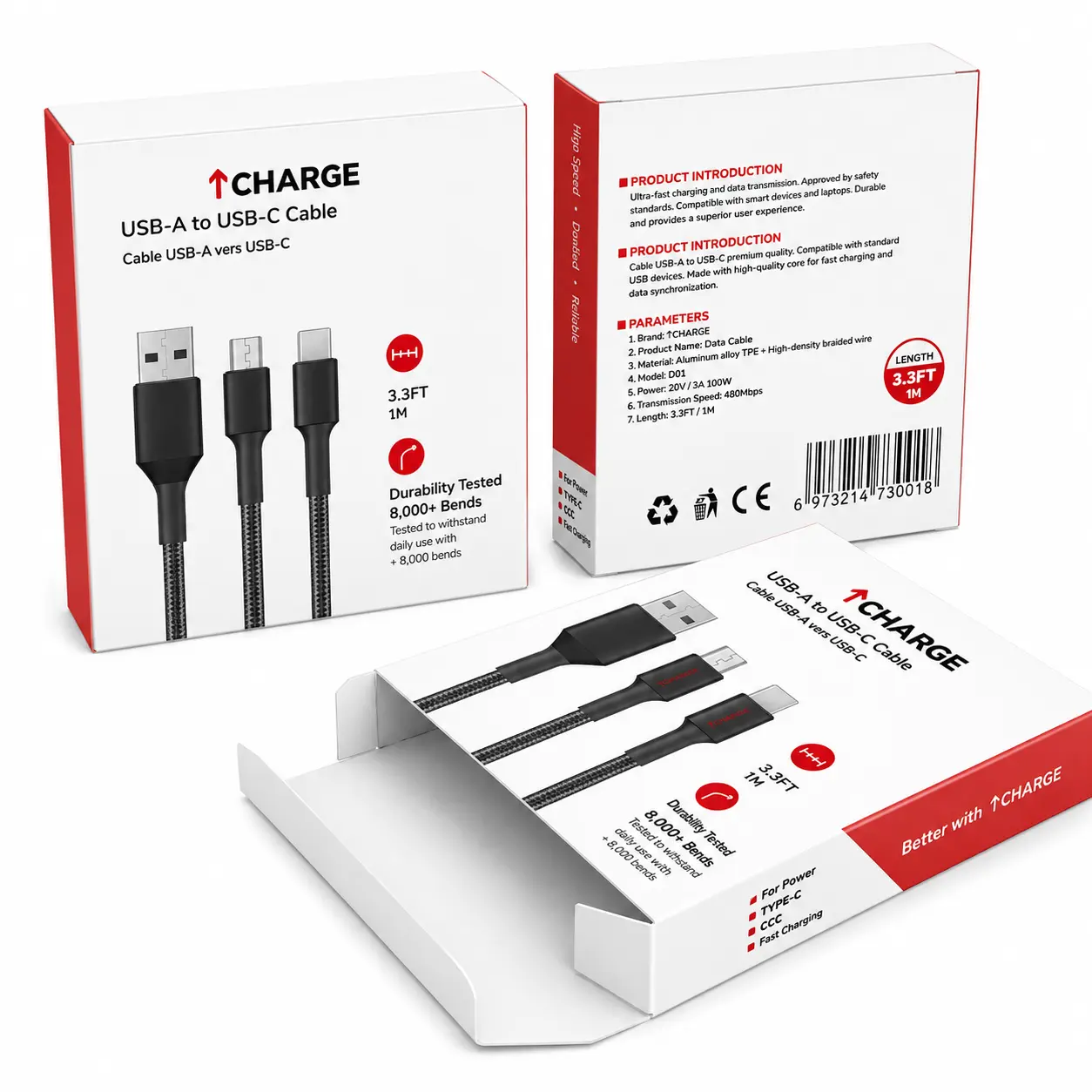
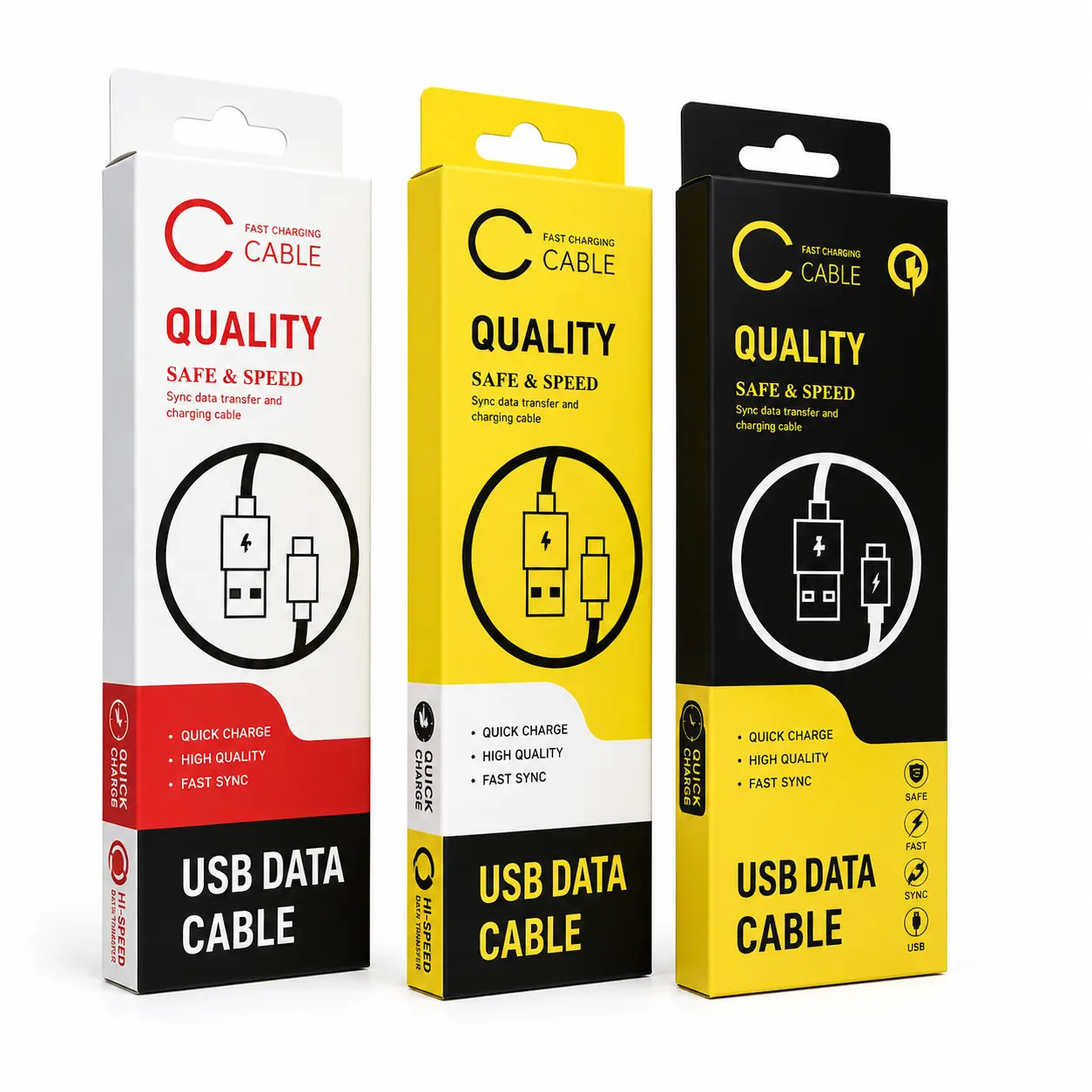
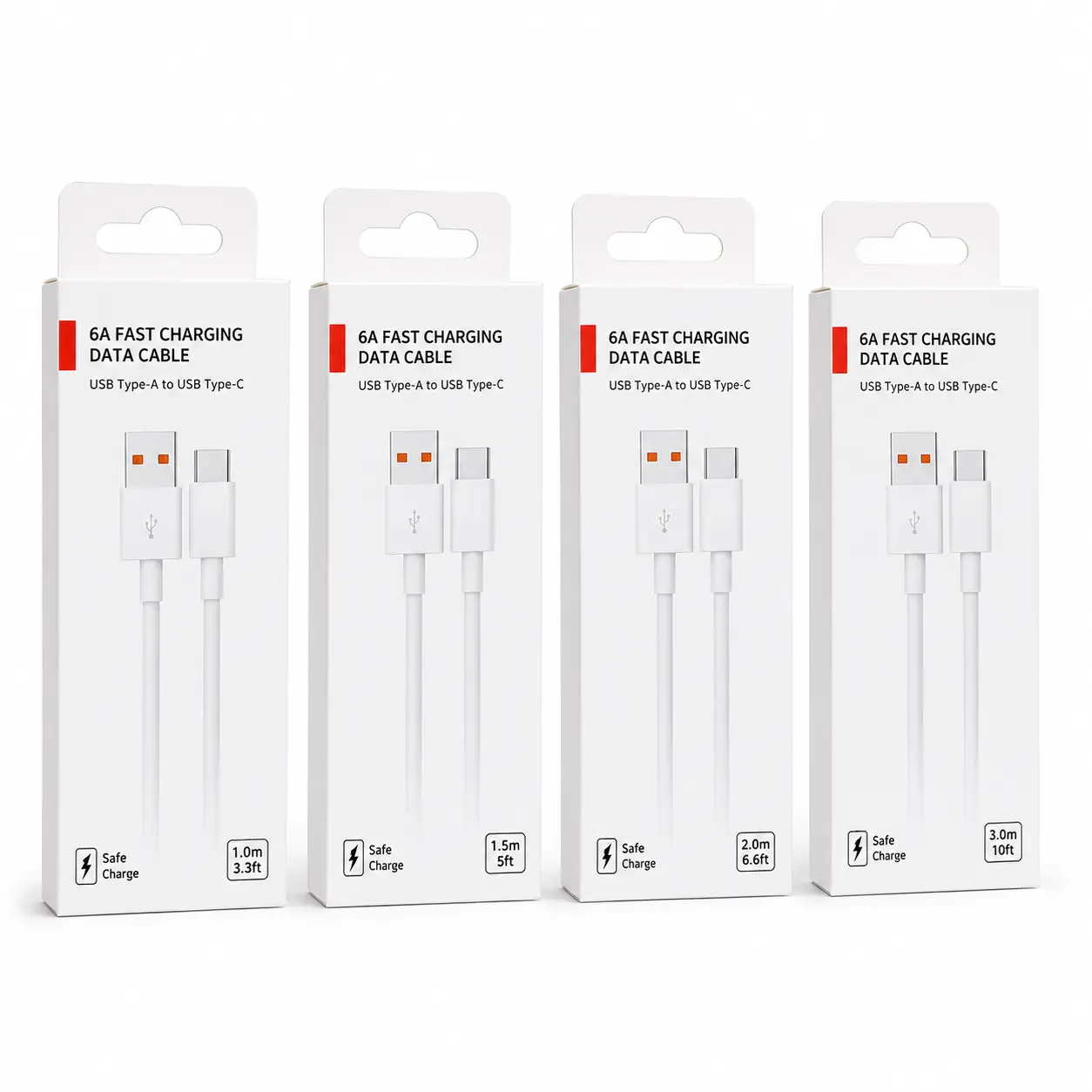
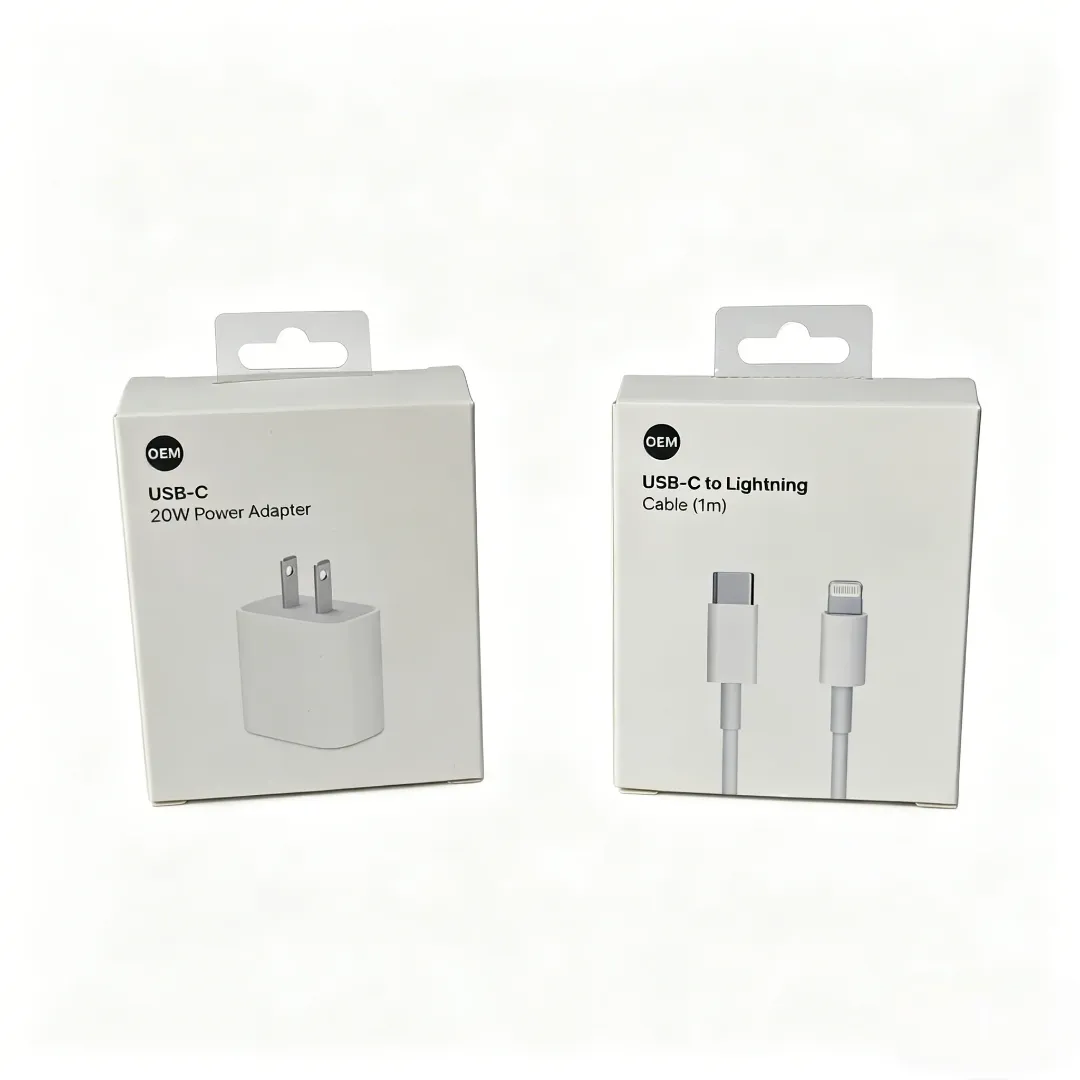
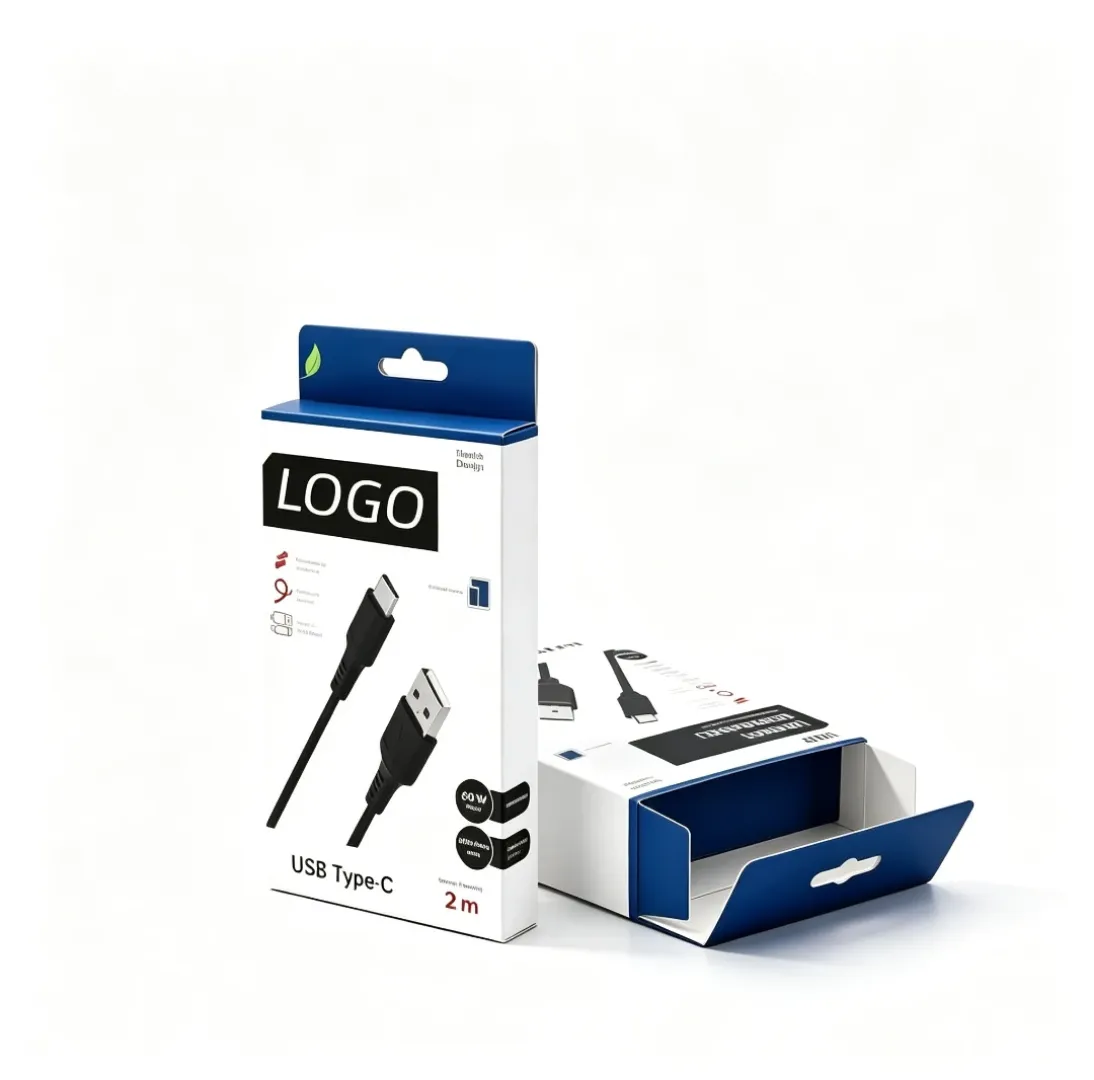
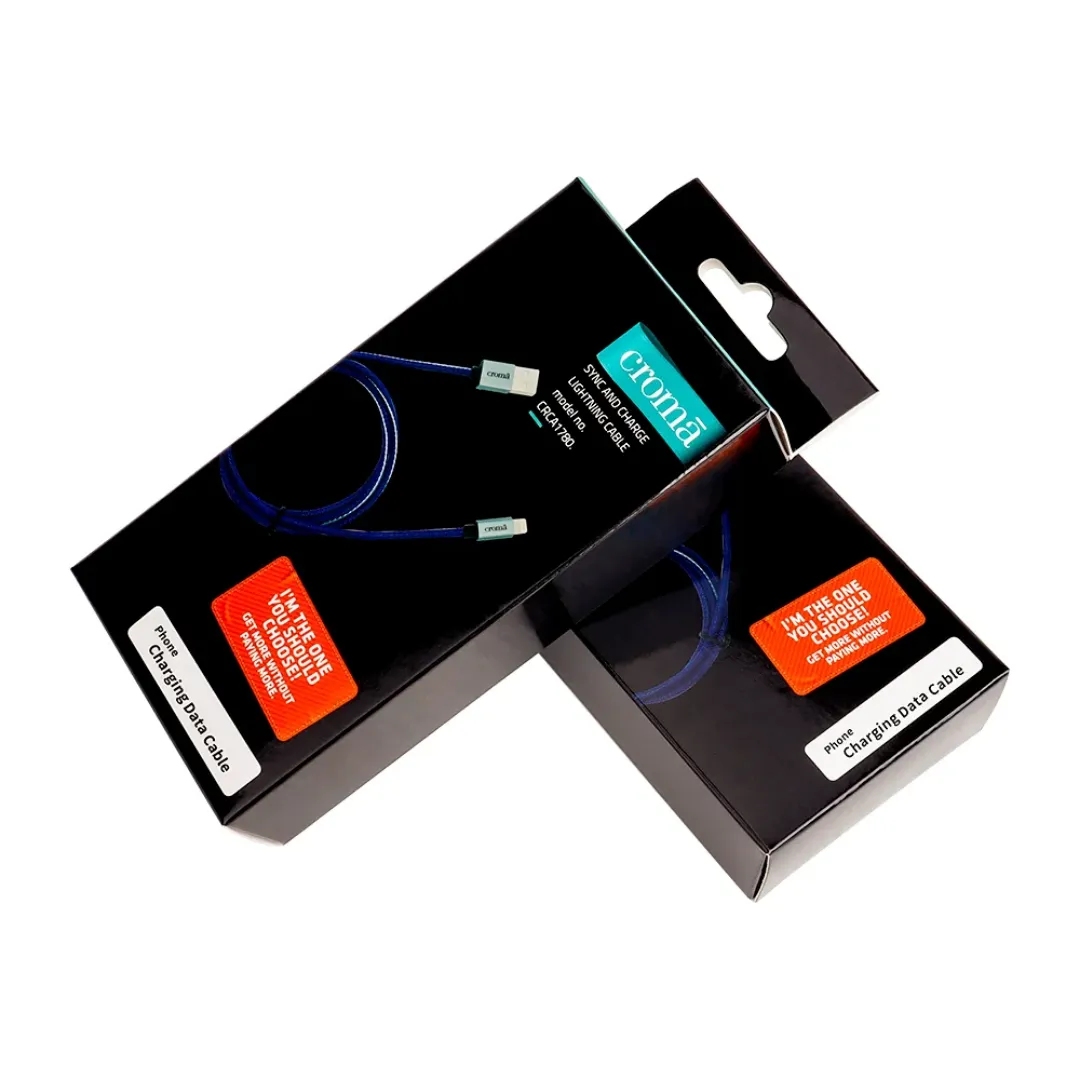
A cable is a tough product to sell from a shelf. It’s a coil of wire that looks almost identical to every other coil hanging next to it, so the box has to tell people what’s inside before they pick it up. Our Custom USB Data Cable Packaging Boxes are built for brands selling charging cables, data cables, braided leads and small cable kits, and they’re sized around the coil, not around a stock box that leaves the cable rattling.
The main problem we solve is simple. Buyers return the wrong cable all the time because the connector type was hard to read. A clear front panel and a fixed insert fix most of that.
Custom USB Data Cable Packaging Boxes Built Around the Coil
First question we ask. How tight can you wind it before it kinks? Say it’s a 3 ft braided USB-C, that’ll usually coil to about 3 inches across, but a 6 or 10 footer wants more room or a figure-eight wrap with a twist tie, and once we know the coil we just add a little margin and drop in a die-cut paperboard card with slots for each plug head. That way the plug ends don’t knock against the box wall and scuff in transit.
If you sell a cable with a wall adapter, the insert gets a second pocket. Same goes for two-packs. Keep the parts separated and the box looks finished when it’s opened, rather than a tangle.
- Single cables in USB-C, Lightning or Micro USB
- Braided or extra-long data cables
- Cable and adapter kits or two-packs
Making the Connector Type Obvious
Here’s the thing. Someone standing in an aisle scans for two facts: which ends, and how long. So we put those front and center, big enough to read from a few feet away. Charging wattage and data speed can sit on a side panel, and compatibility lists go on the back where people flip to check.
A window cutout works well for braided cables, since the weave is part of what you’re selling. For plain PVC cables, a clean printed photo of the connector heads often does the job better than a window (and it keeps dust off the product). Tech brands love matte with a hit of spot UV right on the connector icon, and to be fair it does look sharp when the light hits it.
Box Styles and Board for Cable Packaging
Most cable brands go with SBS paperboard in a tuck end or sleeve style. It prints sharp, folds cleanly and keeps the unit cost down. Hanging on pegs? Hang tab on the top panel. Doing a gift set or a fancy braided line that costs more, we’d honestly go a small rigid box with a lift-off lid, it’s got that weight in your hand.
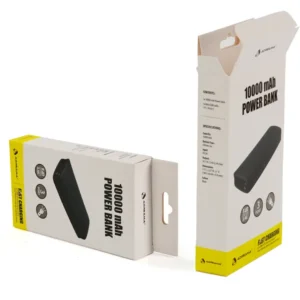
Paperboard or something stiffer, which one? Our guide on cardstock vs corrugated packaging walks through when each one makes sense. For cables, paperboard covers most cases, and corrugated is really for the outer shipping carton. If you’re building out a full accessory line, you can match the look with our power bank boxes and handsfree packaging boxes, so the whole range reads as one brand on the shelf.
Orders often start around 50 boxes depending on the style, and the price per box drops as quantity goes up. Our team sets up the dieline and lays out your artwork at no extra cost, then you approve a digital proof. Production is usually 10 to 12 business days after that, with free ground shipping anywhere in the USA. You’ll find more options in our electronics packaging boxes range, or ask for a quote with your cable lengths.
Custom USB Data Cable Packaging Boxes FAQs
Can one box size fit 3 ft and 6 ft cables?
Sometimes, if the 6 ft cable coils tightly. Braided cables are bulkier, though, so we usually suggest two sizes that share one print design to keep costs sensible.
Do I need an insert, or can the cable sit loose?
A loose coil tends to unwind and shift, and the plug heads rub on the print. A simple die-cut card insert is cheap and keeps everything in place.
Can you add a hang tab for peg displays?
Yes. A hang tab is built into the top panel of the dieline, so there’s no separate header card to attach.
You May Also Need
Building a full product line? Take a look at custom motherboard packaging boxes, custom massager packaging boxes, custom drone packaging boxes and custom product boxes. Everything in this range is listed under product packaging.