Gaming mice sell on looks. The shape, the RGB strip, the side buttons, and nobody’s handing over that kind of money without a good look first. Office mice sell on plain facts: wireless or not, battery life, does it work on a Mac. Mouse Packaging Boxes have to handle both kinds of buyer, and they also have to keep a fairly fragile little gadget from rattling around in a carton.
Our customers for these are accessory brands and gaming startups, plus a fair few private-label folks selling on Amazon. What they ask for is pretty consistent. Show the mouse off. Don’t wreck the scroll wheel.
Mouse Packaging Boxes With a Proper Insert
A loose mouse in a box is a scuffed mouse. The insert is where we spend the most time. We’d normally cut a paperboard tray that follows the curve of the shell a little, so the body sits in it, and then give the USB receiver its own slot (those things are the size of a fingernail and vanish if you let them) or room for the coiled cable. Removable weights, spare skates? Their own little compartment.
Now, the scroll wheel. It pokes up above the shell, and a lid pressing down on it for a week in a warehouse can push it out of line. So we leave a gap over it. That’s why we keep nagging for the height at the tallest point and not just the base.
Getting a Mouse Box Noticed on the Shelf
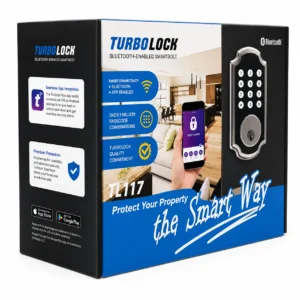
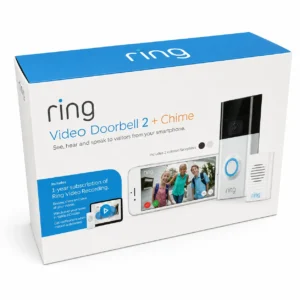
Want shoppers to see the shape and finish without opening it? Cut a window. Except for RGB gaming mice, where honestly a big printed shot of the thing glowing usually beats a window, since a mouse with no power through clear film looks kind of flat. Specs go on the back, DPI, buttons, weight, battery.
Most peripheral brands like that dark, clean look, and matte or soft-touch gets you there. Bit of flash? Spot UV over the mouse photo, or a holographic foil logo. Selling off a peg wall, we’d build the hang tab into the top panel and skip the separate header card.
Matching Mouse Packaging Across a Peripheral Line
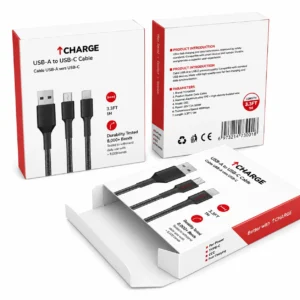
Many brands sell a mouse, keyboard and cable together, and it looks much better when all three boxes share one design system. Our keyboard packaging boxes and USB data cable packaging boxes can carry the same colors and layout. You can see more accessory styles in our electronics packaging boxes collection.
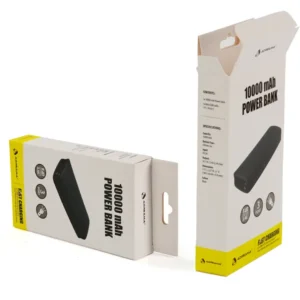
Most mouse boxes are SBS paperboard in a tuck end, sleeve or two-piece style. Premium gaming lines sometimes step up to a rigid box with a magnetic flap. If you sell online and want to keep shipping costs low, keep the box tight. Our post on how packaging dimensions affect shipping cost shows why a few extra inches add up.
From Sample to Production
Send us your mouse dimensions (or a unit) and your artwork. Our team builds the dieline and insert, lays out the design for free and sends a digital proof. Inserts are worth testing, so a physical sample before the bulk run is a good idea.
Orders often start around 50 boxes depending on the style, with lower per-box pricing at higher quantities. Production is 10 to 12 business days after proof approval, with free ground shipping anywhere in the USA. Most digital print runs carry no plate or die charges.
Mouse Packaging Boxes FAQs
Can the same box fit a wired and a wireless version?
Usually, if the mouse shell is the same. The insert just needs a slot that fits either the coiled cable or the receiver.
Should I use a window or a printed photo?
Windows suit mice with an interesting shape or finish. For RGB models, a lit-up photo often shows the product better.
What insert material works best for a mouse?
For most mice, a die-cut paperboard tray, it’s cheap and recyclable. A heavy gaming mouse going into a rigid box? We might use foam there, it hugs it tighter.
Pair It With
Plenty of customers order this alongside keyboard packaging boxes and handsfree packaging boxes. More styles are in electronics packaging boxes.